طراحی مدل کاربرد هوش مصنوعی در صادرات محصولات صنایع الکترونیک
کلمات کلیدی:
هوش مصنوعی, صادرات, صنایع الکترونیک, مدل پارادایمی, تصمیمگیری هوشمندچکیده
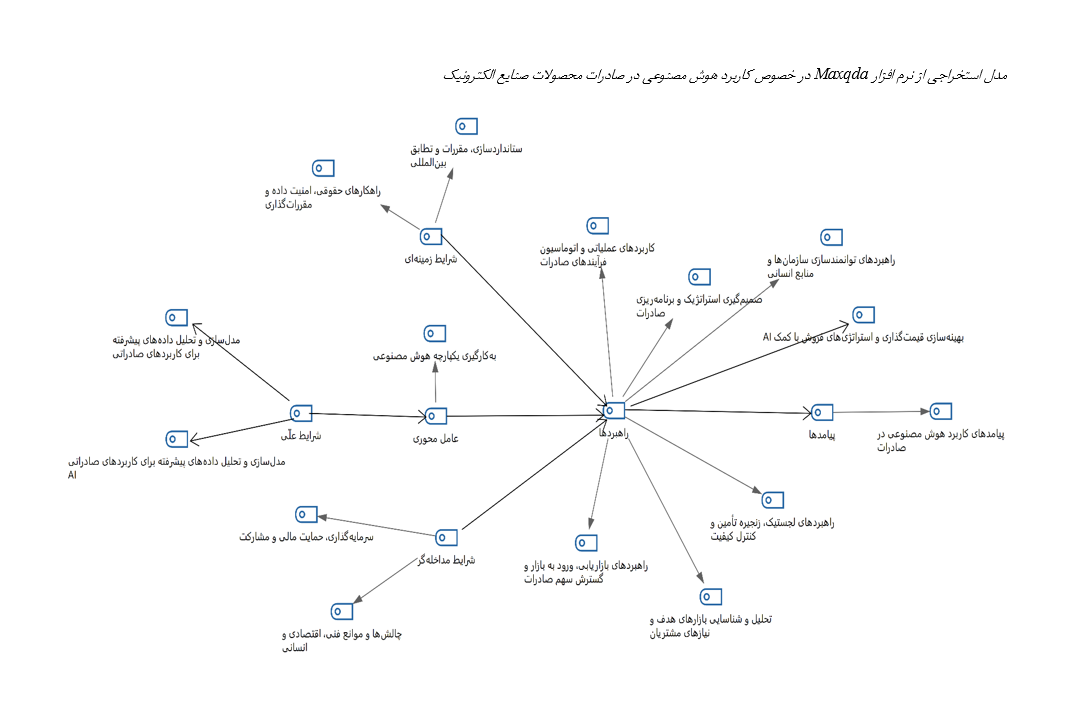
هدف این پژوهش، طراحی یک مدل پارادایمی برای کاربرد هوش مصنوعی در توسعه صادرات محصولات صنایع الکترونیک ایران است. این پژوهش از نوع کیفی و کاربردی با رویکرد نظریه دادهبنیاد بود. دادهها از طریق مصاحبههای نیمهساختاریافته با 16 نفر از خبرگان، مدیران و متخصصان حوزه صنایع الکترونیک و فناوریهای هوشمند جمعآوری شد. شرکتکنندگان به روش نمونهگیری هدفمند و بر اساس اصل اشباع نظری انتخاب شدند. دادهها پس از پیادهسازی واژهبهواژه، با استفاده از روش سه مرحلهای کدگذاری باز، محوری و انتخابی تحلیل شد تا روابط میان مقولهها مشخص و مدل پارادایمی شکل گیرد. تحلیل دادهها نشان داد که کاربرد هوش مصنوعی در صادرات محصولات صنایع الکترونیک ایران دارای پنج بعد اصلی است: شرایط علّی، شرایط زمینهای، شرایط مداخلهگر، راهبردها و پیامدها. شرایط علّی شامل فشار رقابتی جهانی، تغییر الگوی تقاضا و تحریمهای فناورانه بود. شرایط زمینهای شامل زیرساخت دیجیتال، قوانین تجاری تسهیلکننده و استانداردهای بینالمللی بود. شرایط مداخلهگر شامل محدودیتهای مالی، کمبود دانش تخصصی و مقاومت فرهنگی شناسایی شد. راهبردها شامل تحلیل دادهمحور بازار، پیشبینی تقاضا با الگوریتمهای هوش مصنوعی، بهینهسازی لجستیک، بازاریابی دیجیتال و تصمیمگیری الگوریتمی بود. پیامدها شامل بهبود بهرهوری، افزایش دقت تصمیمگیری، کاهش هزینهها و ایجاد مزیت رقابتی پایدار در بازارهای بینالمللی بود. مدل پارادایمی ارائهشده، مسیر تحول دیجیتال و تصمیمگیری هوشمند در صادرات محصولات صنایع الکترونیک ایران را روشن کرده و میتواند به عنوان راهنمای عملی برای بنگاههای صادرکننده در توسعه صادرات هوشمند مورد استفاده قرار گیرد.
دانلودها
مراجع
Akbar, M. B., Ibrahim, I., Nabil, S. J., Iqbal, K. A., & Islam, A. K. M. S. (2024). The Influence of Artificial Intelligence on Consumer Trust in E-Commerce: Opportunities and Ethical Challenges. European Journal of Theoretical and Applied Sciences, 2(6), 250-259. https://doi.org/10.59324/ejtas.2024.2(6).20
Al-Moghrabi, K. G. (2024). Harnessing the Power of Blockchain Technology to Support Decision-Making in E-Commerce Processes. Iaes International Journal of Artificial Intelligence (Ij-Ai), 13(2), 1380. https://doi.org/10.11591/ijai.v13.i2.pp1380-1387
Arora, R. (2024). Bridging the Gap Between Offline and Online Presence in E-Commerce: The Role of Artificial Intelligence. Interantional Journal of Scientific Research in Engineering and Management, 08(12), 1-6. https://doi.org/10.55041/ijsrem33002
Asgarpour, E., Kashmiri Haq, M. A., & Pourvoli Aliyar, N. (2022). Artificial Intelligence as a Driver of Knowledge-Based Businesses and Resistant Economy: Businesses Based on Machine Learning and Deep Learning Applications in Digital Marketing and Consumer Behavior Prediction Fourth National Conference on Knowledge Management and E-Business with a Focus on Resistant Economy.
Catanzaro, A., & Teyssier, S. (2021). Resource based view and export performance: Systematic review and new insights. Journal of World Business, 56(4), 101127. https://doi.org/10.1016/j.jwb.2020.101127
Cheng, J. (2023). Innovation of Fresh Agricultural Products E-Commerce Operation Mode Based on Artificial Intelligence and Machine Learning Model. Applied Mathematics and Nonlinear Sciences, 9(1). https://doi.org/10.2478/amns.2023.2.00528
Faryabi, M., Rahimi Aqdam, S., Ebrahimi, V., & Kazemi, S. (2021). Examining the Impact of Organizational, Strategic, and Environmental Factors on Export Performance; Analyzing the Role of Innovative Exports Among Exporting Companies. International Business Management, 4(2), 63-86. https://jiba.tabrizu.ac.ir/article_13035.html
Giang, N. T. P., Hung, D. M., Huong, T. T., Quyên, H. T. T., Thơm, N. T., Tran, T. B., & Dong, T. T. (2025). Researching User Experience With Artificial Intelligence Application for Customer Care Services on E-Commerce Platform. Jurnal Ekonomi Perusahaan, 31(2), 149-174. https://doi.org/10.46806/jep.v31i2.1319
Kráľ, Š., Fedorko, R., & Štofejová, L. (2024). The Importance of Artificial Intelligence in the E-Commerce Process. 349-359. https://doi.org/10.34135/mmidentity-2024-36
Nazarian-Jashnabadi, J., Ronaghi, M., alimohammadlu, m., & Ebrahimi, A. (2023). The framework of factors affecting the maturity of business intelligence. Business Intelligence Management Studies, 12(46), 1-39. https://doi.org/10.22054/ims.2023.74305.2346
Radha, D. S. (2025). Role of Artificial Intelligence in Shaping Consumer Experience and Loyalty in Fashion E-Commerce. Interantional Journal of Scientific Research in Engineering and Management, 09(04), 1-9. https://doi.org/10.55041/ijsrem44114
Rahimi Kalor, H., & Mohammadi Khani, R. (2024). Designing a Model for the Impacts of Artificial Intelligence and Machine Learning Applications in Advertising and Sales. Studies in Smart Business Management, 12(48), 223-270. https://ims.atu.ac.ir/article_17446.html
Rezaei, M. (2023). The Role of Artificial Intelligence in E-Commerce: Current Status and Future Research Agenda Seventh National Conference on Interdisciplinary Research in Engineering Sciences and Management. Tehran.
Turatti, R. C. (2025). Application of artificial intelligence in forecasting consumer behavior and trends in E-commerce. Brazilian Journal of Development, 11(3), e78442-e78442. https://doi.org/10.34117/bjdv11n3-039

دانلود
چاپ شده
ارسال
بازنگری
پذیرش
شماره
نوع مقاله
مجوز
حق نشر 2025 Abolfazl Zolghadr (Author); Soheil Sarmad saeedi; Behrooz Ghasemi (Author)

این پروژه تحت مجوز بین المللی Creative Commons Attribution-NonCommercial 4.0 می باشد.