فراترکیب الزامات توسعه مهارتهای رهبری با استفاده از برنامهنویسی عصبی–زبانی (NLP)
کلمات کلیدی:
مهارت های رهبری, توسعه مهارت های رهبری, برنامه نویسی عصبی-زبانی, فراترکیبچکیده
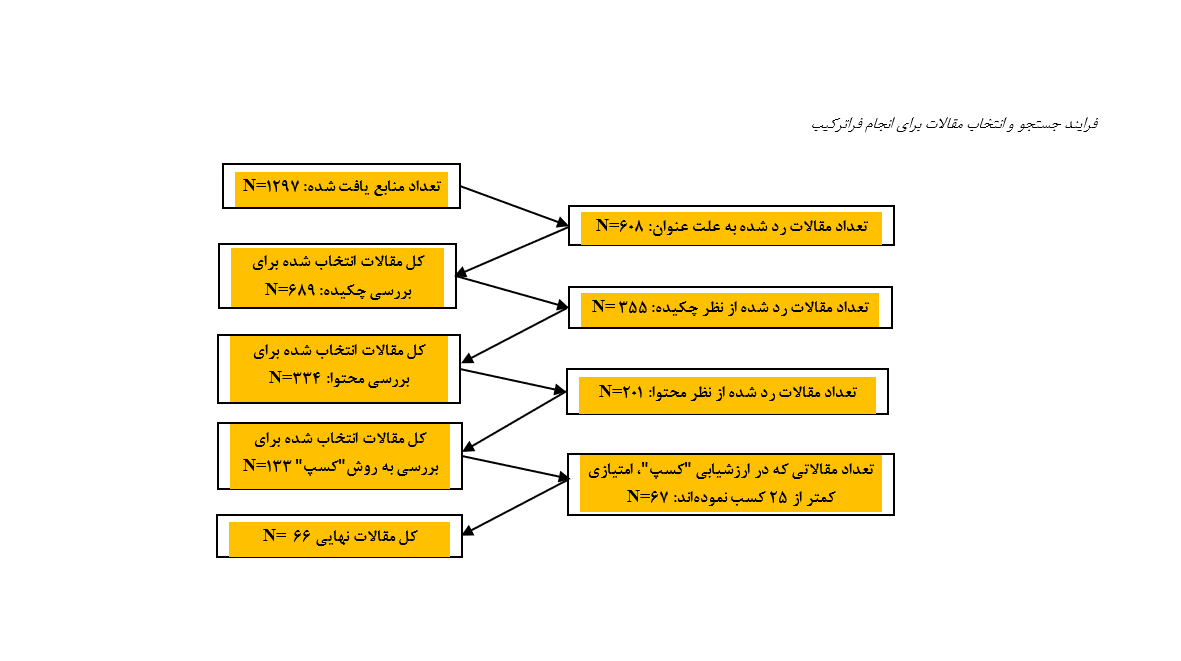
هدف پژوهش تدوین یک چارچوب جامع از الزامات و مؤلفههای تأثیرگذار بر توسعه مهارتهای رهبری با بهرهگیری از برنامهنویسی عصبی–زبانی است. این پژوهش کیفی و توسعهای با رویکرد فراترکیب و روش تحلیل محتوای کیفی انجام شد. جامعه پژوهش شامل کلیه مطالعات داخلی و خارجی مرتبط در حوزه مدیریت، روانشناسی و آموزش در بازه زمانی 2000 تا 2025 بود. پس از جستجو در پایگاههای داده معتبر، 1727 مطالعه اولیه شناسایی شد که طی فرایند غربالگری چندمرحلهای بر اساس معیارهای دقت روششناختی، مرتبط بودن و کیفیت محتوا، تعداد 66 مقاله نهایی انتخاب و طبق روش هفتمرحلهای سندلوسکی و باروسو مورد تحلیل قرار گرفت. نتایج تحلیل نشان داد که الزامات توسعه مهارتهای رهبری مبتنی بر برنامهنویسی عصبی–زبانی در قالب سه مقوله اصلی، نه زیرمقوله و شصت کد توصیفی قابل تبیین است. مقوله نخست شامل الزامات و مهارتهای درونفردی و شخصیتی است که بر توانایی خودرهبریگری، اصالت و خودتوانمندسازی تأکید دارد. مقوله دوم بر مهارتهای بینفردی و گروهی تمرکز دارد و حوزههایی چون تأثیرگذاری، ارتباط مؤثر، ترغیب و مهارتهای رشددهنده را شامل میشود. مقوله سوم به الزامات راهبردی و سازمانی اشاره دارد که ابعادی مانند هوش اجتماعی و سازمانی، مهارتهای تحلیلی و ذهنی، چابکی و سازگاری با تغییر، مهارتهای مدیریتی و اجرایی، و توانایی خلق ارزش را دربرمیگیرد. این یافتهها نشان میدهد که توسعه مهارتهای رهبری از طریق NLP به ارتقای ظرفیتهای عمیق شناختی، ارتباطی و راهبردی رهبران منجر میشود. نتایج پژوهش بیانگر آن است که برنامهنویسی عصبی–زبانی میتواند چارچوبی یکپارچه و چندبعدی برای توسعه مهارتهای رهبری فراهم سازد و رهبران را از سطح رفتارهای قابل مشاهده به سطحی عمیقتر از رشد شخصی، ارتباطی و سازمانی هدایت کند. این الگو با توجه به ماهیت انعطافپذیر و کاربردی NLP، میتواند در برنامههای تربیت رهبر، آموزش سازمانی و توسعه سرمایه انسانی نقشی مؤثر و تحولآفرین ایفا کند.
دانلودها
مراجع
Ajmi, H. R. A. (2024). Principals’ Leadership Skills to Meet the National Strategy for Education in Basic Schools. Journal of Education and E-Learning Research, 11(2), 413-421. https://doi.org/10.20448/jeelr.v11i2.5644
Al‐Thawabiya, A., Singh, K., Al‐Lenjawi, B. A., & Alomari, A. (2023). Leadership styles and transformational leadership skills among nurse leaders in Qatar, a cross‐sectional study. Nursing Open. https://doi.org/10.1002/nop2.1636
Binder, M. (2025). How to Use Neuro-linguistic Programming (NLP) Techniques.
Blancada, N. A. A. (2023). Educational Leaders’ Management Skills, Leadership Behavior and Organizational Commitment. International Journal of Research Publications, 124(1). https://doi.org/10.47119/ijrp1001241520234837
Cripe, K. M., & Burleigh, C. (2022). Examining Leadership Skills, Behaviors, and Effective Communication for Virtual IT Project Managers. Team Performance Management, 28(3/4), 223-237. https://doi.org/10.1108/tpm-11-2021-0085
Faccia, A. (2023). NLP Sentiment Analysis and Accounting Transparency: A New Era of Financial Record Keeping. Computers, 13(1), 5. https://doi.org/10.3390/computers13010005
Fioravanti, M. L., Paulo, H. S. d. M., & Barbosa, E. F. (2021). Fostering Leadership Skills of Technology Professionals in Startups. Renote, 19(2), 406-415. https://doi.org/10.22456/1679-1916.121364
Gerling, C., & Lessmann, S. (2024). Leveraging AI and NLP for Bank Marketing: A Systematic Review and Gap Analysis. arXiv preprint. arXiv:2411.14463
Ghaderi Sheykhi Abadi, M., Nasiri, F., Afzali, A., & Taajobi, M. (2023). Construction and Standardization of Synergistic Leadership Questionnaire in Managers of Technical and Vocational Schools. Sociology of Education, 10(1), 193-203. https://doi.org/10.22034/ijes.2023.1989716.1389
Ghalami Bavil Aliayi, H., & Ali Mahdi, M. (2024). The effectiveness of communication skills training on psychological (organizational) capital and transformational leadership style. New Educational Thought Journal, 20(1), 133-144.
Gilli, K., Lettner, N., & Guettel, W. (2024). The future of leadership: new digital skills or old analog virtues? Journal of Business Strategy, 45(1), 10-16. https://doi.org/10.1108/JBS-06-2022-0093
Groenewald, E., Groenewald, C. A., Uy, F., Cantere Jr, G., Kilag, O. K., & Depoyart, J. (2024). Enhancing Leadership Skills for Addressing Learning Loss and Mental Health Challenges: Insights from School Leaders in Low-and Middle-Income Countries. International Multidisciplinary Journal of Research for Innovation, Sustainability, and Excellence (IMJRISE), 1(2), 226-232. https://www.researchgate.net/profile/Elma-Groenewald-2/publication/378513262
Henderikx, M., & Stoffers, J. (2023). Digital Transformation and Middle Managers’ Leadership Skills and Behavior: A Group Concept Mapping Approach. Frontiers in psychology, 14. https://doi.org/10.3389/fpsyg.2023.1147002
Idris, I., Suyuti, A., Supriyanto, A. S., & As, N. (2022). Transformational leadership, political skill, organizational culture and employee performance: A case study from tourism company in Indonesia. Geojournal of Tourism and Geosites, 40(1), 104-110. https://doi.org/10.30892/gtg.40112-808
Jørgensen, R. (2023). MultiFin: A Dataset for Multilingual Financial NLP. https://doi.org/10.18653/v1/2023.findings-eacl.66
Khandelwal, A. (2025). A Machine Learning Approach to Predicting Managerial Skills and Leadership Performance. Jnanabha, 55(01). https://doi.org/10.58250/jnanabha.2025.55104
Kilag, O. K. T. (2023). Importance of Upskilling and Reskilling in Educational Leadership and Management. Ejlhss, 1(1), 49-57. https://doi.org/10.61796/ejlhss.v1i1.12
Krampitz, J., Tenschert, J., Furtner, M., Simon, J., & Glaser, J. (2023). Effectiveness of online self-leadership training on leaders' self-leadership skills and recovery experiences. Journal of Workplace Learning, 35(9), 66-85. https://doi.org/10.1108/JWL-10-2022-0125
Mohamed Mahdy, F., Binzafrah, F., & Alqahtani, M. (2022). A Structural Framework for Neuro-Linguistic Programming (NLP) and its Consequence on Leadership Succession Planning Strategy Applying to the Leaders of King Khalid University and Qualified Personnel for Leadership Position. Business Ethics and Leadership, 6(2), 24-43. https://doi.org/10.21272/bel.6(2).24-43.2022
Muller, C. R., & Pelser, T. G. (2022). A proposed leadership skills development model for African FMCG business-networks: Super-Cube®. South African Journal of Economic and Management Sciences, 25(1), 4303. https://doi.org/10.4102/sajems.v25i1.4303
Muschard, B., Rozenfeld, H., Guzmán, V. E., Gerolamo, M., & Kohl, H. (2020). Characteristics and Skills of Leadership in the Context of Industry 4.0. Procedia Manufacturing,
Noori, R., Jafari Nia, S., Abdollahi, B., & Razaghi, A. M. (2025). Identifying and Prioritizing Essential Skills for E-Leadership. Quarterly Journal of Organizational Behavior Studies. https://obs.sinaweb.net/?_action=article&au=1692504&_au=%D9%86%D9%88%D8%B1%DB%8C%D8%8C%20%D8%B1%D9%88%D8%AD%20%D8%A7%D9%84%D9%87
Ohlsson, A., Alvinius, A., & Larsson, G. (2020). Smooth power: identifying high-level leadership skills promoting organizational adaptability. International Journal of Organization Theory & Behavior, 23(4), 297-313. https://doi.org/10.1108/IJOTB-02-2019-0009
Osei, A., & Ismail, A. (2023). Enhancing Entrepreneurial Leadership Skills Through Educational Workshops in Agriculture. International Journal of Agricultural Education and Extension, 29(2), 145-155.
Raby, R. L., Fischer, H., & Cruz, N. I. (2023). Community college international leaders' sensemaking: Entrepreneurial leadership skills and behavior. Community College Review, 51(1), 52-74. https://doi.org/10.1177/00915521221125822
Rahman, M. M., Salamzadeh, A., Dana, L. P., & Braga, V. (2024). Work‐Family Balance, Digital Leadership Skills, and Family Social Support as the Predictors of Subjective Well‐Being of Y‐Generation Managers. Strategic Change. https://doi.org/10.1002/jsc.2628
Ranjbar, H., Soleimani, N., & Shafizadeh, H. (2020). A process model for developing educational leadership skills: A qualitative research. School Management Quarterly, 8(3), 484-508. https://sid.ir/paper/958414/fa
Sandberg, B. (2023). Leadership Skills in Startups: a Quantitative Study on the Requirement Profile. Worldmbf, 1(1), 1-13. https://doi.org/10.33422/worldmbf.v1i1.123
Seifollahi, N., & Hassanzadeh, T. (2022). Investigating the impact of knowledge leadership on organizational entrepreneurship, with the mediating role of organizational innovation. Skill Development Journal, 11(41), 121-138. https://doi.org/10.52547/irtvto.11.41.6
Tabassum, M., Raziq, M. M., Allen, M. M. C., Sarwar, N., & Golra, O. A. (2024). Exploring Emergent Leadership in Agile Teams: Network Dynamics, Roles and Skills at the Individual Level. Business Process Management Journal, 30(5), 1615-1637. https://doi.org/10.1108/bpmj-02-2024-0110
Taherpour, F., & Nasehian, H. (2022). Analyzing the Relationship Between Sustainable Leadership Skills and Co-creation with the Mediation of Cognitive Trust Among Faculty Members of Birjand University. Quarterly Journal of Public Management Perspective, 13(4), 35-59. https://doi.org/10.52547/jpap.2022.227484.1194
Tran, Q. H. N. (2023). Library as a Learning Organization: The Influence of Leadership Skills on Organizational Citizenship Behavior at Vietnamese Libraries. The Learning Organization, 30(3), 339-354. https://doi.org/10.1108/tlo-10-2022-0126
Yadav, N. (2025). AI for Mental Health: The Use of Chatbots and NLP to Support Therapy and Early Detection. International Scientific Journal of Engineering and Management, 04(05), 1-7. https://doi.org/10.55041/isjem03402
Zhan, H., Cheng, K. M., Wijaya, L., & Zhang, S. (2024). Investigating the Mediating Role of Self-Efficacy Between Digital Leadership Capability, Intercultural Competence, and Employability Among Working Undergraduates. Higher education, skills and work-based learning. https://doi.org/10.1108/HESWBL-02-2024-0032

دانلود
چاپ شده
ارسال
بازنگری
پذیرش
شماره
نوع مقاله
مجوز
حق نشر -1 Alireza Nikmaram (Author); Nour mohammad Yaqhoubi; Habibollah Salarzehi, Esmaeel Asadi, Abdolsamad khodami (Author)

این پروژه تحت مجوز بین المللی Creative Commons Attribution-NonCommercial 4.0 می باشد.