ارائه چارچوب بازاریابی محتوا در محیطهای B2B با استفاده از رویکرد فراترکیب
کلمات کلیدی:
بازاریابی محتوا, فراترکیب, محیط B2B, تعامل با مشتریانچکیده
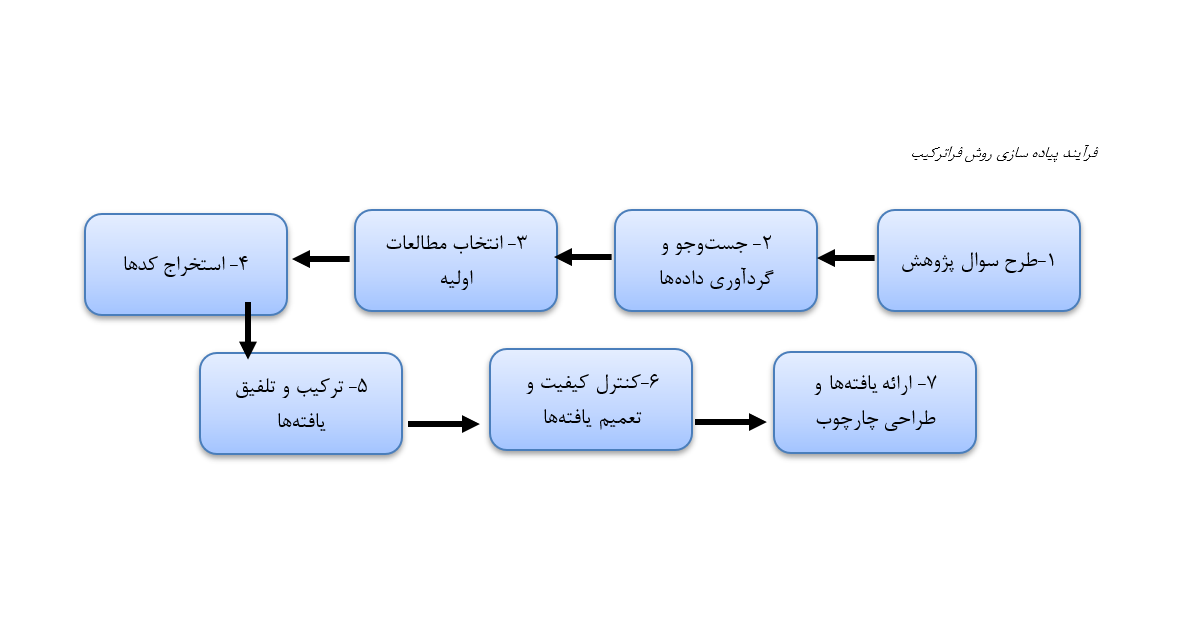
این پژوهش با هدف ارائه یک چارچوب جامع و نظاممند برای بازاریابی محتوا در محیطهای B2B انجام شد. مطالعه حاضر با بهرهگیری از روش فراترکیب و الگوی هفتمرحلهای ساندلوفسکی و باروسو (2007) و الهام از مدل CIPP استافلبیم (2003) انجام شد. جامعه پژوهش شامل ۳۷ مطالعه منتخب شامل مقالات علمی، کتاب و پایاننامههای منتشرشده بین سالهای ۲۰۰۰ تا ۲۰۲۵ بود. کنترل کیفیت از طریق ابزار کان کوال و ارزیابی خبرگان بازاریابی محتوا صورت گرفت و شاخص کاپای کوهن (۰.۸۷) اعتبار بالای یافتهها را تأیید کرد. چارچوب نهایی شامل سه بعد اصلی پیشنیازها (شناخت بازار، چارچوبهای استراتژیک، منابع و زیرساختهای سازمانی)، فرآیندها (تولید، توزیع و سازماندهی محتوا، تعامل با مشتری و بهینهسازی مداوم، سفارشیسازی محتوا) و پیامدها (تقویت روابط بلندمدت با مشتریان، پیامدهای تجاری و اجتماعی، توسعه برند، یادگیری و ارزشآفرینی مشتری) است. پیادهسازی نظاممند این چارچوب منجر به بهبود تعامل با مشتریان، ارتقای اثربخشی ارتباطات و تقویت جایگاه راهبردی سازمان میشود. این پژوهش نشان میدهد که برای موفقیت بازاریابی محتوا در محیطهای B2B، باید مؤلفههای مرتبط با پیشنیازها، فرآیندها و پیامدها بهصورت یکپارچه مورد توجه قرار گیرند. چارچوب ارائهشده، ابزاری علمی و کاربردی برای مدیران B2B و بستری برای تحقیقات آینده فراهم میکند.
دانلودها
مراجع
Abadi, N. E., Amari, Mirabi, & Vahid, R. (2025). Providing a Paradigmatic Content Marketing Model for Cultural Products in the Digital Marketing Space. Scientific Research Quarterly Journal of Cultural Strategy, e229314. http://www.jsfc.ir/article_229314.html
Ansar, N., & Ali, M. (2025). Investigating Marketing & Brand Communication: Audience Perception Towards AI-Driven Content Creation. Journal of Media Horizons, 6(3), 691-713. https://jmhorizons.com/index.php/journal/article/view/342
Baltes, L. P. (2015). Content marketing-the fundamental tool of digital marketing. Bulletin of the Transilvania University of Brasov. Series V: Economic Sciences, 111-118. https://webbut.unitbv.ro/index.php/Series_V/article/view/4497
Copulsky, J., Bergstrom, A., & Simone, M. (2016). One tweak at a time: How analytics improved our content marketing. Applied Marketing Analytics, 2(3), 201-212. https://doi.org/10.69554/KXCV2405
Ghadari Far, S., & Aghajani, A. (2023). Presenting a Content Marketing Model with a Qualitative Approach. Marketing Management, 18(61), 103-118. https://www.noormags.ir/view/fa/articlepage/2105550/
Ho, J. K., Pang, C., & Choy, C. (2020). Content marketing capability building: a conceptual framework. Journal of Research in Interactive Marketing, 14, 133-151. https://doi.org/10.1108/jrim-06-2018-0082
Hollebeek, L. D., & Macky, K. (2019). Digital content marketing's role in fostering consumer engagement, trust, and value: Framework, fundamental propositions, and implications. Journal of Interactive Marketing, 45, 27-41. https://doi.org/10.1016/j.intmar.2018.07.003
Jami Pour, M., & Karimi, Z. (2024). An integrated framework of digital content marketing implementation: an exploration of antecedents, processes, and consequences. Kybernetes, 53(11), 4522-4546. https://doi.org/10.1108/K-02-2023-0178
Kosuniak, Ł. (2021). Content marketing process: Embrace art and science B2B Marketing: A Guidebook for the Classroom to the Boardroom. Springer International Publishing. https://doi.org/10.1007/978-3-030-54292-4_13
Lestari, N., Mukhsinun, M., & Munib, N. I. (2025). The Relationship Between Content Marketing, Live Streaming, Endorsement, and Purchasing Decisions on the Tiktokshop Platform and Its Views on Islam. Indonesian Interdisciplinary Journal of Sharia Economics (Iijse), 8(2), 3531-3556. https://e-journal.uac.ac.id/index.php/iijse/article/view/4252
Maryam, D. H., & Shanthi, D. V. (2023). Unlocking Customer Engagement Through Strategic Content Marketing. Tuijin Jishu/Journal of Propulsion Technology. https://doi.org/10.52783/tjjpt.v44.i3.2456
Mohammadi. (2023). The Role of Digital Content Marketing Components in B2B Organizations International Conference on Management and Industry.
Nguyen, K. M., Nguyen, N. T., Pham, T. T. X., Tran, N. H. M., Cap, N. C. B., & Nguyen, V. K. (2025). How ephemeral content marketing fosters brand love and customer engagement. Spanish Journal of Marketing-ESIC. https://doi.org/10.1108/SJME-04-2024-0089
Risdwiyanto, A., & Bambang, B. (2024). Effectiveness of Content Marketing on Social Media Platforms in Increasing Brand Awareness. International Journal of Financial Economics, 1(4), 864-874. https://scholar.google.com/citations?user=m22kyKkAAAAJ&hl=id
Salonen, A., Mero, J., Munnukka, J., Zimmer, M., & Karjaluoto, H. (2024). Digital content marketing on social media along the B2B customer journey: The effect of timely content delivery on customer engagement. Industrial Marketing Management, 118, 12-26. https://doi.org/10.1016/j.indmarman.2024.02.002
Silalahi, H., & Guna, S. (2024). Enhancing Brand Awareness through Content Marketing Strategy Analysis in the Digital Landscape. Journal on Economics, Management and Business Technology, 3(1), 9-18. https://doi.org/10.35335/jembut.v3i1.222
Sofarian, S., Nasimi, & Rahmati. (2024). Presenting a Content Marketing Model in Sports Electronic Businesses with a Grounded Theory Approach. Sports Marketing Studies, 5(1), 101-121. https://gsmsmr.uok.ac.ir/article_63005.html
Soleimani, R., & Asayesh. (2024). Designing a Content Marketing Model in the Banking Industry with Emphasis on Implementation Stages and Processes. Dynamic Management and Business Analysis, 9(3), 95-106. https://www.dmbaj.com/index.php/dmba/article/view/136
Stufflebeam, D. L. (2003). The CIPP Evaluation Model: How to Evaluate for Improvement and Accountability. Sage Publications. https://link.springer.com/chapter/10.1007/978-94-010-0309-4_4
Świeczak, W. (2012). Content Marketing as an Important Element of Marketing Strategy of Scientific Institutions. 133-155. https://doi.org/10.5604/05096669.1077480
Tribak, I. (2025). The impact of content marketing as a sponsorship activation strategy on online customer engagement. Prosperitas, 12(2), 1-38. https://doi.org/10.31570/prosp_2025_0137
Verma, S., Sharma, R., Deb, S., & Maitra, D. (2021). Artificial intelligence in marketing: Systematic review and future research direction. International Journal of Information Management Data Insights, 1(1), 100002. https://doi.org/10.1016/j.jjimei.2020.100002

دانلود
چاپ شده
ارسال
بازنگری
پذیرش
شماره
نوع مقاله
مجوز
حق نشر 2025 Elham Sheypourchian (Author); Ehsan Abedi; Hamid Reza Yazdani (Author)

این پروژه تحت مجوز بین المللی Creative Commons Attribution-NonCommercial 4.0 می باشد.