تحلیل اثرات مکمل فناوریهای حسی و پیونددهنده بر همسویی محیط وظیفه فروش B2B و سودآوری شرکت
کلمات کلیدی:
بازارگرایی, استراتژی زنجیره تأمین, ادغام مشتری, عملکرد زنجیره تأمین, شرکتهای B2Bچکیده
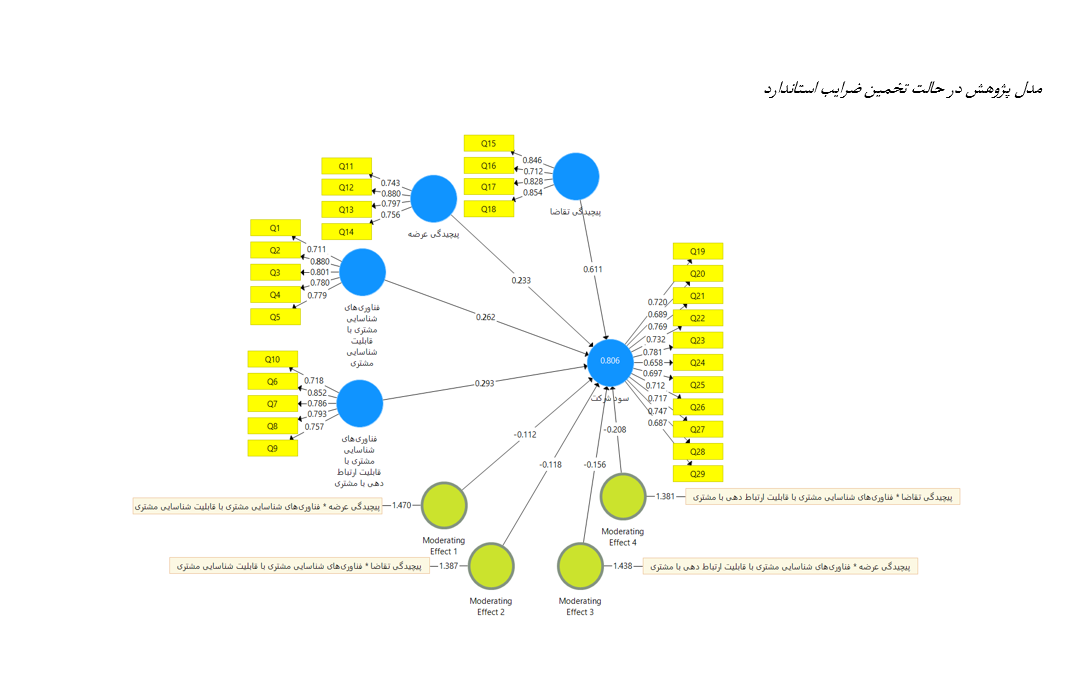
هدف پژوهش حاضر بررسی تأثیر فناوریهای دیجیتال فروش با قابلیت شناسایی مشتری و قابلیت ارتباطدهی با مشتری بر سودآوری شرکتهای B2B و تبیین نقش تعدیلگر پیچیدگی عرضه و تقاضا در این روابط بود. این پژوهش از نوع توصیفی–همبستگی با رویکرد کمی و مبتنی بر مدلسازی معادلات ساختاری به روش حداقل مربعات جزئی (PLS-SEM) بود. جامعه آماری شامل مدیران عامل و مدیران فروش شرکتهای فعال در شهرک صنعتی شمسآباد بود که در حوزه فروش B2B فعالیت داشته و از فناوریهای دیجیتال فروش استفاده میکردند. حجم نمونه بر اساس جدول کرجسی و مورگان 275 نفر تعیین شد و نمونهگیری بهصورت هدفمند انجام گرفت. ابزار گردآوری دادهها شامل پرسشنامههای استاندارد فناوریهای دیجیتال فروش، پیچیدگی عرضه، پیچیدگی تقاضا و سود شرکت بود. برای سنجش پایایی از آلفای کرونباخ و پایایی مرکب و برای ارزیابی روایی از شاخصهای AVE و معیار فورنل و لارکر استفاده شد. تحلیل دادهها با نرمافزار SmartPLS3 انجام گرفت. نتایج نشان داد فناوریهای دیجیتال فروش با قابلیت شناسایی مشتری تأثیر مثبت و معناداری بر سود شرکت دارند (β=0.262, t=8.960, p<0.001). همچنین فناوریهای دیجیتال فروش با قابلیت ارتباطدهی با مشتری اثر مثبت و قویتری بر سود شرکت نشان دادند (β=0.293, t=11.287, p<0.001). افزون بر این، پیچیدگی عرضه و پیچیدگی تقاضا نقش تعدیلگر مثبت و معناداری در رابطه میان فناوریهای دیجیتال فروش و سودآوری ایفا کردند. ضریب تعیین مدل برای سود شرکت برابر با 0.806 و شاخص برازش کلی مدل (GOF) برابر با 0.751 بود که نشاندهنده قدرت تبیین و برازش بسیار مطلوب مدل پژوهش است. یافتههای پژوهش نشان میدهد که فناوریهای دیجیتال فروش، بهویژه فناوریهای حسی و پیونددهنده، از طریق بهبود شناخت مشتری، ارتقای کیفیت تعاملات فروش و افزایش هماهنگی با پیچیدگیهای محیطی، نقش اساسی در افزایش سودآوری و مزیت رقابتی پایدار شرکتهای B2B ایفا میکنند. همچنین شرکتهایی که توانایی مدیریت همزمان پیچیدگی عرضه و تقاضا را دارند، میتوانند از مزایای فناوریهای دیجیتال بهصورت مؤثرتری بهرهمند شوند و عملکرد مالی برتری کسب کنند.
دانلودها
مراجع
Amawate, V. (2024). Adoption of Digital Platforms by Sponsoring Organizations and NPOs for Cause-related B2B Marketing Programs: A FsQCA Exploration. Journal of Business & Industrial Marketing, 39(3), 617-632. https://doi.org/10.1108/JBIM-09-2022-0429
Ameen, N., Pagani, M., Pantano, E., Cheah, J. H., Tarba, S. Y., & Xia, S. (2024). The Rise of Human–Machine Collaboration: Managers’ Perceptions of Leveraging Artificial Intelligence for Enhanced B2B Service Recovery. British Journal of Management, 36(1), 91-109. https://doi.org/10.1111/1467-8551.12829
Andersson, S., Aagerup, U., Svensson, L., & Eriksson, S. (2024). Challenges and opportunities in the digitalization of the B2B customer journey. Journal of Business & Industrial Marketing, 39(13), 160-174. https://doi.org/10.1108/JBIM-12-2023-0714
Anton, M. (2024). Components of Service-Dominant Logic in B2B Marketing. Management. https://doi.org/10.30857/2415-3206.2023.1.5
Brown, D. M., Apostolidis, C., Dey, B. L., Singh, P., Thrassou, A., Kretsos, L., & Babu, M. M. (2024). Sustainability starts from within: A critical analysis of internal marketing in supporting sustainable value co-creation in B2B organisations. Industrial Marketing Management, 117, 14-27. https://doi.org/10.1016/j.indmarman.2023.12.006
Cheragh Sahar, R., Sasanpour, M., & Bahrani, M. H. (2024). Investigating the Impact of Artificial Intelligence Applications on Organizational Performance Mediated by Business-to-Business (B2B) Marketing Capabilities (Case Study: Janbo Chain Stores).
Dao, T. C., Liao, Y. K., Chen, G., Luu, T. M. N., & Le, T. M. (2025). The Influence of B2B Social Media Marketing and Relationship Marketing on Customer Relationship Management Effectiveness, WOM and Loyalty: A Mediator Analysis. International Review of Management and Marketing, 15(1), 71-81. https://doi.org/10.32479/irmm.17340
Ebrahimpour, S. (2025). The Effect of B2B Firms' Technology Readiness on AI-Based Customer Relationship Management Capacity with the Mediating Role of ICT Capacity and the Moderating Role of Industry Dynamism: A Study of B2B Firms Fourth International Congress on Management, Economics, Humanities, and Business Development,
Fereira, H. D., Hirvon, G., & Sanchy, D. S. (2024). Strategic and Growth Orientation to Improve Performance of B2B SMEs in Emerging Markets. Jebi, 1(3), 301-320. https://doi.org/10.69725/jebi.v1i3.178
Hadid, A. B., Bouguelia, S., & Kheddouci, H. (2024). A New Method of B2B Customer Segmentation Based on Firmographic Data, and RFM and Graph Models. 2024 IEEE International Conference on e-Business Engineering,
Rendy, A. P., Budiyanto, & Suhermin. (2023). The Role of Value Co-Creation in Sustaining Partner Loyalty in B2B Business: A Service-Dominant Logic Approach. International Journal of Research in Business and Social Science. https://doi.org/10.20525/ijrbs.v12i9.3056
Rodriguez, M., & Peterson, R. (2024). Artificial intelligence in business-to-business (B2B) sales process: a conceptual framework. Journal of Marketing Analytics. https://doi.org/10.1057/s41270-023-00287-7
Salonen, A., Mero, J., Munnukka, J., Zimmer, M., & Karjaluoto, H. (2024). Digital content marketing on social media along the B2B customer journey: The effect of timely content delivery on customer engagement. Industrial Marketing Management, 118, 12-26. https://doi.org/10.1016/j.indmarman.2024.02.002
Sethi, A. R., Dash, S., Mishra, A., & Cyr, D. (2024). Role of community trust in driving brand loyalty in large online B2B communities. Journal of Business & Industrial Marketing, 39(2), 256-272. https://doi.org/10.1108/JBIM-10-2022-0469
Sönnichsen, S. D. (2023). Corporate Fashion and Circular Economy - How to Manage Ethical Challenges in Marketing of B2B Textiles. In P. N. E. U. H. S. M. Ghauri (Ed.), Creating a Sustainable Competitive Position: Ethical Challenges for International Firms (Vol. 37, pp. 33-57). Emerald Publishing Limited. https://doi.org/10.1108/S1876-066X20230000037003
Sousa, B., & Ferreira, P. (2025). In the heart of B2B branding: Exploring the link between brand-specific transformational leadership, employer branding and employee-based brand equity. Management Research: Journal of the Iberoamerican Academy of Management, 23(3), 315-338. https://doi.org/10.1108/MRJIAM-05-2024-1542
Wu, M., Andreev, P., Benyoucef, M., & Hood, D. (2024). Unlocking B2B buyer intentions to purchase: Conceptualizing and validating inside sales purchases. Decision Support Systems. https://doi.org/10.1016/j.dss.2023.114165

دانلود
چاپ شده
ارسال
بازنگری
پذیرش
شماره
نوع مقاله
مجوز
حق نشر 2025 Behzad Ghahremani ; Alireza Pirali (Author)

این پروژه تحت مجوز بین المللی Creative Commons Attribution-NonCommercial 4.0 می باشد.