نقش قابلیتهای هوش مصنوعی در تقویت اثر بازاریابی B2B بر عملکرد صادراتی: مطالعهای در صنعت پتروشیمی
کلمات کلیدی:
قابلیتهای هوش مصنوعی , بازاریابی B2B, عملکرد صادراتیچکیده
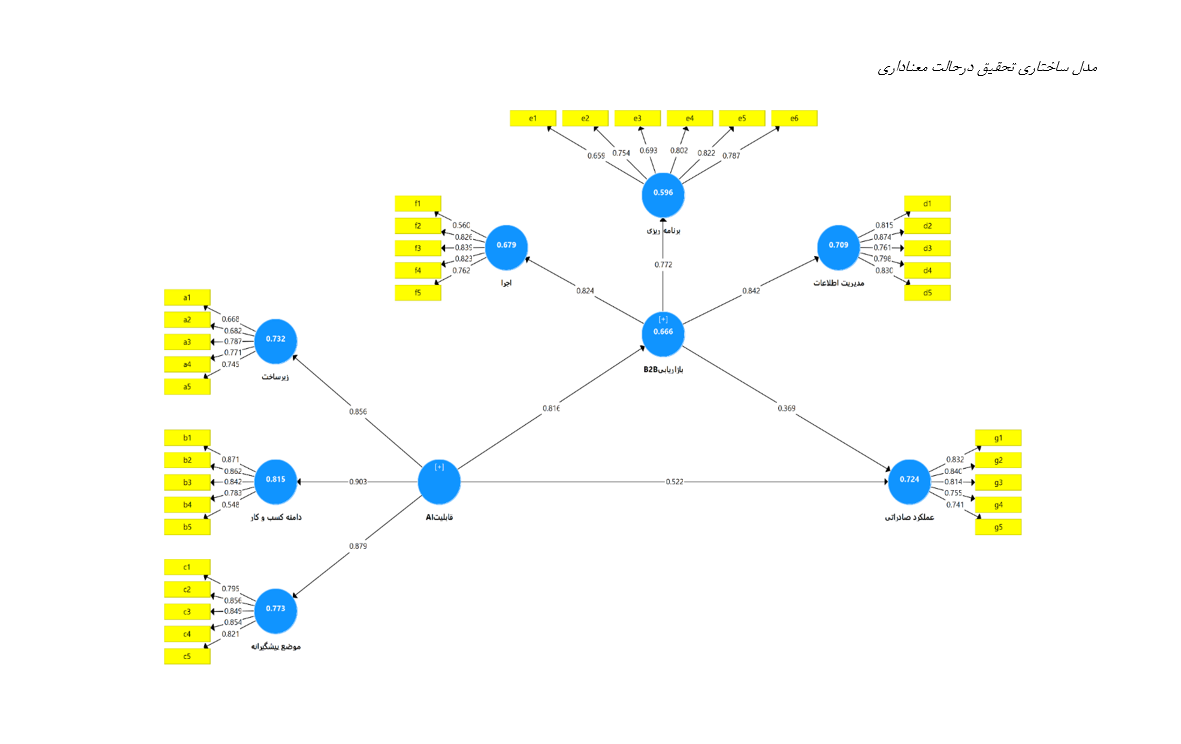
هدف پژوهش حاضر بررسی نقش قابلیتهای هوش مصنوعی در تقویت اثر بازاریابی بینسازمانی (B2B) بر عملکرد صادراتی شرکتهای فعال در صنعت پتروشیمی و تبیین سازوکارهای اثرگذاری این قابلیتها از طریق مدیریت اطلاعات، برنامهریزی و اجرای بازاریابی بود. این پژوهش از نظر هدف کاربردی و از نظر روش، توصیفی–پیمایشی مبتنی بر مدلسازی معادلات ساختاری بود. جامعه آماری شامل مدیران و کارشناسان حوزه بازاریابی، فروش صادراتی و برنامهریزی شرکتهای پتروشیمی فعال در بازارهای بینالمللی بود. نمونهگیری به روش غیراحتمالی در دسترس انجام شد و حجم نمونه با استفاده از نرمافزار G*Power برابر با 105 نفر تعیین گردید. دادهها از طریق پرسشنامه استاندارد مبتنی بر طیف پنجدرجهای لیکرت گردآوری شد. روایی سازه با استفاده از شاخص میانگین واریانس استخراجشده و معیار فورنل–لارکر و پایایی ابزار از طریق آلفای کرونباخ و پایایی ترکیبی تأیید شد. تحلیل دادهها با بهرهگیری از نرمافزار SmartPLS و رویکرد حداقل مربعات جزئی انجام گرفت. نتایج نشان داد قابلیتهای هوش مصنوعی تأثیر مثبت و معناداری بر مدیریت اطلاعات، برنامهریزی بازاریابی و اجرای بازاریابی دارند. بیشترین اثر مستقیم مربوط به تأثیر هوش مصنوعی بر اجرای بازاریابی بود که نشاندهنده نقش کلیدی فناوریهای هوشمند در بهبود کارایی فعالیتهای بازاریابی صنعتی است. همچنین هر سه بعد بازاریابی B2B بر عملکرد صادراتی اثر مستقیم و مثبت داشتند و مدیریت اطلاعات قویترین پیشبین عملکرد صادراتی شناخته شد. نتایج اثرات غیرمستقیم نیز بیانگر آن بود که هوش مصنوعی از طریق بهبود مدیریت اطلاعات و برنامهریزی بازاریابی، عملکرد صادراتی را ارتقا میدهد. مقدار ضریب تعیین عملکرد صادراتی برابر با 0.731 بهدست آمد که حاکی از قدرت تبیین بالای مدل پژوهش است. یافتههای پژوهش نشان داد که قابلیتهای هوش مصنوعی بهعنوان یک منبع راهبردی میتوانند از طریق تقویت فرآیندهای کلیدی بازاریابی بینسازمانی، مزیت رقابتی و عملکرد صادراتی شرکتهای پتروشیمی را بهبود بخشند. بهرهگیری از فناوریهای هوشمند در تحلیل دادهها، پیشبینی تقاضا، برنامهریزی بازاریابی و مدیریت ارتباط با مشتریان صنعتی میتواند زمینه افزایش اثربخشی تصمیمگیریهای صادراتی و توسعه حضور پایدار در بازارهای بینالمللی را فراهم سازد.
دانلودها
مراجع
Agrawal, S., Gupta, R., & Singh, P. (2024). Operational Performance and AI Integration in Industrial Sectors. Journal of Business Research, 78(4), 210-230.
Alizadeh, H., M, K., Saberian, H., & Keramati, M. (2024). Qualitative Study to Propose Digital Marketing Based on Customer Experience: Considering Grounded Theory (GT). Business, Marketing, and Finance Open, 1(6), 86-98. https://doi.org/10.61838/bmfopen.1.6.8
Alizadeh, H., & Nazarpour Kashani, H. (2024). The Impact of Perceived Experience with ChatGPT on Online Consumers' Information Searching Behavior: An Empirical Study of Iranian College Students. Asia Pacific Journal of Marketing and Logistics. https://doi.org/10.1108/APJML-02-2024-0140
Bag, S., Pretorius, J. H. C., Gupta, S., & Dwivedi, Y. K. (2021). Role of Institutional Pressures and Resources in the Adoption of Big Data Analytics Powered Artificial Intelligence, Sustainable Manufacturing Practices and Circular Economy Capabilities. Technological Forecasting and Social Change, 163, 120420. https://doi.org/10.1016/j.techfore.2020.120420
Chen, Y., Zhang, L., & Kumar, S. (2023). The Impact of Artificial Intelligence on Marketing Strategies: Evidence from Multinational Companies. Journal of Marketing Research, 60(2), 123-145.
Ersoy, A. B. (2024). Artificial Intelligence Applications Used in Online Retail in China and Their Relationship to Customer Satisfaction and Loyalty. International Journal of Business and Applied Social Science, 8-17. https://doi.org/10.33642/ijbass.v10n3p2
Herhausen, D., Miocevic, D., Morgan, R. E., & Kleijnen, M. H. (2020). The Digital Marketing Capabilities Gap. Industrial Marketing Management, 90, 276-290.
McKinsey, & Company. (2025). AI in the Workplace: A Report for 2025.
Mehrani, H., Alizadeh, M., & Rasouli, A. (2022). Evaluation of the Role of Artificial Intelligence Tools in the Development of Financial Services and Marketing. Journal of Technology in Entrepreneurship and Strategic Management, 1(1), 71-82. https://www.journaltesm.com/index.php/journaltesm/article/view/278
Mikalef, P., Conboy, K., & Krogstie, J. (2021). Artificial Intelligence as an Enabler of B2B Marketing: A Dynamic Capabilities Micro-Foundations Approach. Industrial Marketing Management, 98, 80-92.
Mikalef, P., Lemmer, K., Schaefer, C., Ylinen, M., Fjortoft, S. O., Torvatn, H. Y., & Niehaves, B. (2023). Examining How AI Capabilities Can Foster Organizational Performance in Public Organizations. Government Information Quarterly, 40(2), 101797.
Paschen, J., Pitt, C., & Kietzmann, J. (2020). Artificial Intelligence: Building Blocks and an Innovation Typology. Business Horizons, 63(2), 147-155.
Peltier, J. W., Dahl, A. J., & Schibrowsky, J. A. (2024). Artificial Intelligence in Interactive Marketing: A Conceptual Framework and Research Agenda. Journal of Research in Interactive Marketing, 18(1), 54-90. https://doi.org/10.1108/JRIM-01-2023-0030
Phan, T. N., Nguyen, T. T., & Vu, M. T. (2023). From AI Capability to Enhanced Organizational Performance: The Path Through Organizational Creativity. Journal of Business Research, 158, 113-123. https://doi.org/10.1016/j.jbusres.2022.113123
Talha, M. (2025). Optimizing Digital Marketing Campaigns Using Artificial Intelligence (AI) and Social Media Analytics: A Comparative Study of Machine Learning Algorithms. International Journal of Scientific Research in Engineering and Management, 9(3), 1-9. https://doi.org/10.55041/ijsrem42691
Teng, H. Y., Li, M. W., & Chen, C. Y. (2025). Does Smart Technology, Artificial Intelligence, Robotics, and Algorithm (STARA) Awareness Have a Double-Edged-Sword Influence on Proactive Customer Service Performance? Effects of Work Engagement and Employee Resilience. Journal of Hospitality Marketing & Management, 1-24. https://doi.org/10.1080/19368623.2025.2449853
Torabi, M. A., Dehghan Anari, M., Jalalian, N., & Shahsavand, A. H. (2024). Neuromorphic Design in the Intelligent Organization: Reconstructing AI Decision-Making Processes Inspired by the Octopus Brain. Intelligent Marketing Management, 5(4), 11-23. https://en.civilica.com/doc/2098235/
Wu, Y. (2023). AI-Based Compliance Automation in Commercial Bank: How the Silicon Valley Bank Provided a Cautionary Tale for Future Integration. International Research in Economics and Finance, 7(1). https://doi.org/10.20849/iref.v7i1.1356
Yoo, J. W., Park, J., & Park, H. (2024). The Impact of AI-Enabled CRM Systems on Organizational Competitive Advantage: A Mixed-Method Approach Using BERTopic and PLS-SEM. Heliyon, 10(16). https://doi.org/10.1016/j.heliyon.2024.e36392
دانلودها
گاهشمار انتشار
- ارسال
- بازنگری
- پذیرش
شماره
نوع مقاله
مجوز
حق نشر 2025 Hamid Alizadeh; Mobina Damavandi Nejad, Abbas Behradfar (Author)

این پروژه تحت مجوز بین المللی Creative Commons Attribution-NonCommercial 4.0 می باشد.