بررسی اثرات عملکردی همافزایی دوسوتوانی اکتشافی–بهرهبردارانه و تابآوری دیجیتال بر تحول دیجیتال
کلمات کلیدی:
دوسوتوانی سازمانی, دوسوتوانی اکتشافی–بهرهبردارانه, تابآوری دیجیتال, تحول دیجیتال, عملکرد رقابتی.چکیده
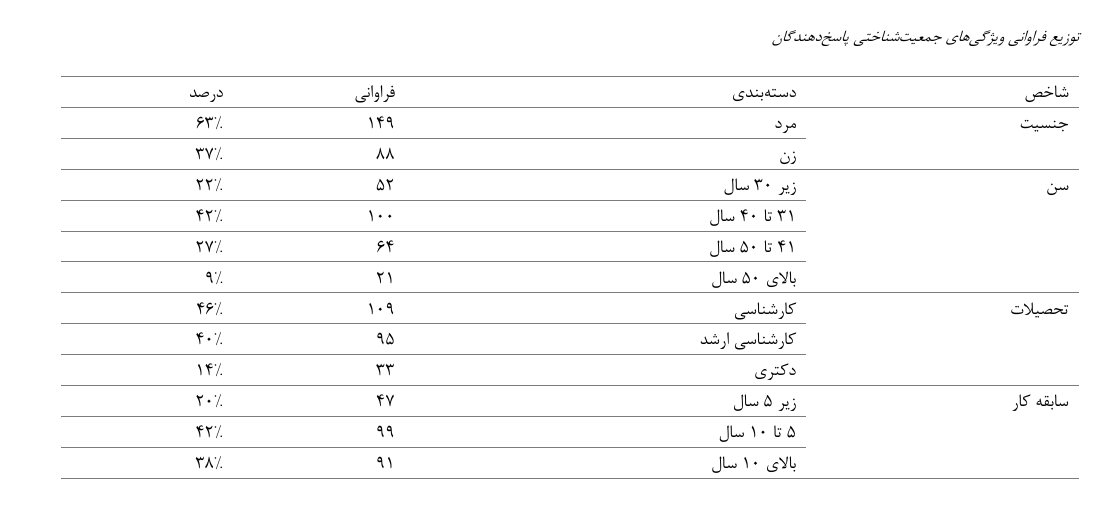
هدف این پژوهش بررسی نقش همافزایی دوسوتوانی اکتشافی–بهرهبردارانه و تابآوری دیجیتال در فرایند تحول دیجیتال و تبیین تأثیر آن بر عملکرد رقابتی سازمانها بود. پژوهش حاضر از نظر هدف کاربردی و از نظر روش، توصیفی–همبستگی مبتنی بر مدلیابی معادلات ساختاری بود. جامعه آماری شامل مدیران، کارشناسان و کارکنان سازمانهای فعال در حوزه فناوری اطلاعات و خدمات دیجیتال در سال 1404 بود که از میان آنها 237 پرسشنامه قابل تحلیل به روش نمونهگیری در دسترس جمعآوری شد. ابزار گردآوری دادهها پرسشنامه استاندارد مبتنی بر طیف پنجدرجهای لیکرت بود که برای سنجش متغیرهای دوسوتوانی اکتشافی–بهرهبردارانه، تابآوری دیجیتال، تحول دیجیتال و عملکرد رقابتی مورد استفاده قرار گرفت. روایی پرسشنامه از طریق تحلیل عاملی تأییدی و پایایی آن با استفاده از آلفای کرونباخ و پایایی ترکیبی تأیید شد. برای تجزیهوتحلیل دادهها از نرمافزارهای SPSS نسخه 26 و SmartPLS نسخه 4 استفاده شد. نتایج تحلیل مدل ساختاری نشان داد که دوسوتوانی اکتشافی–بهرهبردارانه تأثیر مثبت و معناداری بر تابآوری دیجیتال (β=0.49, t=6.82, P<0.01) و فرایند تحول دیجیتال (β=0.41, t=5.44, P<0.01) دارد. همچنین تابآوری دیجیتال بر عملکرد رقابتی سازمانها اثر مثبت و معناداری نشان داد (β=0.44, t=5.91, P<0.01). علاوه بر این، تحول دیجیتال نیز تأثیر معناداری بر عملکرد رقابتی داشت (β=0.38, t=4.76, P<0.01). نتایج بیانگر آن بود که اثر کل دوسوتوانی بر عملکرد رقابتی از طریق متغیرهای میانجی تابآوری دیجیتال و تحول دیجیتال معنادار است (β=0.62, t=8.14). همچنین مقدار ضریب تعیین برای عملکرد رقابتی برابر با 0.58 و شاخص SRMR معادل 0.062 بهدست آمد که نشاندهنده برازش مطلوب مدل پژوهش بود. یافتههای پژوهش نشان داد که همافزایی میان دوسوتوانی اکتشافی–بهرهبردارانه و تابآوری دیجیتال میتواند بهعنوان یک قابلیت راهبردی، موفقیت تحول دیجیتال و بهبود عملکرد رقابتی سازمانها را تسهیل کند. سازمانهایی که بهطور همزمان بر نوآوری، بهرهبرداری از ظرفیتهای موجود و توسعه تابآوری دیجیتال تمرکز دارند، در مواجهه با تغییرات فناوری و محیطهای رقابتی عملکرد موفقتری خواهند داشت. ازاینرو، توسعه همزمان قابلیتهای دوسوتوانی و تابآوری دیجیتال بهعنوان راهبردی کلیدی برای سازمانهای فعال در اقتصاد دیجیتال پیشنهاد میشود.
دانلودها
مراجع
Ardabili, F. S., Verbenko, G., & Cajnko, P. (2025). The effects of organizational agility on organizational performance: the mediating role of ambidexterity. Journal on Innovation and Sustainability Risus, 16(2), 114-123. https://doi.org/10.23925/2179-3565.2025v16i2p114-123
Aslam, H., Khan, A. Q., Rashid, K., & Rehman, S. u. (2020). Achieving supply chain resilience: the role of supply chain ambidexterity and supply chain agility. Journal of Manufacturing Technology Management, 31(6), 1185-1204. https://doi.org/10.1108/JMTM-07-2019-0263
Attique, A., Hameed, F., & Ahmed, M. (2025). Ambidextrous Leadership and Innovative Work Behavior: A Case Study of Pakistani Hospitals. Research Journal for Social Affairs, 3(5), 699-712. https://doi.org/10.71317/RJSA.003.05.0366
Campbell, R., Short, C., & Graffin, S. (2025). Balancing the radical and the incremental: CEO affiliative humor and organizational ambidexterity. Research Policy, 54(1), 105131. https://doi.org/10.1016/j.respol.2024.105131
Ceptureanu, S. I., Ferraro, G., Ceptureanu, E. G., & Georgescu, B. (2025). Individual Learning Ambidexterity Behavior and Individual Job Performance in Services: The Role of Organizational Structure. Review of managerial science, 19(8), 2457-2492. https://doi.org/10.1007/s11846-024-00819-0
Faten Ahmed Mohammed Abd El, s., & Ahmed, M. (2024). Effect of Strategic Leadership on Organization Ambidexterity and Agility as Perceived by Staff Nurses. Assiut Scientific Nursing Journal, 0(0), 0-0. https://doi.org/10.21608/asnj.2024.289173.1821
Indriyani, D. S., Utami, H. N., & Afrianty, T. W. (2024). The Role of Leadership Agility and Entrepreneurial Orientation on Innovation Ambidexterity and Its Impact on Competitive Advantage. Jurnal Aplikasi Manajemen, 22(3), 733-748. https://doi.org/10.21776/ub.jam.2024.022.03.09
Jiang, H., Wang, Z. W., Chen, C., & Gai, J. (2025). How Managers’ Digital Literacy Promotes Ambidexterity Innovation: The Serial Mediating Role of Knowledge re-Orchestration And digital Capabilities. Business Process Management Journal, 31(8), 199-222. https://doi.org/10.1108/bpmj-05-2025-0672
Kebede, A. G., Terefe, S. D., & Ijigu, A. W. (2024). Ambidextrous leadership and academic staff innovative behavior at Debre Berhan University, Ethiopia: the mediating role of workplace happiness. Cogent Business & Management, 11(1), 2307564. https://doi.org/10.1080/23311975.2024.2307564
Khan, M. T., & Ullah, S. (2025). Balancing Innovation: The Role of Paradoxical Leadership and Ambidexterity in Fostering Team Creativity. International Journal of Innovation Science.
Khodami, S., Sadegh Vaziri, F., & Honari, A. (2025). Investigating the Impact of Ambidextrous Factors on International Marketing Agility. Quarterly Journal of Strategic Management Studies, 16(61), 47-70. https://www.smsjournal.ir/article_216100_en.html
Kokubun, K. (2025). Digitalization, Open Innovation, Ambidexterity, and Green Innovation in Small and Medium-Sized Enterprises: A Narrative Review and New Perspectives. https://doi.org/10.20944/preprints202504.0009.v1
Kord, A., Gorkaz, M., Matoufi, A., Khozin, A., & Hassan Maleki, A. (2025). Providing a model for professional thinking of employees based on dimensions of ambidexterity and psychological empowerment. Journal of Management and educational perspective, 6(1), 333-350.
Leitao, J., Brito, S., & Pereira, D. (2024). Organizational ambidexterity, open innovation and innovation outputs: How do followers and low-flyer EU countries innovate. International Journal of Innovation Studies, 8(2), 186-235. https://doi.org/10.1016/j.ijis.2024.01.001
Lin, C. Y. C., Hu, S., & Chiu, C. K. (2025). Achieving Job Performance Through Agility and Innovativeness by Strategizing Learning Ambidexterity. Journal of managerial psychology, 40(7), 999-1015. https://doi.org/10.1108/jmp-12-2023-0752
Marin Idarraga, D. A., Hurtado González, J. M., Cabello Medina, C., & Sabidussi, A. (2025). Ambidexterity and innovation: a systematic and meta-analytic approach to mediating effects on performance. Technology Analysis & Strategic Management, 1-18. https://doi.org/10.1080/09537325.2025.2464885
Nasution, H., Muafi, M., El-Qadri, Z. M., & Suprihanto, J. (2025). Impact of digital business transformation on organizational ambidexterity and performance in indonesian insurance firms. Intangible Capital, 21(1), 1-20. https://doi.org/10.3926/ic.2930
Rahman, M. K., Hossain, M. A., Piprani, A. Z., & Abdullah, A. R. (2025). Impact of tech-driven integration, flexibility, and ambidexterity on supply chain integration and performance in manufacturing firms: moderating role of uncertainty and agility. Future Business Journal, 11(1), 72. https://doi.org/10.1186/s43093-025-00488-9
Reyes-Parga, M., Rialp-Criado, Á., & Gutierrez-Rincon, V. (2025). Organizational Ambidexterity and Born Global Firms' Post-Internationalization Growth: A Multi-Case Study From the Agri-Food Sector. Strategic Change, 1-28. https://doi.org/10.1002/jsc.2633
Sartipzade, S., Rastgar, A., & vishlaghi, M. (2025). The Impact of Business Intelligence on Performance with Emphasis on the mediating role of Innovation Ambidexterity and Dynamic Capabilities. Journal of Advertising and Sales Management, 6(1), 276-297. https://www.magiran.com/paper/2844361/the-impact-of-business-intelligence-on-performance-with-emphasis-on-the-mediating-role-of-innovation-ambidexterity-and-dynamic-capabilities?lang=en
Sharififar, F., Nicknam, M., & Zakkipour, M. (2025). Designing the Marketing ambidexterity maturity model in telecom industry Islamic Azad University, Qazvin Branch]. Unpublished thesis.
Siddiqui, F., Anwer, N., John, A., & Rabie, M. O. (2024). The role of human capital in fostering organizational ambidexterity: A study of IT firms in Pakistan. Journal of Asian Development Studies, 13(1), 41-56. https://doi.org/10.62345/jads.2024.13.1.41
Taleb, M. A., Tantawi, P., Ragheb, M., & Amara, D. F. (2025). Small and Medium-Sized Enterprises’ Resilience to Socioeconomic Challenges in Emerging Economies: The Impact of Entrepreneurial Orientation on Organisational Ambidexterity. Socioeconomic Challenges, 9(2), 156-179. https://doi.org/10.61093/sec.9(2).156-179.2025
Tho, N. D., Trang, N. T. M., & Thu, N. N. (2025). Ambidextrous Leadership and Innovation Ambidexterity in a Business Function: The Role of Managers’ Psychological Capital and Proactive Personality. Journal of Knowledge Management, 29(5), 1446-1464. https://doi.org/10.1108/jkm-09-2024-1109
Venugopal, A., & Donnelly, R. (2025). Hello from the other side: External stakeholder paradoxes matter for organizational ambidexterity. Business & Society, 64(7), 1392-1425. https://doi.org/10.1177/00076503241283270
Waseel, A. H., Zhang, J., Shehzad, M. U., Hussain Sarki, I., & Kamran, M. W. (2024). Navigating the innovation frontier: ambidextrous strategies, knowledge creation, and organizational agility in the pursuit of competitive excellence. Business Process Management Journal, 30(6), 2127-2160. https://doi.org/10.1108/BPMJ-02-2024-0081
Zaman, N. U., Atta, A., Parvez, A., & Ahmad, A. (2024). Cultivating Team Learning: Interplay of Ambidextrous Leadership and Psychological Safety. Pakistan Business Review, 26(1), 27-49. https://journals.iobm.edu.pk/index.php/pbr/article/view/1172
Zeebaree, M. R. Y. (2024). The Effect of Organizational Flexibility on Organizational Ambidexterity in Higher Education Institutions in Iraq. International Review of Management and Marketing, 14(2), 23-36. https://doi.org/10.32479/irmm.15705
دانلودها
گاهشمار انتشار
- ارسال
- بازنگری
- پذیرش
شماره
نوع مقاله
مجوز
حق نشر 2025 Parham Moeini; Vahid Khashei Varnamkhasti (Author)

این پروژه تحت مجوز بین المللی Creative Commons Attribution-NonCommercial 4.0 می باشد.