کشف تراکنشهای مشکوک به پولشویی و تقلب در تراکنشهای مالی و بانکی بر مبنای یادگیری تقویتی عمیق
کلمات کلیدی:
تشخیص تقلب, شبکه عصبی, یادگیری تقویتی عمیق , خودرمزنگارها, Deep Reinforcement Learningچکیده
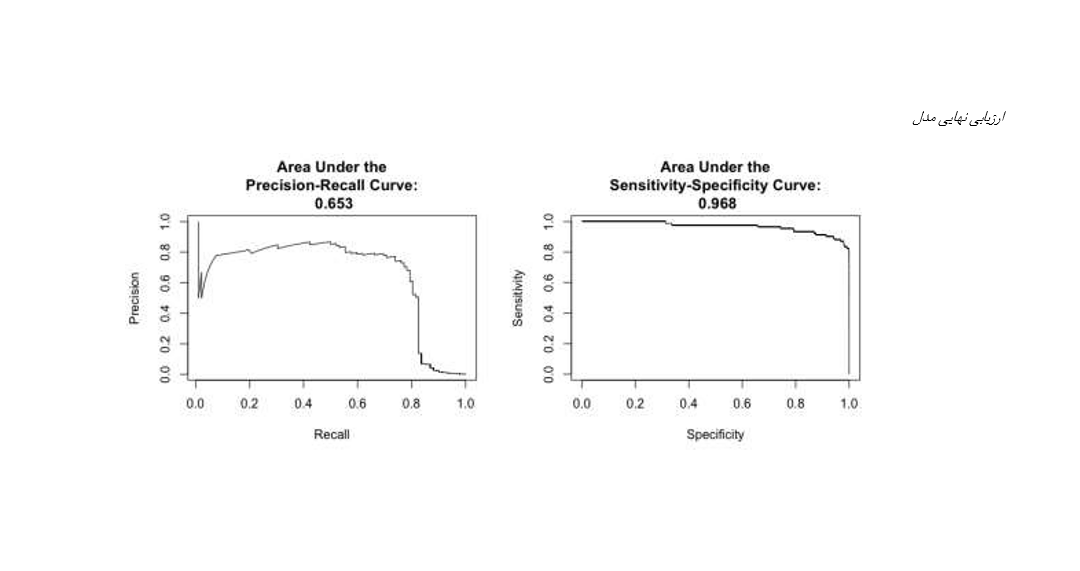
هدف پژوهش حاضر ارائه یک مدل مبتنی بر یادگیری تقویتی عمیق و شبکههای عصبی برای شناسایی تراکنشهای متقلبانه و مشکوک در سامانههای پرداخت بانکی با تأکید بر تراکنشهای مبتنی بر دستگاههای POS بود. این پژوهش از نوع کاربردی و مطالعه موردی بود که بر روی دادههای واقعی بانک پاسارگاد و مجموعه داده معیار CCFD انجام شد. دادههای پژوهش شامل بیش از 250 هزار تراکنش واقعی کارتهای اعتباری و 284807 تراکنش در مجموعه داده معیار بود. برای طراحی مدل، از ترکیب یادگیری تقویتی عمیق، شبکه عصبی مصنوعی و الگوریتم خودرمزنگار استفاده شد. دادهها پس از پاکسازی، نرمالسازی و کاهش ابعاد با روش گلوگاه، به دو بخش آموزش و آزمون تقسیم شدند. در مرحله آموزش، مدلهای با ناظر و بدون ناظر به صورت همزمان بهکار گرفته شدند تا توانایی کشف ناهنجاری و تشخیص تقلب افزایش یابد. پیادهسازی الگوریتمها با استفاده از زبانهای R و Python و کتابخانههای یادگیری ماشین انجام شد. نتایج اجرای الگوریتم بر روی دادههای واقعی نشان داد که مدل پیشنهادی توانست با مقدار AUC برابر با 0.999 و مقدار Gini معادل 0.999 عملکرد بسیار مطلوبی در تشخیص تقلب ارائه دهد. همچنین مدل نهایی حدود 83 درصد از تراکنشهای متقلبانه و نزدیک به 100 درصد از تراکنشهای مجاز را به درستی شناسایی کرد. در مجموعه داده معیار CCFD نیز صحت الگوریتم برابر با 0.95 و دقت آن 0.97 به دست آمد که نشاندهنده توانایی بالای مدل در مدیریت دادههای نامتوازن و شناسایی رفتارهای غیرعادی در تراکنشهای بانکی بود. یافتههای پژوهش نشان داد که ترکیب یادگیری تقویتی عمیق، شبکههای عصبی و خودرمزنگارها میتواند رویکردی کارآمد برای کشف تقلب در تراکنشهای مالی و بانکی فراهم سازد. مدل پیشنهادی علاوه بر افزایش نرخ کشف تقلب، توانایی مناسبی در کاهش خطاهای تشخیص و مدیریت دادههای نامتوازن دارد و میتواند به عنوان زیرساختی مؤثر برای سامانههای هوشمند نظارت بر تراکنشهای بانکی مورد استفاده قرار گیرد.
دانلودها
مراجع
Ahmed, M., Ansar, K., Muckley, C. B., Khan, A., Anjum, A., & Talha, M. (2021). A Semantic Rule Based Digital Fraud Detection. Peerj Computer Science, 7, e649. https://doi.org/10.7717/peerj-cs.649
Akhtar, N., Khan, A. N., & Raza, M. (2023). Technological Advancements and Legal Challenges to Combat Money Laundering: Evidence From Pakistan. Pakistan Journal of Humanities and Social Sciences, 11(1), 473-483. https://doi.org/10.52131/pjhss.2023.1101.0365
Aldahasi, E., Alsheikh, R. K., Khan, F. A., & Jeon, G. (2024). Optimizing Fraud Detection in Financial Transactions With Machine Learning and Imbalance Mitigation. Expert Systems, 42(2). https://doi.org/10.1111/exsy.13682
Alhajeri, R., & Alhashem, A. (2023). Using Artificial Intelligence to Combat Money Laundering. Intelligent Information Management, 15(04), 284-305. https://doi.org/10.4236/iim.2023.154014
Alkhalili, M., Qutqut, M. H., & Almasalha, F. (2021). Investigation of Applying Machine Learning for Watch-List Filtering in Anti-Money Laundering. IEEE Access, 9, 18481-18496. https://doi.org/10.1109/access.2021.3052313
Chitsungo, C. (2024). Harnessing Digital Strategies to Combat Cryptocurrency-Enabled Crimes: Addressing Money Laundering, Illicit Trade, and Cyber Threats. Ajir, 9(7), 77-106. https://doi.org/10.47672/ajir.2523
Dumitrescu, B., Bălțoiu, A., & Budulan, Ş. (2022). Anomaly Detection in Graphs of Bank Transactions for Anti Money Laundering Applications. IEEE Access, 10, 47699-47714. https://doi.org/10.1109/access.2022.3170467
Goecks, L. S., Korzenowski, A. L., Neto, P. G. T., Souza, D. L. d., & Mareth, T. (2022). Anti‐money Laundering and Financial Fraud Detection: A Systematic Literature Review. Intelligent Sys in Account, 29(2), 71-85. https://doi.org/10.1002/isaf.1509
Hampo, J. A., Nwokorie, E. C., & Odii, J. N. (2023). A Web-Based kNN Money Laundering Detection System. European Journal of Theoretical and Applied Sciences, 1(4), 277-288. https://doi.org/10.59324/ejtas.2023.1(4).27
Husnaningtyas, N., Hanin, G. F., Dewayanto, T., & Malik, M. F. (2023). A Systematic Review of Anti-Money Laundering Systems Literature: Exploring the Efficacy of Machine Learning and Deep Learning Integration. Jema Jurnal Ilmiah Bidang Akuntansi Dan Manajemen, 20(1), 91-116. https://doi.org/10.31106/jema.v20i1.20602
Japinye, A. O. (2024). Integrating Machine Learning in Anti-Money Laundering Through Crypto: A Comprehensive Performance Review. European Journal of Accounting Auditing and Finance Research, 12(4), 54-80. https://doi.org/10.37745/ejaafr.2013/vol12n45480
Jensen, R. I. T., & Iosifidis, A. (2023). Fighting Money Laundering With Statistics and Machine Learning. IEEE Access, 11, 8889-8903. https://doi.org/10.1109/access.2023.3239549
Jiao, M. (2023). Big Data Analytics for Anti-Money Laundering Compliance in the Banking Industry. Highlights in Science Engineering and Technology, 49, 302-309. https://doi.org/10.54097/hset.v49i.8522
Karim, M. R., Hermsen, F., Chala, S. A., Perthuis, P. d., & Mandal, A. (2024). Scalable Semi-Supervised Graph Learning Techniques for Anti Money Laundering. IEEE Access, 12, 50012-50029. https://doi.org/10.1109/access.2024.3383784
Ketenci, U. G., Kurt, T., Önal, S., Erbil, C., Aktürkoğlu, S., & İlhan, H. Ş. (2021). A Time-Frequency Based Suspicious Activity Detection for Anti-Money Laundering. IEEE Access, 9, 59957-59967. https://doi.org/10.1109/access.2021.3072114
Kurshan, E., & Shen, H. (2020). Graph Computing for Financial Crime and Fraud Detection: Trends, Challenges and Outlook. International Journal of Semantic Computing, 14(04), 565-589. https://doi.org/10.1142/s1793351x20300022
Kute, D. V., Pradhan, B., Shukla, N., & Alamri, A. (2021). Deep Learning and Explainable Artificial Intelligence Techniques Applied for Detecting Money Laundering–A Critical Review. IEEE Access, 9, 82300-82317. https://doi.org/10.1109/access.2021.3086230
Labanca, D., Primerano, L., Markland-Montgomery, M., Polino, M., Carminati, M., & Zanero, S. (2022). Amaretto: An Active Learning Framework for Money Laundering Detection. IEEE Access, 10, 41720-41739. https://doi.org/10.1109/access.2022.3167699
Lokanan, M. (2022). Financial Fraud Detection: The Use of Visualization Techniques in Credit Card Fraud and Money Laundering Domains. Journal of Money Laundering Control, 26(3), 436-444. https://doi.org/10.1108/jmlc-04-2022-0058
Lokanan, M., & Maddhesia, V. (2023). Predicting Suspicious Money Laundering Transactions Using Machine Learning Algorithms. https://doi.org/10.21203/rs.3.rs-2530874/v1
Martins, A. P., & Brito, M. A. (2023). Fraud Detection and Anti-Money Laundering Applying Machine Learning Techniques in Cryptocurrency Transactional Graphs. https://doi.org/10.33965/mccsis2023_202305c016
Nicholls, J., Kuppa, A., & Le‐Khac, N. A. (2021). Financial Cybercrime: A Comprehensive Survey of Deep Learning Approaches to Tackle the Evolving Financial Crime Landscape. IEEE Access, 9, 163965-163986. https://doi.org/10.1109/access.2021.3134076
Oad, A., Razaque, A., Tolemyssov, A., Alotaibi, M., Alotaibi, B., & Chenglin, Z. (2021). Blockchain-Enabled Transaction Scanning Method for Money Laundering Detection. https://doi.org/10.20944/preprints202106.0172.v1
Oad, A., Razaque, A., Tolemyssov, A., Alotaibi, M., Alotaibi, B., & Zhao, C. (2021). Blockchain-Enabled Transaction Scanning Method for Money Laundering Detection. Electronics, 10(15), 1766. https://doi.org/10.3390/electronics10151766
Ouyang, S., Bai, Q., Feng, H., & Hu, B. (2024). Bitcoin Money Laundering Detection via Subgraph Contrastive Learning. Entropy, 26(3), 211. https://doi.org/10.3390/e26030211
Rouhollahi, Z. (2021). Towards Artificial Intelligence Enabled Financial Crime Detection. https://doi.org/10.48550/arxiv.2105.10866
Ruchay, A., Feldman, E. V., Cherbadzhi, D., & Sokolov, A. N. (2023). The Imbalanced Classification of Fraudulent Bank Transactions Using Machine Learning. Mathematics, 11(13), 2862. https://doi.org/10.3390/math11132862
Stefánsson, H. P., Grímsson, H. S., Þórðarson, J. K., & Óskarsdóttir, M. (2022). Detecting Potential Money Laundering Addresses in the Bitcoin Blockchain Using Unsupervised Machine Learning. https://doi.org/10.24251/hicss.2022.194
Tan, X., Tse, T.-F. T., Yiu, S. M., & Lam, H.-M. H. (2024). A Case Study on Multi-Countries Money Laundering Scheme and a Proposed Automatic Detection System. International Conference on Cyber Warfare and Security, 19(1), 385-394. https://doi.org/10.34190/iccws.19.1.1984
Tsapa, J. A. (2023). Artificial Intelligence Use Cases for Banking Anti-Money Laundering. Journal of Artificial Intelligence Machine Learning and Data Science, 1(2), 259-264. https://doi.org/10.51219/jaimld/joseph-aaron-tsapa/81
Turner, A., McCombie, S., & Uhlmann, A. J. (2020). Analysis Techniques for Illicit Bitcoin Transactions. Frontiers in Computer Science, 2. https://doi.org/10.3389/fcomp.2020.600596
Wang, Q. (2022). A Robust AI Agent-Based Approach to Tackle and Prevent Money Laundering. https://doi.org/10.31219/osf.io/bd38t
Yusoff, Y. H., Azlan, N. A. F., Zamzuri, N. N. M., Sufian, N., Kurniawan, S. N. R., & Hassan, R. (2023). Areas of Technology That Helps in Combating Money Laundering: A Concept Paper. International Journal of Academic Research in Business and Social Sciences, 13(5). https://doi.org/10.6007/ijarbss/v13-i5/16588
Zheng, L. (2025). Networked Markets, Fragmented Data: Adaptive Graph Learning for Customer Risk Analytics and Policy Design. https://doi.org/10.48550/arxiv.2512.24487
دانلودها
گاهشمار انتشار
- ارسال
- بازنگری
- پذیرش
شماره
نوع مقاله
مجوز
حق نشر 2025 Mehdi Shakeri Behbahani (Author); Mehdi Sadeghzadeh; Naser Khani, Akbar Nabiollahi (Author)

این پروژه تحت مجوز بین المللی Creative Commons Attribution-NonCommercial 4.0 می باشد.