تأثیر قابلیتهای هوش مصنوعی بر مزیت رقابتی در بازارهای بینالمللی با نقش میانجی جهتگیری کارآفرینانه و نقش تعدیلگر چابکی استراتژیک
کلمات کلیدی:
قابلیتهای هوش مصنوعی, مزیت رقابتی, جهتگیری کارآفرینانه, چابکی استراتژیک, استارتاپهای فینتک, بازارهای بینالمللیچکیده
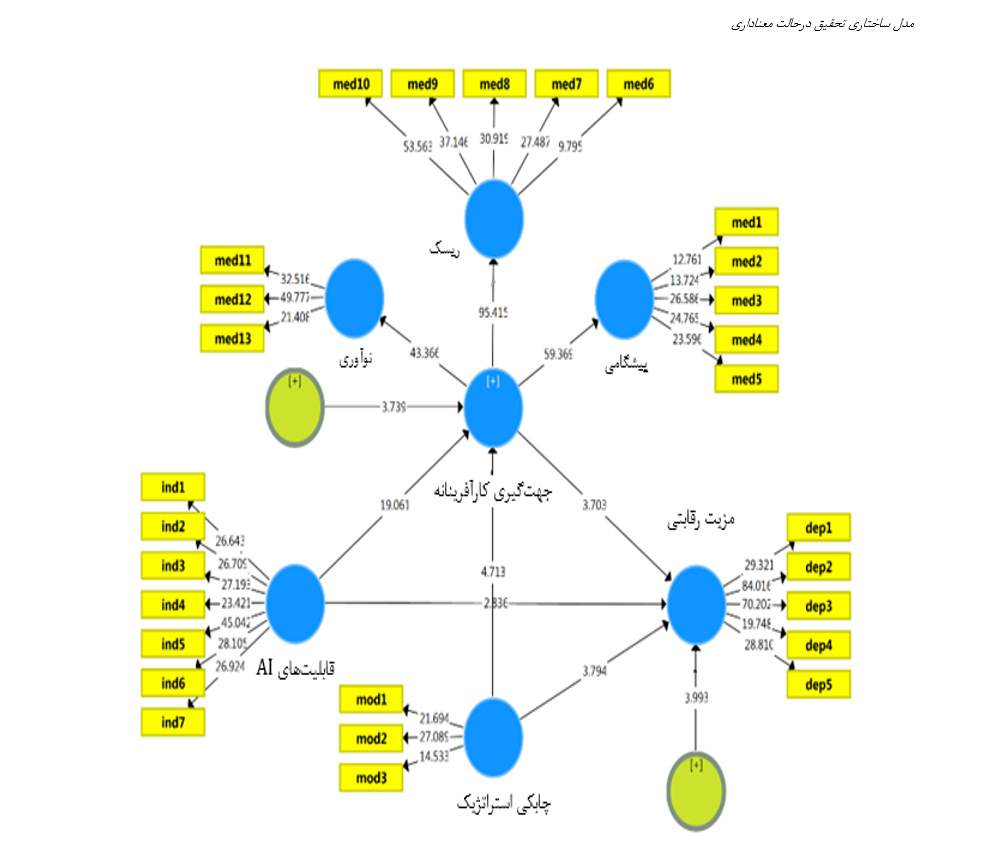
هدف این پژوهش تحلیل تأثیر قابلیتهای هوش مصنوعی بر مزیت رقابتی استارتاپهای فینتک در بازارهای بینالمللی با بررسی نقش میانجی جهتگیری کارآفرینانه و نقش تعدیلگر چابکی استراتژیک بود. این پژوهش از نظر هدف کاربردی و از حیث روش، توصیفی–پیمایشی و مبتنی بر گردآوری دادههای میدانی بود. جامعه آماری شامل مدیران و کارشناسان ارشد استارتاپهای فینتک شهر تهران بود که تعداد آنها حدود 500 نفر برآورد شد. بر اساس فرمول کوکران، حجم نمونه 215 نفر تعیین و با روش نمونهگیری تصادفی انتخاب شدند. دادهها از طریق پرسشنامه محققساخته شامل چهار سازه قابلیتهای هوش مصنوعی، مزیت رقابتی در بازارهای بینالمللی، جهتگیری کارآفرینانه و چابکی استراتژیک گردآوری شد. روایی ابزار با استفاده از روایی صوری و محتوایی تأیید گردید و پایایی آن با آلفای کرونباخ 0.897 در سطح مطلوب قرار داشت. تحلیل دادهها با بهرهگیری از مدلیابی معادلات ساختاری مبتنی بر حداقل مربعات جزئی و نرمافزار SmartPLS انجام شد. نتایج نشان داد قابلیتهای هوش مصنوعی تأثیر مثبت و معناداری بر جهتگیری کارآفرینانه دارند (β=0.696, t=19.061, p<0.001). همچنین جهتگیری کارآفرینانه تأثیر مثبت و معناداری بر مزیت رقابتی داشت (β=0.334, t=3.703, p<0.001). آزمون اثرات غیرمستقیم نشان داد جهتگیری کارآفرینانه نقش میانجی معناداری در رابطه بین قابلیتهای هوش مصنوعی و مزیت رقابتی ایفا میکند (β=0.198, t=3.541, p<0.001). افزون بر این، چابکی استراتژیک رابطه بین قابلیتهای هوش مصنوعی و جهتگیری کارآفرینانه را بهصورت معناداری تعدیل کرد (β=0.221, t=3.739, p<0.001). همچنین نقش تعدیلگر چابکی استراتژیک در رابطه میان قابلیتهای هوش مصنوعی و مزیت رقابتی نیز تأیید شد (β=0.235, t=3.993, p<0.001). یافتههای پژوهش نشان میدهد که قابلیتهای هوش مصنوعی بهعنوان یک منبع راهبردی میتوانند بهطور مستقیم و غیرمستقیم موجب تقویت مزیت رقابتی استارتاپهای فینتک در بازارهای بینالمللی شوند. این تأثیر از طریق ارتقای جهتگیری کارآفرینانه تشدید شده و در شرایط برخورداری از سطوح بالاتر چابکی استراتژیک اثربخشی بیشتری پیدا میکند.
دانلودها
مراجع
Agrawal, S., Gupta, R., & Singh, P. (2024). Operational Performance and AI Integration in Industrial Sectors. Journal of Business Research, 78(4), 210-230.
Alizadeh, H., M, K., Saberian, H., & Keramati, M. (2024). Qualitative Study to Propose Digital Marketing Based on Customer Experience: Considering Grounded Theory (GT). Business, Marketing, and Finance Open, 1(6), 86-98. https://doi.org/10.61838/bmfopen.1.6.8
Alizadeh, H., & Nazarpour Kashani, H. (2024). The Impact of Perceived Experience with ChatGPT on Online Consumers' Information Searching Behavior: An Empirical Study of Iranian College Students. Asia Pacific Journal of Marketing and Logistics. https://doi.org/10.1108/APJML-02-2024-0140
Alkhawaja, M. I., Halim, M. S. A., Abumandil, M. S., & Al-Adwan, A. S. (2022). System Quality and Students' Acceptance of the E-Learning System: The Serial Mediation of Perceived Usefulness and Intention to Use. Contemporary Educational Technology, 14(2). https://doi.org/10.30935/cedtech/11525
Alqahtani, M. (2023). Artificial Intelligence and Entrepreneurship Education: A Paradigm in Qatari Higher Education Institutions after the COVID-19 Pandemic. International Journal of Data and Network Science, 7(2), 695-706.
Alzahrani, S., & Bhunia, A. K. (2024). A Serial Mediation Model of the Relationship between Digital Entrepreneurial Education, Alertness, Motivation and Intentions. Sustainability, 16(20), 8858. https://doi.org/10.3390/su16208858
Anwar, I., Ahmad, A., Saleem, I., & Yasin, N. (2023). Role of Entrepreneurship Education, Passion and Motivation in Augmenting Omani Students' Entrepreneurial Intention: A Stimulus-Organism-Response Approach. The International Journal of Management Education, 21(3), 100842. https://doi.org/10.1016/j.ijme.2023.100842
Chen, L., Ifenthaler, D., Yau, J. Y. K., & Sun, W. (2024). Artificial Intelligence in Entrepreneurship Education: A Scoping Review. Education + Training. https://doi.org/10.1108/ET-05-2023-0169
Ersoy, A. B. (2024). Artificial Intelligence Applications Used in Online Retail in China and Their Relationship to Customer Satisfaction and Loyalty. International Journal of Business and Applied Social Science, 8-17. https://doi.org/10.33642/ijbass.v10n3p2
Fossen, F. M., & Sorgner, A. (2021). Digitalization of Work and Entry into Entrepreneurship. Journal of Business Research, 125, 548-563. https://doi.org/10.1016/j.jbusres.2019.09.019
Gardan, I. P., Manu, M. B., Gardan, D. A., Negoita, L. D. L., Pastiu, C. A., Ghita, E., & Zaharia, A. (2025). Adopting AI in Education: Optimizing Human Resource Management Considering Teacher Perceptions. Frontiers in Education, 10, 1488147. https://doi.org/10.3389/feduc.2025.1488147
Gimpel, H., Hall, K., Decker, S., Eymann, T., Lammermann, L., Madche, A., Roglinger, M., Ruiner, C., Schoch, M., & Schoop, M. (2023). Unlocking the Power of Generative AI Models and Systems Such as GPT-4 and ChatGPT for Higher Education: A Guide for Students and Lecturers. https://hdl.handle.net/10419/270970
Ruiz-Rojas, L. I., Salvador-Ullauri, L., & Acosta-Vargas, P. (2024). Collaborative Working and Critical Thinking: Adoption of Generative Artificial Intelligence Tools in Higher Education. Sustainability, 16(13), 5367. https://doi.org/10.3390/su16135367
Seraj, A. H. A., Fazal, S. A., & Alshebami, A. S. (2022). Entrepreneurial Competency, Financial Literacy and Sustainable Performance: Examining the Mediating Role of Entrepreneurial Resilience among Saudi Entrepreneurs. Sustainability, 14(17), 10689. https://doi.org/10.3390/su141710689
Tadokoro, M. (2024). The Strategist's Guide for Startups: Five Perspectives and 23 Frameworks to Drive Success. Diamond.
Taylor, D. W., & Thorpe, R. (2004). Entrepreneurial Learning: A Process of Co-Participation. Journal of Small Business and Enterprise Development, 11(2), 203-211. https://doi.org/10.1108/14626000410537146
Terblanche, N. H. D., & Tau, T. (2025). Exploring the Use of a Goal-Attainment, Artificial Intelligence (AI) Chatbot Coach to Support First-Time Graduate Employees. Industry and Higher Education, 39(3), 1-12. https://doi.org/10.1177/09504222231153837
Yamaguchi, T., Iwata, K., & Sugiyama, Y. (2024). Do Accelerator Supports Vary According to the Growth Phase and Type of Startups? A Discussion and Empirical Analysis Using RBV. Japan Academy of Business Administration Journal, 56, 3-15.
Zewe, A. (2023). Explained: Generative AI. https://news.mit.edu/2023/explained-generative-ai-1109
دانلودها
گاهشمار انتشار
- ارسال
- بازنگری
- پذیرش
شماره
نوع مقاله
مجوز
حق نشر 2025 Sadaf Saeidi (Author); Hamid Alizadeh

این پروژه تحت مجوز بین المللی Creative Commons Attribution-NonCommercial 4.0 می باشد.