ارائه چارچوب مفهومی توسعه ظرفیتهای سازمانی جهت هوشمندسازی منابع انسانی براساس برنامه هفتم توسعه در وزارت نفت: یک مطالعه کیفی
کلمات کلیدی:
برنامه هفتم توسعه, تحول دیجیتال, ظرفیتهای سازمانی, وزارت نفت, هوشمندسازی منابع انسانیچکیده
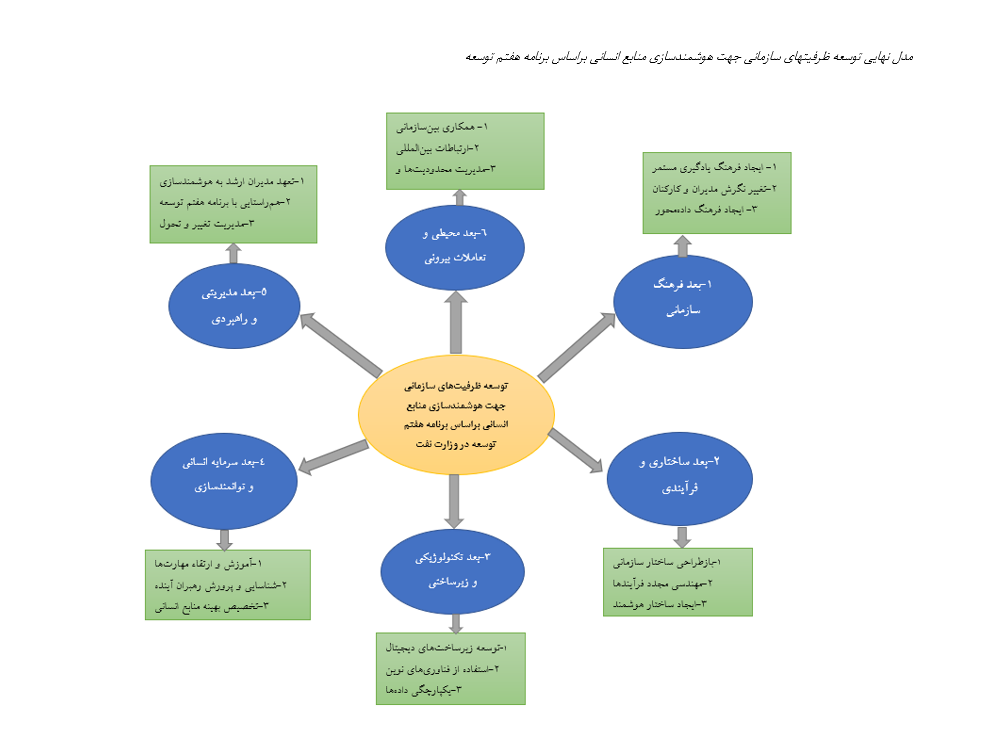
هدف این پژوهش ارائه چارچوبی مفهومی برای شناسایی و تبیین ظرفیتهای سازمانی موردنیاز جهت تحقق هوشمندسازی منابع انسانی در وزارت نفت بر مبنای الزامات برنامه هفتم توسعه و فراهمسازی مبنایی برای سیاستگذاری و تحول دیجیتال در این حوزه بود. این پژوهش از نوع کاربردی، اکتشافی و کیفی بود و با رویکرد تحلیل مضمون انجام شد. دادهها از طریق مصاحبههای نیمهساختاریافته با 12 نفر از مدیران ارشد و میانی وزارت نفت، خبرگان منابع انسانی، متخصصان فناوری اطلاعات و استادان دانشگاه گردآوری شد. مشارکتکنندگان با روش نمونهگیری هدفمند و گلولهبرفی انتخاب شدند و فرایند گردآوری دادهها تا دستیابی به اشباع نظری ادامه یافت. تحلیل دادهها با استفاده از نرمافزار MAXQDA و از طریق مراحل کدگذاری باز، محوری و انتخابی انجام شد. نتایج تحلیل مضامین نشان داد که هوشمندسازی منابع انسانی در وزارت نفت یک فرایند تحول سازمانی چندبعدی است که تحقق آن به توسعه همزمان شش ظرفیت کلیدی شامل ظرفیت فناورانه و زیرساختی، ظرفیت سرمایه انسانی، ظرفیت ساختاری و فرآیندی، ظرفیت فرهنگی، ظرفیت مدیریتی و راهبردی، و ظرفیت محیطی و نهادی وابسته است. یافتهها بیانگر آن بود که فقدان هر یک از این ظرفیتها میتواند اثربخشی سرمایهگذاریهای فناورانه را کاهش دهد. همچنین مشخص شد که فرهنگ دادهمحور، رهبری تحولگرا، حکمرانی داده، توانمندسازی دیجیتال کارکنان و بازطراحی ساختارها و فرآیندها نقش محوری در موفقیت هوشمندسازی منابع انسانی دارند. در نهایت، یک مدل مفهومی یکپارچه استخراج شد که تعامل پویا میان ابعاد ششگانه ظرفیت سازمانی را بهعنوان پیشنیاز تحقق مدیریت هوشمند منابع انسانی تبیین میکند. نتایج پژوهش نشان داد که هوشمندسازی منابع انسانی در وزارت نفت فراتر از استقرار فناوریهای نوین بوده و مستلزم توسعه متوازن ظرفیتهای سخت و نرم سازمانی است. چارچوب ارائهشده میتواند بهعنوان نقشه راهی برای سیاستگذاران و مدیران وزارت نفت در مسیر تحول دیجیتال، ارتقای بهرهوری، چابکی سازمانی و توسعه سرمایه انسانی مورد استفاده قرار گیرد.
دانلودها
مراجع
Abdullah, N. A. S., Noor, N. L. M., & Ibrahim, E. N. M. (2013). Resilient Organization: Modelling the Capacity for Resilience. 2013 International Conference on Research and Innovation in Information Systems (ICRIIS),
Afshari, M., & Karimi, A. (2021). Investigating the Challenges and Barriers of Human Resource Smartization in Governmental Organizations. Human Resource Management Quarterly, 13(3), 75-98.
Aggarwal, V. A., Posen, H. E., & Workiewicz, M. (2017). Adaptive Capacity to Technological Change: A Microfoundational Approach. Strategic management journal, 38(6), 1212-1231. https://doi.org/10.1002/smj.2584
Al-Faouri, E. H., Abu Huson, Y., Aljawarneh, N. M., & Alqmool, T. J. (2024). The Role of Smart Human Resource Management in the Relationship between Technology Application and Innovation Performance. Sustainability, 16(11), 4747. https://doi.org/10.3390/su16114747
Alaerts, G. J., & Kaspersma, J. M. (2009). Progress and Challenges in Knowledge and Capacity Development. In Capacity Development for Improved Water Management (Vol. 3, pp. 3-30). https://doi.org/10.1201/b10532-1
Asrif, M. I., Handayani, P. W., & Harahap, N. C. (2026). Indonesian organization digital innovation: the influence of business process management capabilities. Business Process Management Journal, 1-26.
Bayat, G. (2021). The Necessity of Smartizing Human Resource Management toward Productivity. Proceedings of the 9th International Conference on Financial Management, Business, Banking, Economics and Accounting,
De Alwis, A. C., Andrlić, B., & Šostar, M. (2022). The Influence of E-HRM on Modernizing the Role of HRM Context. Economies, 10(8), 181. https://doi.org/10.3390/economies10080181
Hamidi, R., & Rahimi, K. (2022). Designing a Conceptual Model for Human Resource Smartization. Strategic Human Resources Quarterly.
Kazemi, S., & Soltani, M. (2021). Investigating Digital Transformation Models in the Human Resources of the Ministry of Petroleum. Human Resources in Petroleum Industry Quarterly.
Khoshhal, F., Sargolzaei, A., & Vazifeh, Z. (2023). Designing and Explaining a Human Resource Empowerment Model Based on Organizational Intelligence Capabilities and Interpersonal Relationships Using a Mixed-Method Approach. https://dor.isc.ac/dor/20.1001.1.22516069.1402.14.4.3.9
Legge, K. (2014). Human Resource Management: A Critical Analysis. In New Perspectives on Human Resource Management (pp. 19-40). Routledge. https://www.taylorfrancis.com/chapters/edit/10.4324/9781315740560-2/human-resource-management-critical-analysis-karen-legge
Lengnick-Hall, M. L., Neely, A. R., & Stone, C. B. (2018). Human Resource Management in the Digital Age: Big Data, HR Analytics and Artificial Intelligence. In Management and Technological Challenges in the Digital Age (pp. 1-30). CRC Press. https://doi.org/10.1201/9781351238922-1
Liao, Q., Li, D., Zhang, K., & Chang, H. (2023). Applications of Artificial Intelligence in the Oil and Gas Industry. Frontiers in Environmental Science, 11, 1163593. https://doi.org/10.3389/feart.2023.1163593
Sarfarazi, M., Hashemzadeh, S. F., & Motamed, M. J. (2023). Designing a Human Resource Excellence Model in Smart Organizations. Proceedings of the 10th National Conference on Modern Studies and Research in Humanities, Management and Entrepreneurship of Iran, Tehran.
Sharifi, H., & Rezaei, P. (2022). The Effect of Organizational Culture on the Adoption of Emerging Technologies in Human Resource Management. Organizational Culture and Innovation Quarterly.
Soveydi, A., Mohammadi, M., Rezaeifar, H., & Mahmoudzadeh, M. (2024). Presenting a Human Resource Development Model toward Organizational Excellence in the National Iranian Drilling Company. http://iieshrm.ir/article-1-1653-fa.html
Stelmaszak, M., Joshi, M., & Constantiou, I. (2025). Artificial Intelligence as an Organizing Capability Arising From Human‐Algorithm Relations. Journal of Management Studies. https://doi.org/10.1111/joms.70003
Tenggono, E., Soetjipto, B. W., & Sudhartio, L. (2025). Dynamic Managerial Capabilities In action: Advancing Strategic Agility and Digital Readiness in Healthcare Organizations. Journal of Organizational Change Management. https://doi.org/10.1108/jocm-12-2024-0772
Tran, M. N. (2025). Fostering Organizational Innovation Capability Through Transformational Leadership and Creativity in Public Educational Institutions: Moderating Roles of AI-enabled Job Complexity and Innovation Climate. International Journal of Educational Management, 1-17. https://doi.org/10.1108/ijem-12-2024-0851
Zacca, R. (2026). Leveraging Network Capability for Small Enterprise Success: The Critical Roles of Organizational Capability and Alertness. Journal of Small Business Management, 64(1), 287-310. https://doi.org/10.1080/00472778.2025.2478448

دانلود
چاپ شده
ارسال
بازنگری
پذیرش
شماره
نوع مقاله
مجوز
حق نشر 1405 Mohammad Mahdi Hadi Goshayesh (Author); Mashallah Valikhani Dehaghani; Hassan Amiri (Author)

این پروژه تحت مجوز بین المللی Creative Commons Attribution-NonCommercial 4.0 می باشد.