طراحی مدل هوش کسبوکار برای ارتقای عملکرد برند در صنعت مواد غذایی استان تهران با رویکرد دادهبنیاد
DOI:
https://doi.org/10.61838/kman.jtesm.500کلمات کلیدی:
هوش, هوش کسب و کار, برند, عملکرد برند, صنعت مواد غذاییچکیده
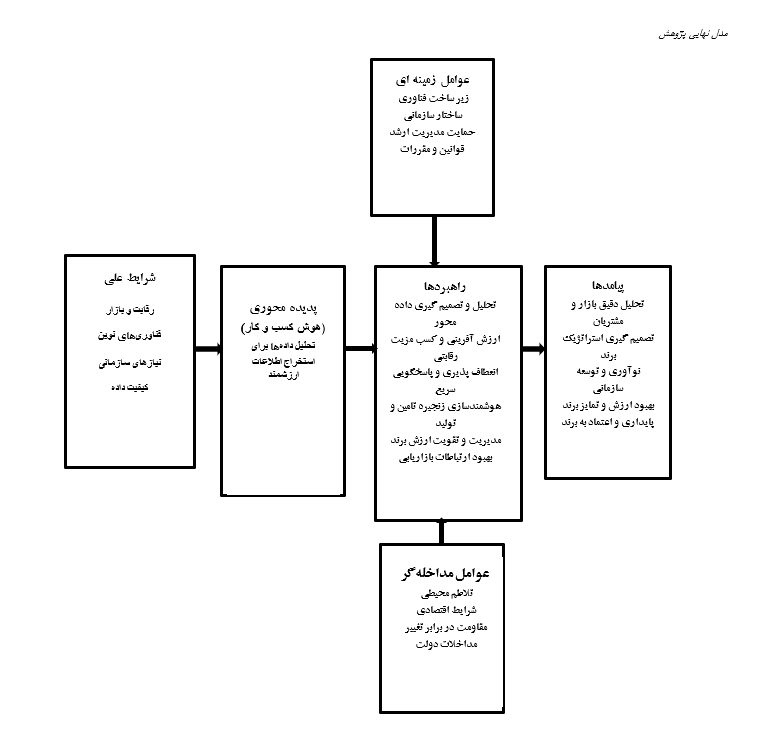
هدف پژوهش حاضر طراحی و تبیین یک مدل بومی هوش کسبوکار برای ارتقای عملکرد برند شرکتهای فعال در صنعت مواد غذایی استان تهران بود. این پژوهش از نظر هدف، کاربردی و از نظر ماهیت و طرح، اکتشافی با رویکرد کیفی نظریه دادهبنیاد بود. جامعه پژوهش شامل مدیران و کارشناسان ارشد صنعت مواد غذایی استان تهران بود که با استفاده از نمونهگیری هدفمند و قضاوتی انتخاب شدند. دادهها از طریق مصاحبههای عمیق و جهتدار با 12 مشارکتکننده واجد معیارهای تخصصی و تجربی گردآوری و بر اساس الگوی نظاممند اشتراوس و کوربین، طی مراحل کدگذاری باز، محوری و انتخابی تحلیل شدند. برای ارزیابی اعتبار یافتهها از بازخورد مشارکتکنندگان و بررسی همکاران و برای سنجش پایایی از کدگذاری مجدد مصاحبهها استفاده شد؛ ضریب پایایی بازآزمون کدگذاری برابر با 0.83 به دست آمد. تحلیل دادهها نشان داد رقابت و تحولات بازار، فناوریهای نوین، نیازهای سازمانی و کیفیت دادهها، شرایط علّی شکلگیری هوش کسبوکار را تشکیل میدهند. پدیده محوری مدل، تحلیل دادهها برای استخراج اطلاعات ارزشمند بود که جمعآوری، انبارش، تحلیل، بهکارگیری دادهها و پایش شاخصهای کلیدی عملکرد را دربر میگرفت. زیرساخت فناوری، ساختار سازمانی، حمایت مدیریت ارشد و قوانین و مقررات بهعنوان عوامل زمینهای، اجرای مدل را تسهیل کردند؛ درحالیکه تلاطم محیطی، شرایط اقتصادی، مقاومت در برابر تغییر و مداخلات دولت نقش مداخلهگر داشتند. راهبردهای مؤثر شامل تحلیل و تصمیمگیری دادهمحور، ارزشآفرینی و کسب مزیت رقابتی، انعطافپذیری، هوشمندسازی زنجیره تأمین و تولید، تقویت ارزش برند و بهبود ارتباطات بازاریابی بود. اجرای این راهبردها به تحلیل دقیقتر بازار و مشتریان، تصمیمگیری راهبردی برند، نوآوری سازمانی، افزایش ارزش و تمایز برند و تقویت پایداری و اعتماد به برند منجر شد. هوش کسبوکار در صنعت مواد غذایی یک قابلیت راهبردی و پویاست که با تبدیل دادههای سازمانی و بازار به دانش کاربردی، زمینه تصمیمگیری اثربخش، پاسخگویی سریع به تحولات، افزایش اعتماد مشتریان و دستیابی به مزیت رقابتی پایدار برند را فراهم میسازد.
دانلودها
مراجع
Agaba, M., & Kalu, E. (2019). Brand Equity and Competitive Advantage in Alcoholic Beverage Products. International Journal of Management and Network Economics, 4(3), 246-262. https://doi.org/10.1504/IJMNE.2019.105869
Bahrami, M., & Nejad, K. (2021). Business Intelligence in Local Enterprises: A Study of Barriers and Implementation Strategies. Iranian Journal of Management Studies, 9(2), 110-125.
Borissova, D., Cvetkova, P., Garvanov, I., & Garvanova, M. (2020). A Framework of Business Intelligence System for Decision Making in Efficiency Management. In. https://doi.org/10.1007/978-3-030-47679-3_10
Bozic, K., & Dimovski, V. (2021). Business Intelligence and Analytics Use, Innovation Ambidexterity, and Firm Performance: A Dynamic Capabilities Perspective. The Journal of Strategic Information Systems, 28(4), 101578. https://doi.org/10.1016/j.jsis.2019.101578
Bui, M., & Le, L. (2023). Digital Capability and Creative Capability to Boost Firm Performance and Formulate Differentiated CSR-Based Strategy. Heliyon, 9(3), e14241. https://doi.org/10.1016/j.heliyon.2023.e14241
Champa, S. S., & Segall, R. S. (2026). Integrated Data Analytics, Business Intelligence, and Machine Learning Architecture for SMEs. International Journal of Business Analytics, 13(1), 1-38. https://doi.org/10.4018/ijban.409371
Chen, Y., & Liu, Q. (2022). The Role of Business Intelligence in Strategic Decision-Making and Brand Performance in the Asian Food Industry. Asia Pacific Journal of Marketing and Logistics, 34(2), 98-120.
Esmaili, R., & Mohammadi, S. (2021). Data Security and Business Intelligence in the Food Industry: Risks and Solutions. Journal of Business and Management, 25(1), 50-67.
Gonzalez, R., & Fernandez, M. (2023). Business Intelligence and Innovation Strategies: Their Impact on Brand Performance in European SMEs. European Journal of Innovation Management, 26(1), 77-95.
Hamad, F., Al-Aamr, R., Jabbar, S. A., & Fakhuri, H. (2021). Business Intelligence in Academic Libraries in Jordan: Opportunities and Challenges. Ifla Journal, 47(1). https://doi.org/10.1177/0340035220931882
Hashemi, Z., & Alizadeh, H. (2022). A Theoretical Framework for Business Intelligence and Its Impact on Brand Loyalty in the Iranian Market. International Journal of Brand Management, 18(3), 180-195.
Hosseingoli, A., & Khadem Hojjati, T. (2022). The Effect of Business Intelligence in Marketing on Increasing Sales in Manufacturing Companies. Accounting and Management Outlook Quarterly, 5(59).
Huang, Z.-X., Savita, K. S., & Jiang, Z.-J. (2022). The Business Intelligence Impact on the Financial Performance of Start-Ups. Information Processing & Management, 59, 102761. https://doi.org/10.1016/j.ipm.2021.102761
Khatibi Shahkhali, S. (2022). Investigating the Effect of Business Intelligence, Business Digitalization, and Information Technology Capability on Financial Performance Based on the Role of Innovation: A Study of Employees of Bank Melli in Guilan Province Rahbord Shomal Institute of Higher Education].
Lee, J., & Lee, S. (2023). Impact of Business Intelligence on Brand Performance through Big Data Analytics in the Food Industry. Journal of Business Intelligence Research, 15(1), 45-67.
Matlabbi, A., Hosseini, S., & Faryabi, M. (2024). Identifying the Fundamental Dimensions and Components Affecting the Success of Business Intelligence Systems Using a Meta-Synthesis Approach. Science and Technology Policy Letters Quarterly, 14(3).
Nguyen, T., & Tran, P. (2022). The Effects of Business Intelligence on Digital Marketing Strategies and Brand Performance in the Southeast Asian Food and Beverage Industry. Journal of Marketing Analytics, 10(2), 123-144.
Pourgholi, A., Eydi, H., & Keshavarz, F. (2025). Explaining the Key Factors Influencing Business Intelligence in Online Sports Enterprises. Sports Marketing Studies, 6(1), 32-44. https://gsmsmr.uok.ac.ir/article_63526_en.html?lang=fa
Rahimi, M., & Ajoudani, M. (2023). The Effect of Marketing Intelligence on the Supply Chain with the Mediating Role of Product Innovation Performance: A Study of Kalleh Company in Tehran Province First National Conference on New Approaches to Management, Economics, Global Trade, Accounting, and Banking in the Third Millennium, Ahvaz. https://civilica.com/doc/1894768
Rajabzadeh, A., & Hosseini, M. (2023). Challenges in Implementing Business Intelligence in the Iranian Food Industry: A Focus on Brand Performance. Journal of Iranian Industrial Management, 14(3), 180-195.
Rajala, A., & Tidstrom, A. (2021). Examining the Effects of a Coopetitive Mindset on SME Performance: The Moderating Role of Growth. Industrial Marketing Management, 105, 351-358. https://doi.org/10.1016/j.indmarman.2022.06.012
Rashidi Chefakhour, H., & Rezaeian, A. (2021). The Role of Brand Equity and Creativity in the Effect of Business Intelligence on Financial Performance: A Study of Private Banks in Khuzestan Province First International Conference on the Advancement of Management, Economics, and Accounting Sciences, Sari.
Rouhani, S., & Rabiei Savoji, S. (2016). A Model for Evaluating the Success of Business Intelligence Tools. Journal of Information Technology Management Studies, 4(15).
Rumanti, A. F., Rizana, F., & Achmad, F. (2023). Exploring the Role of Organizational Creativity and Open Innovation in Enhancing SMEs Performance. Journal of Open Innovation: Technology, Market, and Complexity, 9, 100045-100041-100015. https://doi.org/10.1016/j.joitmc.2023.100045
Sartipzade, S., Rastgar, A., & vishlaghi, M. (2025). The Impact of Business Intelligence on Performance with Emphasis on the mediating role of Innovation Ambidexterity and Dynamic Capabilities. Journal of Advertising and Sales Management, 6(1), 276-297. https://www.magiran.com/paper/2844361/the-impact-of-business-intelligence-on-performance-with-emphasis-on-the-mediating-role-of-innovation-ambidexterity-and-dynamic-capabilities?lang=en
Shuvo, S. A., Tabassum, M., Tafannum, N., & Chadni, S. (2025). Machine learning in business intelligence: From data mining to strategic insights. Review of Applied Science and Technology, 4(2), 339-369. https://doi.org/10.63125/drb8py41
Smith, K., & Johnson, L. (2020). Business Intelligence and Its Role in Strategic Decision-Making and Brand Performance in the U.S. Food Industry. Journal of Strategic Management, 28(4), 189-207.
Solomon, O., Emmanuel, F., Simon, J., & Mendez, D. (2025). Leveraging Data Analytics, Business Intelligence, Artificial Intelligence, and Predictive Modeling to Foster Innovation, Strengthen Startups, Mitigate Operational Risks, and Accelerate Economic Growth in the United States. Ijfei, 2(4), 85-97. https://doi.org/10.54660/ijfei.2025.2.4.85-97
Tian, W. (2025). Enhancing Financial Decision-Making Through Automated Business Intelligence Systems. International Journal of E-Collaboration, 21(1), 1-20. https://doi.org/10.4018/ijec.367575
Trieu, P., Van Nguyen, T. T. M., Nguyen, H. M., Vu, K., & Tran, K. (2023). Information Technology Capabilities and Organizational Ambidexterity Facilitating Organizational Resilience and Firm Performance of SMEs. Asia Pacific Management Review, 28(4), 544-555. https://doi.org/10.1016/j.apmrv.2023.03.004
Vafaei Basir, H., & Farajpour, S. (2022). Investigating the Effect of Business Intelligence on Marketing with Emphasis on Business Innovation: A Study of Food Industry Companies in Hamadan Province Ninth Scientific Research Conference on the Development and Promotion of Management and Accounting Sciences in Iran, Tehran. https://civilica.com/doc/1681577
Valamanesh, M. (2015). Investigating the Effect of Business Intelligence on the Brand Equity of Export Products of Food Industry Companies Urmia University].
Williams, D., & Scott, T. (2021). Business Intelligence Systems and Their Impact on Financial and Brand Performance in North American Food Companies. Journal of Business Economics and Management, 22(3), 311-329.
دانلودها
گاهشمار انتشار
- ارسال
- بازنگری
- پذیرش
شماره
نوع مقاله
مجوز
حق نشر 2025 Arezoo Havaie (Author); Seyed Ahmad Ghasemi; Nader Khalesi (Author)

این پروژه تحت مجوز بین المللی Creative Commons Attribution-NonCommercial 4.0 می باشد.