تأثیر بهکارگیری هوش مصنوعی بر کارآفرینی
کلمات کلیدی:
هوش مصنوعی, کارآفرینیچکیده
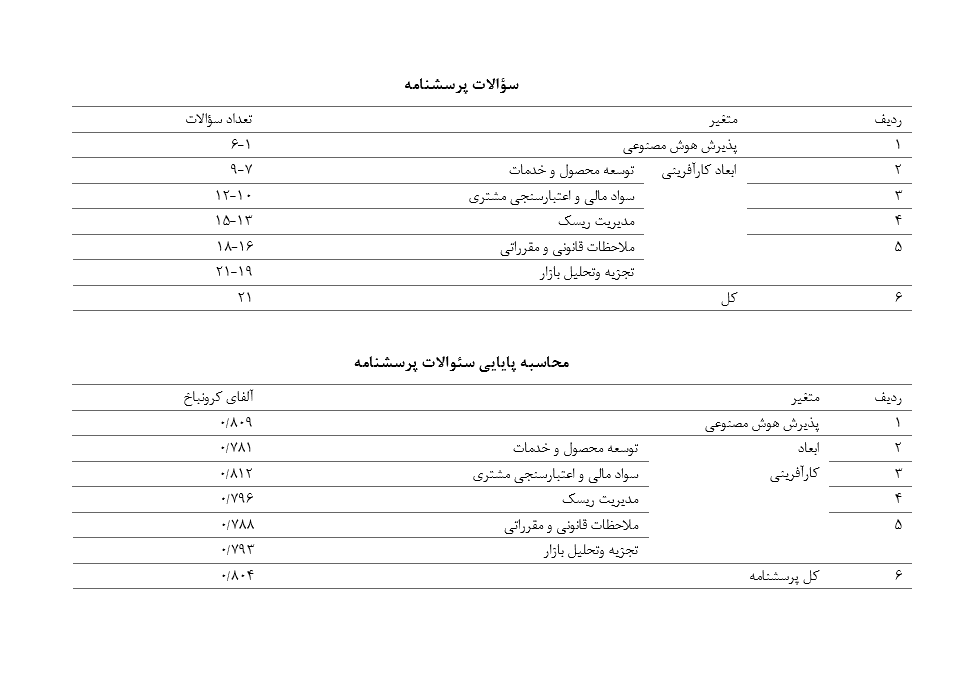
پژوهش حاضر با هدف بررسی تأثیر پذیرش و بهکارگیری هوش مصنوعی بر شناسایی فرصتهای کارآفرینانه با تأکید بر توسعه محصول و خدمات، سواد مالی و اعتبارسنجی مشتری، مدیریت ریسک، ملاحظات قانونی و مقرراتی و تجزیهوتحلیل بازار در میان کارآفرینان شهرستان چابهار انجام شد. این پژوهش از نظر هدف کاربردی و از نظر روش، توصیفی–پیمایشی و میدانی بود. جامعه آماری شامل 340 کارآفرین شهرستان چابهار بود که بر اساس فرمول کوکران، 181 نفر با روش نمونهگیری تصادفی ساده انتخاب شدند. دادهها با استفاده از پرسشنامه استاندارد 21 گویهای شامل پذیرش هوش مصنوعی و پنج بعد کارآفرینی گردآوری شد. پایایی کل پرسشنامه بر اساس آلفای کرونباخ 0.804 و ضرایب پایایی سازهها بین 0.781 تا 0.812 بود. با توجه به غیرنرمال بودن توزیع متغیرها در آزمون کولموگروف–اسمیرنوف، مدل اندازهگیری و فرضیههای پژوهش با تحلیل عاملی تأییدی و مدلسازی معادلات ساختاری مبتنی بر حداقل مربعات جزئی در نرمافزار SmartPLS بررسی شدند. نتایج مدل ساختاری نشان داد پذیرش هوش مصنوعی بر توسعه محصول و خدمات (β=0.415، t=3.909)، سواد مالی و اعتبارسنجی مشتری (β=0.217، t=5.111)، مدیریت ریسک (β=0.629، t=2.820)، ملاحظات قانونی و مقرراتی (β=0.301، t=4.525) و تجزیهوتحلیل بازار (β=0.557، t=6.019) اثر مثبت و معناداری داشت. ضرایب تعیین برای این پنج متغیر بهترتیب 0.691، 0.685، 0.627، 0.701 و 0.644 بود که قدرت تبیین بالای مدل را نشان داد. همچنین اندازه اثر برای چهار مسیر در سطح بزرگ و برای مسیر سواد مالی و اعتبارسنجی مشتری در سطح متوسط قرار داشت و مقادیر Q² مثبت و بالا، قدرت پیشبینی مناسب مدل را تأیید کرد. پذیرش هوش مصنوعی میتواند بهعنوان یک قابلیت راهبردی در تقویت ابعاد مختلف کارآفرینی عمل کند و بهویژه از طریق ارتقای مدیریت ریسک، تحلیل بازار و توسعه محصول و خدمات، ظرفیت کارآفرینان برای شناسایی و بهرهبرداری از فرصتهای کسبوکار را افزایش دهد؛ بنابراین، توسعه زیرساختهای فناورانه، آموزش کارآفرینان و تقویت آمادگی سازمانی برای پذیرش هوش مصنوعی میتواند زمینه بهرهگیری مؤثرتر از این فناوری را فراهم سازد.
دانلودها
مراجع
Alizadeh, H., Damavandinejad, M., & Behradfar, A. (2026). The Role of Artificial Intelligence Capabilities in Strengthening the Effect of B2B Marketing on Export Performance: A Study in the Petrochemical Industry. Technology in Entrepreneurship and Strategic Management, 5(2).
Barani, S., Nosrat-Panah, R., & Beigi, S. (2026). The Advantage of Artificial Intelligence in the Formation of Digital Entrepreneurship: The Role of ChatGPT Acceptance in Guiding the Planned Behavior of Potential Entrepreneurs.
Elsa, D., Islami, N., Mahdum, M., Copriady, J., & Putra, Z. H. (2026). Transforming Entrepreneurship Education in the Age of Artificial Intelligence: A Bibliometric Review and Future Research Agenda. https://doi.org/10.1007/s41959-026-00174-z
Kleinert, S., & Vismara, S. (2026). The Reconfiguration of Entrepreneurship: How Digital Platforms and Artificial Intelligence Transform the Entrepreneurial Process. Eurasian Business Review, 1-24. https://doi.org/10.1007/s40821-025-00339-1
Reshadi, M. S. (2025). A review of medical tourism entrepreneurship and marketing at regional and global levels and a quick glance into the applications of artificial intelligence in medical tourism. Ai & Society. https://doi.org/10.1007/s00146-024-02178-6
Sadeghi, Z., & Shafipour Motlagh, F. (2025). Designing an Empowerment Model for Entrepreneurial School Principals Using Artificial Intelligence. Entrepreneurship Education and Management, 4(1), 69-90. https://doi.org/10.22126/eme.2025.11908.1157
Saeed, M. N. (2025). Fostering Sustainable Productive Entrepreneurs by Green Transformational Leadership Efficiency and Adoption of Artificial Intelligence-Tools in Saudi Micro and Small Enterprises. https://doi.org/10.21203/rs.3.rs-8041181/v1
Saeidi, S., & Alizadeh, H. (2026). The Effect of Artificial Intelligence Capabilities on Competitive Advantage in International Markets: The Mediating Role of Entrepreneurial Orientation and the Moderating Role of Strategic Agility. Technology in Entrepreneurship and Strategic Management, 5(2).
Singh, R., Khan, S., Joshi, A., Katragadda, R., & Kumar, V. (2026). Exploring the Role of Artificial Intelligence on Business Innovation and Entrepreneurship. Strategy & Leadership, 54(3), 302-322. https://doi.org/10.1108/SL-04-2025-0080
Thottoli, M. M., Cruz, M. E., & Al Abri, S. S. S. (2025). The Incubation Revolution: Transforming Entrepreneurial Education with Artificial Intelligence. Asia Pacific Journal of Innovation and Entrepreneurship, 19(1), 2-23.
Uriarte, S., Baier-Fuentes, H., Espinoza-Benavides, J., & Inzunza-Mendoza, W. (2026). Artificial Intelligence Technologies and Entrepreneurship: A Hybrid Literature Review. Review of managerial science, 20(1), 251-299. https://doi.org/10.1007/s11846-025-00839-4
Waseem, M., & Shehryar, M. (2025). Harnessing Artificial Intelligence for New Business Development: A Study of Malaysian Entrepreneurial Students. BRDR, 5(1), 21-32. https://doi.org/10.70890/brdr.2025.5103
Yu, G., Ramayah, T., & Lin, Z. (2025). Toward Understanding the Role of Generative AI in Entrepreneurship Education: A Systematic Review. Computers and Education: Artificial Intelligence, 9, 100470. https://doi.org/10.1016/j.caeai.2025.100470
Zolghadr, A., Sarmad Saeidi, S., & Ghasemi, B. (2026). Designing a Model for the Application of Artificial Intelligence in the Export of Electronic Industry Products. Technology in Entrepreneurship and Strategic Management, 5(1), 1-18. https://journaltesm.com/index.php/journaltesm/article/view/389
دانلودها
گاهشمار انتشار
- ارسال
- بازنگری
- پذیرش
شماره
نوع مقاله
مجوز
حق نشر 2025 Hossein Dehghanjazani (Author); Ebrahim Qivaki; Somayeh Ghajari (Author)

این پروژه تحت مجوز بین المللی Creative Commons Attribution-NonCommercial 4.0 می باشد.