شناسایی و مقایسه چالشهای سیاستی توسعه بانکداری الکترونیک و نوعشناسی آن در بانکهای منتخب (ملت، صادرات، تجارت و رفاه)
کلمات کلیدی:
بانکداری الکترونیک, چالشهای سیاستی, تحول دیجیتالچکیده
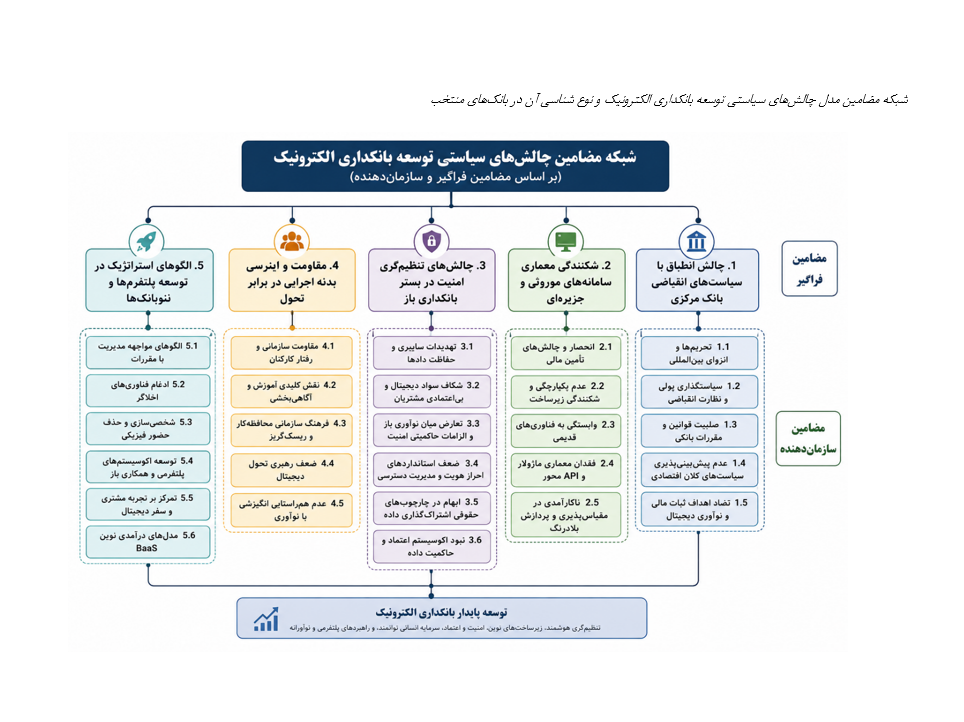
هدف این پژوهش شناسایی، مقایسه و نوعشناسی چالشهای سیاستی مؤثر بر توسعه بانکداری الکترونیک در بانکهای ملت، صادرات، تجارت و رفاه و تبیین الگوهای متفاوت مواجهه این بانکها با الزامات تحول دیجیتال بود. پژوهش از نظر هدف کاربردی و از نظر رویکرد، کیفی و اکتشافی بود و با استفاده از روش تحلیل مضمون استقرایی انجام شد. مشارکتکنندگان شامل مدیران ارشد، کارشناسان صنعت بانکداری و خبرگان دانشگاهی آشنا با سیاستگذاری و بانکداری الکترونیک بودند که با نمونهگیری هدفمند و گلولهبرفی انتخاب شدند. اشباع دادهها پس از مصاحبه دهم مشاهده شد و برای تثبیت یافتهها پنج مصاحبه تکمیلی انجام گرفت؛ بنابراین، حجم نهایی نمونه 15 نفر بود. دادهها از طریق مصاحبههای نیمهساختاریافته گردآوری و پس از پیادهسازی، کدگذاری و سازماندهی در نرمافزار MAXQDA تحلیل شدند. اعتبار یافتهها از طریق بازبینی مکرر کدها و مضامین، بازآزمون و توافق میان کدگذاران بررسی شد. تحلیل دادهها نشان داد چالشهای توسعه بانکداری الکترونیک در پنج مضمون فراگیر بههمپیوسته قابل تبیین است: چالش انطباق با سیاستهای انقباضی بانک مرکزی، شکنندگی معماری سامانههای موروثی و جزیرهای، چالشهای تنظیمگری امنیت در بستر بانکداری باز، مقاومت و اینرسی بدنه اجرایی در برابر تحول، و الگوهای استراتژیک توسعه پلتفرمها و نئوبانکها. مقایسه بانکها نشان داد مواجهه با الزامات سیاستی یکسان نیست؛ بانک ملت بیشتر الگوی تطبیق سختگیرانه با مقررات، بانکهای صادرات و تجارت الگوی انعطافپذیرتر و استفاده از راهکارهای جایگزین، و بانک رفاه گرایش بیشتری به انضباط مقرراتی نشان دادند. همچنین، شکاف سواد دیجیتال و بیاعتمادی مشتریان، فشارهای امنیت سایبری، عدم یکپارچگی سامانهها و مقاومت سازمانی بهصورت متقابل ظرفیت نوآوری دیجیتال را محدود میکنند، درحالیکه حرکت به بانکداری پلتفرمی، هوش مصنوعی، خدمات شخصیسازیشده و نئوبانکها مسیر راهبردی آینده را شکل میدهد. توسعه پایدار بانکداری الکترونیک مستلزم گذار از سیاستگذاری یکنواخت و صرفاً کنترلی به تنظیمگری منعطف و متناسب با ظرفیت بانکها، نوسازی معماری فناوری، تقویت حکمرانی داده و امنیت سایبری، توانمندسازی کارکنان و مشتریان و حمایت مدیریتی از نوآوری و بانکداری پلتفرمی است.
دانلودها
مراجع
Abdalla, A. A., Bhat, M. A., Tiwari, C. K., Khan, S. T., & Wedajo, A. D. (2024). Exploring ChatGPT Adoption among Business and Management Students through the Lens of Diffusion of Innovation Theory. Computers and Education: Artificial Intelligence, 7, 100257. https://doi.org/10.1016/j.caeai.2024.100257
Aduba, J. J. (2020). On the Determinants, Gains, and Challenges of Electronic Banking Adoption in Nigeria. International Journal of Social Economics. https://doi.org/10.1108/IJSE-07-2020-0452
Amina, A., Kassem, A., & Sleem, W. (2022). Applying Lewin's Change Management Theory to Improve Patient's Discharge Plan. Mansoura Nursing Journal, 9(2), 335-348. https://doi.org/10.21608/mnj.2022.295591
Babaei, R., & Ramak, J. (2022). Factors Affecting the Effectiveness of Strategic Planning with Emphasis on the Role of Organizational Politics. Tehran.
Belbergui, C., Elkamoun, N., & Hilal, R. (2020). E-Banking Overview: Concepts, Challenges, and Solutions. Wireless Personal Communications, 117, 1059-1078. https://doi.org/10.1007/s11277-020-07911-0
Bouteraa, M., Iskandar, R. R. R. H., & Zainol, Z. (2022). Challenges Affecting Bank Consumers' Intention to Adopt Green Banking Technology in the UAE: A UTAUT-Based Mixed-Methods Approach. Journal of Islamic Marketing. https://doi.org/10.1108/JIMA-02-2022-0039
Esfandiar, A., & Araei, V. (2021). Examining the Effect of Leadership Style on Job Satisfaction with the Mediating Role of Perceived Organizational Politics: A Case Study of Salam Schools. Tehran.
Forcadell, F. J., Aracil, E., & Úbeda, F. (2020). Using Reputation for Corporate Sustainability to Tackle Banks Digitalization Challenges. Business Strategy and the Environment, 29, 2181-2193. https://doi.org/10.1002/bse.2494
Hassan, S. W. U., Kiran, S., Gul, S., Khatatbeh, I. N., & Zainab, B. (2025). The Perception of Accountants/Auditors on the Role of Corporate Governance and Information Technology in Fraud Detection and Prevention. Journal of Financial Reporting and Accounting, 23(1), 5-29. https://doi.org/10.1108/JFRA-05-2023-0235
Huang, W., Molyneux, P., Ongena, S., & Xie, R. (2023). The New Challenges of Global Banking and Finance. The European Journal of Finance, 29, 693-699. https://doi.org/10.1080/1351847X.2023.2200145
Indriasari, E., Prabowo, H., Gaol, F., & Purwandari, B. (2022). Digital Banking: Challenges, Emerging Technology Trends, and Future Research Agenda. International Journal of E-Business Research, 18, 1-20. https://doi.org/10.4018/IJEBR.309398
Kemp, T., Ayton, J., Butler-Henderson, K., & Lam, M. (2024). Using Socio-Technical Systems Theory to Study the Health Information Management Workforce in Australian Acute Hospitals. Social Theory & Health, 22(4), 285-300. https://doi.org/10.1057/s41285-024-00214-5
Ma, J., Wang, P., Li, B., Wang, T., Pang, X. S., & Wang, D. (2025). Exploring User Adoption of ChatGPT: A Technology Acceptance Model Perspective. International Journal of Human-Computer Interaction, 41(2), 1431-1445. https://doi.org/10.1080/10447318.2024.2314358
Mirzaei, V., & Mahzoun, A. (2024). Examining the Relationship between Ethical Leadership and Perceived Organizational Politics: The Mediating Role of Social Loafing. Tehran.
Nourmohammoudi, M., & Edalatpanah, S. A. (2024). A New Decision-Tree-Based Model in an Interval Neutrosophic Environment for Fraud Detection in Electronic Banking. Sari.
Nygaard, A. (2022). From Linear to Circular Economy: A Transaction Cost Approach to the Ecological Transformation of the Firm. Circular Economy and Sustainability, 2(3), 1127-1142. https://doi.org/10.1007/s43615-022-00158-w
Rahman, A., & Islam, S. (2021). Can Voluntary Insurance Ensure Risk-Free Digital-Banking in Chinese-Economy: Seeking Attentions? Journal of Chinese Economic and Business Studies, 20, 139-158. https://doi.org/10.1080/14765284.2021.1929792
Rishi, D., Vigneau, L., Bohn, S., & Wickert, C. (2023). Institutional Theory-Based Research on Corporate Social Responsibility: Bringing Values Back In. International Journal of Management Reviews, 25(1), 3-23. https://doi.org/10.1111/ijmr.12299
Sebti, R. (2022). Banking in the Digital Age: Issues and Challenges. Rimak International Journal of Humanities and Social Sciences. https://doi.org/10.47832/2717-8293.18.12
Shahini, M. (2020). An Analysis of Financial Management in Interest-Free Banking by Drawing on Electronic Banking. Quarterly Journal of New Research in Management and Accounting, 4(37).
Tekele, A. A. (2020). Challenges of Electronic Banking in Commercial Bank of Ethiopia, Wolita Sodo Dicha Branch. Journal of Information Engineering and Applications.
Ursavaş, Ö. F. (2022). Unified Theory of Acceptance and Use of Technology Model (UTAUT). In (pp. 111-133). Springer International Publishing. https://doi.org/10.1007/978-3-031-10846-4_6
Xu, A. J., Loi, R., & Lam, L. W. (2015). The Bad Boss Takes It All: How Abusive Supervision and Leader-Member Exchange Interact to Influence Employee Silence. The Leadership Quarterly, 26(5), 763-774. https://doi.org/10.1016/j.leaqua.2015.03.002
Yaseri, H., & Miandehi, H. (2024). Examining the Effect of Servant Leadership on Organizational Citizenship Behavior with the Mediating Role of Perceived Organizational Politics: A Case Study of Guilan Telecommunications Employees. Astaneh Ashrafieh.
دانلودها
گاهشمار انتشار
- ارسال
- بازنگری
- پذیرش
شماره
نوع مقاله
مجوز
حق نشر 2025 Hedayat Afshari (Author); Akbar Etebarian Khorasgani; Saeid Daei Karimzadeh (Author)

این پروژه تحت مجوز بین المللی Creative Commons Attribution-NonCommercial 4.0 می باشد.