Detection of Suspicious Money Laundering and Fraudulent Financial and Banking Transactions Based on Deep Reinforcement Learning
Keywords:
Fraud detection, neural network, deep reinforcement learning, self-encryptors, Deep Reinforcement LearningAbstract
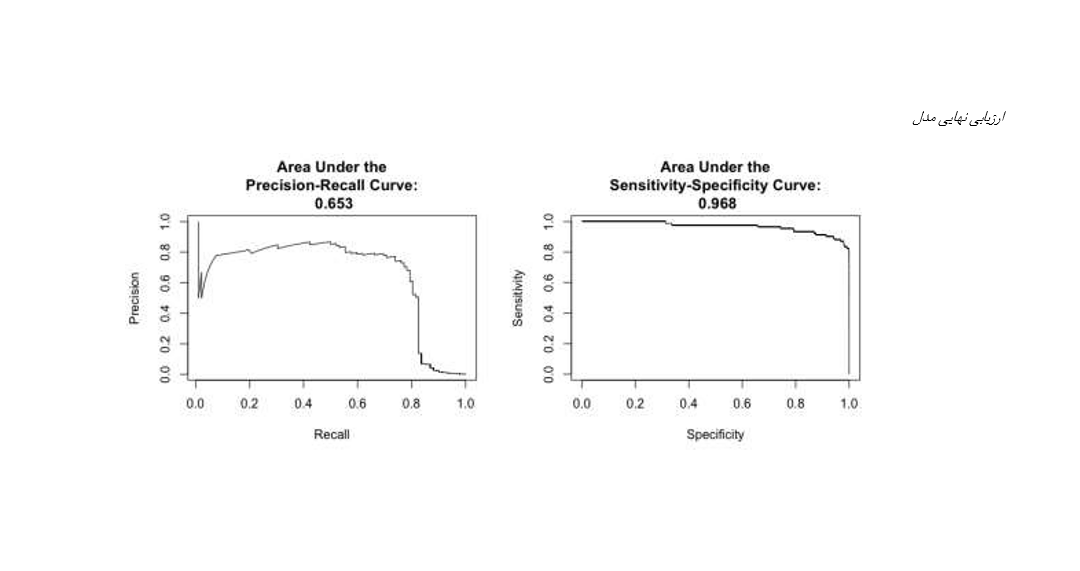
The present study aimed to develop a deep reinforcement learning-based model using neural networks to detect fraudulent and suspicious transactions in banking payment systems, with a focus on POS-based financial transactions. This applied case-study research was conducted using real transaction data from Bank Pasargad and the benchmark CCFD dataset. The research dataset included more than 250,000 real credit card transactions and 284,807 transactions from the benchmark dataset. A hybrid framework consisting of deep reinforcement learning, artificial neural networks, and autoencoder algorithms was employed for fraud detection. After preprocessing, normalization, and dimensionality reduction using the bottleneck method, the data were divided into training and testing subsets. Both supervised and unsupervised learning strategies were simultaneously implemented to improve anomaly detection and fraud classification performance. The proposed algorithms were implemented using R and Python machine learning libraries. The results obtained from the real transaction dataset demonstrated that the proposed model achieved excellent fraud detection performance with an AUC value of 0.999 and a Gini coefficient of 0.999. The final model correctly identified approximately 83% of fraudulent transactions and nearly 100% of legitimate transactions. Furthermore, evaluation on the CCFD benchmark dataset yielded an accuracy rate of 0.95 and a precision score of 0.97, indicating the model’s strong capability in handling highly imbalanced datasets and identifying anomalous financial behaviors. The findings indicated that integrating deep reinforcement learning, neural networks, and autoencoder techniques provides an effective approach for detecting fraud in financial and banking transactions. The proposed framework not only improved fraud detection rates but also reduced classification errors and effectively managed imbalanced transaction data. Therefore, the model can serve as a reliable infrastructure for intelligent banking transaction monitoring and real-time fraud detection systems.
Downloads
References
Ahmed, M., Ansar, K., Muckley, C. B., Khan, A., Anjum, A., & Talha, M. (2021). A Semantic Rule Based Digital Fraud Detection. Peerj Computer Science, 7, e649. https://doi.org/10.7717/peerj-cs.649
Akhtar, N., Khan, A. N., & Raza, M. (2023). Technological Advancements and Legal Challenges to Combat Money Laundering: Evidence From Pakistan. Pakistan Journal of Humanities and Social Sciences, 11(1), 473-483. https://doi.org/10.52131/pjhss.2023.1101.0365
Aldahasi, E., Alsheikh, R. K., Khan, F. A., & Jeon, G. (2024). Optimizing Fraud Detection in Financial Transactions With Machine Learning and Imbalance Mitigation. Expert Systems, 42(2). https://doi.org/10.1111/exsy.13682
Alhajeri, R., & Alhashem, A. (2023). Using Artificial Intelligence to Combat Money Laundering. Intelligent Information Management, 15(04), 284-305. https://doi.org/10.4236/iim.2023.154014
Alkhalili, M., Qutqut, M. H., & Almasalha, F. (2021). Investigation of Applying Machine Learning for Watch-List Filtering in Anti-Money Laundering. IEEE Access, 9, 18481-18496. https://doi.org/10.1109/access.2021.3052313
Chitsungo, C. (2024). Harnessing Digital Strategies to Combat Cryptocurrency-Enabled Crimes: Addressing Money Laundering, Illicit Trade, and Cyber Threats. Ajir, 9(7), 77-106. https://doi.org/10.47672/ajir.2523
Dumitrescu, B., Bălțoiu, A., & Budulan, Ş. (2022). Anomaly Detection in Graphs of Bank Transactions for Anti Money Laundering Applications. IEEE Access, 10, 47699-47714. https://doi.org/10.1109/access.2022.3170467
Goecks, L. S., Korzenowski, A. L., Neto, P. G. T., Souza, D. L. d., & Mareth, T. (2022). Anti‐money Laundering and Financial Fraud Detection: A Systematic Literature Review. Intelligent Sys in Account, 29(2), 71-85. https://doi.org/10.1002/isaf.1509
Hampo, J. A., Nwokorie, E. C., & Odii, J. N. (2023). A Web-Based kNN Money Laundering Detection System. European Journal of Theoretical and Applied Sciences, 1(4), 277-288. https://doi.org/10.59324/ejtas.2023.1(4).27
Husnaningtyas, N., Hanin, G. F., Dewayanto, T., & Malik, M. F. (2023). A Systematic Review of Anti-Money Laundering Systems Literature: Exploring the Efficacy of Machine Learning and Deep Learning Integration. Jema Jurnal Ilmiah Bidang Akuntansi Dan Manajemen, 20(1), 91-116. https://doi.org/10.31106/jema.v20i1.20602
Japinye, A. O. (2024). Integrating Machine Learning in Anti-Money Laundering Through Crypto: A Comprehensive Performance Review. European Journal of Accounting Auditing and Finance Research, 12(4), 54-80. https://doi.org/10.37745/ejaafr.2013/vol12n45480
Jensen, R. I. T., & Iosifidis, A. (2023). Fighting Money Laundering With Statistics and Machine Learning. IEEE Access, 11, 8889-8903. https://doi.org/10.1109/access.2023.3239549
Jiao, M. (2023). Big Data Analytics for Anti-Money Laundering Compliance in the Banking Industry. Highlights in Science Engineering and Technology, 49, 302-309. https://doi.org/10.54097/hset.v49i.8522
Karim, M. R., Hermsen, F., Chala, S. A., Perthuis, P. d., & Mandal, A. (2024). Scalable Semi-Supervised Graph Learning Techniques for Anti Money Laundering. IEEE Access, 12, 50012-50029. https://doi.org/10.1109/access.2024.3383784
Ketenci, U. G., Kurt, T., Önal, S., Erbil, C., Aktürkoğlu, S., & İlhan, H. Ş. (2021). A Time-Frequency Based Suspicious Activity Detection for Anti-Money Laundering. IEEE Access, 9, 59957-59967. https://doi.org/10.1109/access.2021.3072114
Kurshan, E., & Shen, H. (2020). Graph Computing for Financial Crime and Fraud Detection: Trends, Challenges and Outlook. International Journal of Semantic Computing, 14(04), 565-589. https://doi.org/10.1142/s1793351x20300022
Kute, D. V., Pradhan, B., Shukla, N., & Alamri, A. (2021). Deep Learning and Explainable Artificial Intelligence Techniques Applied for Detecting Money Laundering–A Critical Review. IEEE Access, 9, 82300-82317. https://doi.org/10.1109/access.2021.3086230
Labanca, D., Primerano, L., Markland-Montgomery, M., Polino, M., Carminati, M., & Zanero, S. (2022). Amaretto: An Active Learning Framework for Money Laundering Detection. IEEE Access, 10, 41720-41739. https://doi.org/10.1109/access.2022.3167699
Lokanan, M. (2022). Financial Fraud Detection: The Use of Visualization Techniques in Credit Card Fraud and Money Laundering Domains. Journal of Money Laundering Control, 26(3), 436-444. https://doi.org/10.1108/jmlc-04-2022-0058
Lokanan, M., & Maddhesia, V. (2023). Predicting Suspicious Money Laundering Transactions Using Machine Learning Algorithms. https://doi.org/10.21203/rs.3.rs-2530874/v1
Martins, A. P., & Brito, M. A. (2023). Fraud Detection and Anti-Money Laundering Applying Machine Learning Techniques in Cryptocurrency Transactional Graphs. https://doi.org/10.33965/mccsis2023_202305c016
Nicholls, J., Kuppa, A., & Le‐Khac, N. A. (2021). Financial Cybercrime: A Comprehensive Survey of Deep Learning Approaches to Tackle the Evolving Financial Crime Landscape. IEEE Access, 9, 163965-163986. https://doi.org/10.1109/access.2021.3134076
Oad, A., Razaque, A., Tolemyssov, A., Alotaibi, M., Alotaibi, B., & Chenglin, Z. (2021). Blockchain-Enabled Transaction Scanning Method for Money Laundering Detection. https://doi.org/10.20944/preprints202106.0172.v1
Oad, A., Razaque, A., Tolemyssov, A., Alotaibi, M., Alotaibi, B., & Zhao, C. (2021). Blockchain-Enabled Transaction Scanning Method for Money Laundering Detection. Electronics, 10(15), 1766. https://doi.org/10.3390/electronics10151766
Ouyang, S., Bai, Q., Feng, H., & Hu, B. (2024). Bitcoin Money Laundering Detection via Subgraph Contrastive Learning. Entropy, 26(3), 211. https://doi.org/10.3390/e26030211
Rouhollahi, Z. (2021). Towards Artificial Intelligence Enabled Financial Crime Detection. https://doi.org/10.48550/arxiv.2105.10866
Ruchay, A., Feldman, E. V., Cherbadzhi, D., & Sokolov, A. N. (2023). The Imbalanced Classification of Fraudulent Bank Transactions Using Machine Learning. Mathematics, 11(13), 2862. https://doi.org/10.3390/math11132862
Stefánsson, H. P., Grímsson, H. S., Þórðarson, J. K., & Óskarsdóttir, M. (2022). Detecting Potential Money Laundering Addresses in the Bitcoin Blockchain Using Unsupervised Machine Learning. https://doi.org/10.24251/hicss.2022.194
Tan, X., Tse, T.-F. T., Yiu, S. M., & Lam, H.-M. H. (2024). A Case Study on Multi-Countries Money Laundering Scheme and a Proposed Automatic Detection System. International Conference on Cyber Warfare and Security, 19(1), 385-394. https://doi.org/10.34190/iccws.19.1.1984
Tsapa, J. A. (2023). Artificial Intelligence Use Cases for Banking Anti-Money Laundering. Journal of Artificial Intelligence Machine Learning and Data Science, 1(2), 259-264. https://doi.org/10.51219/jaimld/joseph-aaron-tsapa/81
Turner, A., McCombie, S., & Uhlmann, A. J. (2020). Analysis Techniques for Illicit Bitcoin Transactions. Frontiers in Computer Science, 2. https://doi.org/10.3389/fcomp.2020.600596
Wang, Q. (2022). A Robust AI Agent-Based Approach to Tackle and Prevent Money Laundering. https://doi.org/10.31219/osf.io/bd38t
Yusoff, Y. H., Azlan, N. A. F., Zamzuri, N. N. M., Sufian, N., Kurniawan, S. N. R., & Hassan, R. (2023). Areas of Technology That Helps in Combating Money Laundering: A Concept Paper. International Journal of Academic Research in Business and Social Sciences, 13(5). https://doi.org/10.6007/ijarbss/v13-i5/16588
Zheng, L. (2025). Networked Markets, Fragmented Data: Adaptive Graph Learning for Customer Risk Analytics and Policy Design. https://doi.org/10.48550/arxiv.2512.24487
Downloads
Publication Timeline
- Submitted
- Revised
- Accepted
Issue
Section
License
Copyright (c) 2025 Mehdi Shakeri Behbahani (Author); Mehdi Sadeghzadeh; Naser Khani, Akbar Nabiollahi (Author)

This work is licensed under a Creative Commons Attribution-NonCommercial 4.0 International License.