A Recommender System for Developing Marketing Strategies for Online Products Based on Sentiment Analysis of User Reviews Using Deep Learning Algorithms
DOI:
https://doi.org/10.61838/kman.jtesm.535Keywords:
advisor system, marketing strategies, online products, sentiments analysis, users comments, deep learningAbstract
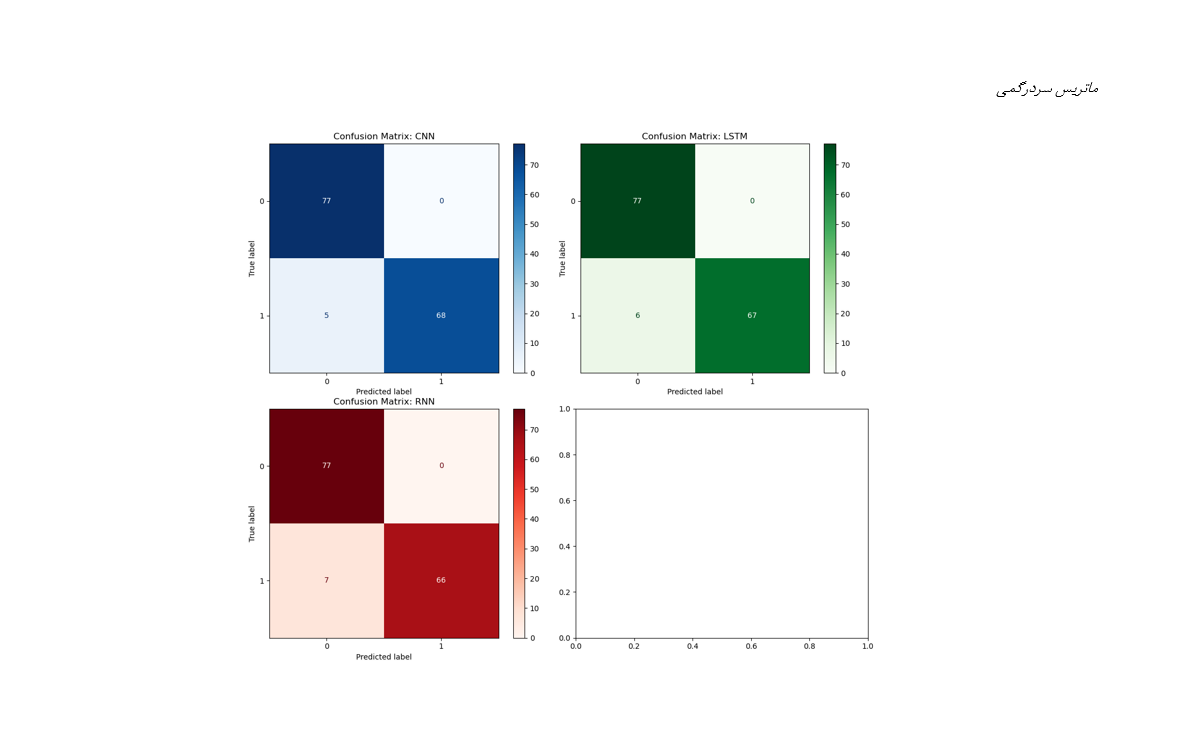
This study aimed to develop a recommender system for formulating marketing strategies for online products based on sentiment analysis of user reviews and to compare the performance of deep learning algorithms in predicting product sales. This applied, descriptive-analytical study was based on textual data obtained from users of an online store. User reviews of products were employed as the primary input data, and the sentiments expressed in the reviews were classified into positive, negative, and neutral categories. Three deep learning algorithms—Convolutional Neural Network (CNN), Recurrent Neural Network (RNN), and Long Short-Term Memory (LSTM)—were implemented for sentiment analysis and sales prediction. The model incorporated product- and review-related features, including user sentiment, price, brand, quality, delivery, packaging, support, warranty, and other product characteristics. Model performance was comparatively evaluated using accuracy, precision, F1-score, recall, confusion matrices, and receiver operating characteristic (ROC) curves. Comparative results demonstrated that CNN achieved the strongest overall performance, followed by LSTM and RNN. Accuracy values were 0.966, 0.960, and 0.953 for CNN, LSTM, and RNN, respectively. Corresponding precision values were 0.956, 0.954, and 0.944; F1-scores were 0.931, 0.917, and 0.904; and recall values were 0.964, 0.957, and 0.949. The confusion-matrix and ROC analyses further supported the relative superiority of CNN in classification and prediction. Feature-importance analysis based on the CNN model indicated that other users’ comments had the greatest contribution to classification, followed by user sentiment, delivery, brand, and packaging. Sentiment analysis of user reviews using deep learning algorithms, particularly CNN, can provide an effective analytical basis for predicting product sales and developing recommender systems that support product-specific marketing strategy formulation in online retail environments.
Downloads
References
Abubakar, M., & Shahzad, A. (2024). Aspect-Based Sentiment Analysis on Product Reviews. ASEAN Journal of Economic and Economic Education, 3(1), 29-34.
Alzahrani, M. E., Aldhyani, T. H. H., Alsubari, S. N., Althobaiti, M. M., & Fahad, A. (2022). Developing an Intelligent System with Deep Learning Algorithms for Sentiment Analysis of E-Commerce Product Reviews. Computational Intelligence and Neuroscience, 3840071. https://doi.org/10.1155/2022/3840071
Bilal, M., & Almazroi, A. A. (2023). Effectiveness of Fine-tuned BERT Model in Classification of Helpful and Unhelpful Online Customer Reviews. Electronic Commerce Research, 23, 2737-2757. https://doi.org/10.1007/s10660-022-09560-w
Elangovan, D., & Subedha, V. (2023). Adaptive Particle Grey Wolf Optimizer with Deep Learning-based Sentiment Analysis on Online Product Reviews. Engineering, Technology & Applied Science Research, 13(3), 10989-10993.
Jia, W., Shan, J., Wang, J., & Mengyang, Z. (2026). Implicit Aspect-Based Sentiment Analysis: A Systematic Review. Acm Computing Surveys, 58(10), 262. https://doi.org/10.1145/3799234
Kaur, G., & Sharma, A. (2023). A deep learning-based model using hybrid feature extraction approach for consumer sentiment analysis. Journal of Big Data, 10, 5. https://doi.org/10.1186/s40537-022-00680-6
Kumar, M., Khan, L., & Chang, H. T. (2025). Evolving techniques in sentiment analysis: a comprehensive review. Peerj Computer Science, 11, e2592. https://doi.org/10.7717/peerj-cs.2592
Lee, L.-H. (2026). DimABSA: Building Multilingual and Multidomain Datasets for Dimensional Aspect-Based Sentiment Analysis Proceedings of the 64th Annual Meeting of the Association for Computational Linguistics (Volume 1: Long Papers),
Loukili, M., Messaoudi, F., & El Ghazi, M. (2023). Sentiment Analysis of Product Reviews for ECommerce Recommendation based on Machine Learning. International Journal of Advanced Soft Computing Applications, 15(1).
Oralbekova, D., Mamyrbayev, O., Othman, M., Kassymova, D., & Mukhsina, K. (2023). Contemporary Approaches in Evolving Language Models. Applied Sciences, 13, 12901.
Quan, T. D., Thanh, L. N., & Thuy, T. N. T. (2023). The Capability of E-Reviews in Online Shopping: Integration of the PLS-SEM and ANN Method. International Journal of Professional Business Review, 8(7), 1-29.
Shi, P. Y., & Yu, J. H. (2022). Research on the Identification of User Demands and Data Mining Based on Online Reviews 2022 International Conference on Big Data, Information and Computer Network (BDICN), Sanya, China.
Sudirjo, F., Ratnawati, Hadiyati, R., Sutaguna, I. N. T., & Yusuf, M. (2023). The Influence of Online Customer Reviews and E-Service Quality on Buying Decisions in Electronic Commerce. Journal of Management and Creative Business (JMCBUS), 1(2), 156-181.
Sun, Y., Sekiguchi, K., & Ohsawa, Y. (2026). Optimizing sentiment analysis in product descriptions: effects on customer purchase intentions. Information Technology and Management, 27, 277-300. https://doi.org/10.1007/s10799-025-00448-3
Tiwari, A., Tewari, K., Dawar, S., Singh, A., & Rathee, N. (2023). Comparative Analysis on Aspect-based Sentiment using BERT 7th International Conference on Computing Methodologies and Communication (ICCMC), Erode, India.
Vadla, S., Suresh, M. A., & Viswanathan, V. K. (2024). Enhancing Product Design through AI-Driven Sentiment Analysis of Amazon Reviews Using BERT. Algorithms, 17, 59. https://doi.org/10.3390/a17020059
Downloads
Publication Timeline
- Submitted
- Revised
- Accepted
Issue
Section
License
Copyright (c) 2025 Maryam Golmeshki (Author); Alireza Farokhbakht foomany; Mohammad Taleghani, Narges Delafrooz (Author)

This work is licensed under a Creative Commons Attribution-NonCommercial 4.0 International License.