مدل ارتقا عملکرد بازاریابی فروشگاههای اینترنتی با تکیه بر هوش مصنوعی
کلمات کلیدی:
ارتقا عملکرد بازاریابی, بازاریابی, عملکرد بازاریابی, هوش مصنوعیچکیده
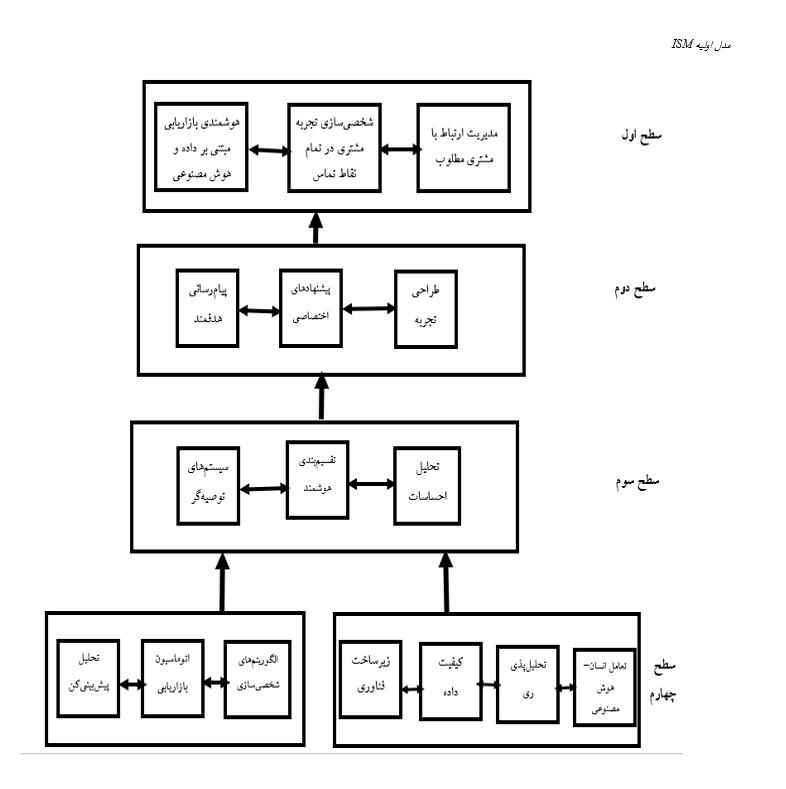
هدف این پژوهش ارائه مدل ارتقای عملکرد بازاریابی فروشگاههای اینترنتی با تکیه بر هوش مصنوعی و تبیین ابعاد، مؤلفهها و سازوکارهای اثرگذار آن در بهبود تجربه مشتری و هوشمندسازی فعالیتهای بازاریابی بود. این پژوهش از نظر هدف کاربردی و از نظر ماهیت اکتشافی با رویکرد آمیخته کیفی–کمی انجام شد. در بخش کیفی، دادهها از طریق مصاحبههای نیمهساختاریافته با 15 نفر از خبرگان، مدیران و بازاریابان فروشگاههای اینترنتی گردآوری شد که به روش نمونهگیری هدفمند و تا رسیدن به اشباع نظری انتخاب شدند. برای طراحی مدل اولیه از روش مدلسازی ساختاری تفسیری (ISM) استفاده شد و روایی محتوایی مؤلفهها با شاخص CVR مورد ارزیابی قرار گرفت. در بخش کمی، روابط میان متغیرها با استفاده از مدلسازی معادلات ساختاری (SEM) بررسی شد. تحلیل دادهها از طریق کدگذاری باز، محوری و انتخابی و همچنین تحلیل ماتریسهای ساختاری و وابستگی انجام گرفت. نتایج نشان داد مدل پژوهش شامل 5 مؤلفه اصلی و 16 مؤلفه فرعی در چهار سطح سلسلهمراتبی است. مؤلفههای «پیشرانها» و «هوش بازاریابی» در سطح چهارم بهعنوان اثرگذارترین عوامل شناسایی شدند. «ابزارهای هوشمند تجربه» در سطح سوم، «شخصیسازی تجربه» در سطح دوم و «ارتقای عملکرد بازاریابی فروشگاههای اینترنتی» در سطح اول و بهعنوان وابستهترین مؤلفه قرار گرفت. همچنین تمامی مؤلفهها دارای روایی محتوایی مطلوب بودند و مقدار CVR برای همه آنها برابر با 1 گزارش شد. یافتهها نشان داد زیرساخت فناوری، کیفیت داده، تحلیل پیشبینانه، سیستمهای توصیهگر، تحلیل احساسات و پیامرسانی هدفمند نقش معناداری در بهبود عملکرد بازاریابی و افزایش هوشمندسازی بازاریابی مبتنی بر داده دارند. نتایج پژوهش نشان داد ارتقای عملکرد بازاریابی فروشگاههای اینترنتی مستلزم ایجاد زیرساختهای فناورانه، توسعه ابزارهای هوشمند تجربه و بهرهگیری از راهبردهای شخصیسازی تجربه مشتری است. استفاده هدفمند از هوش مصنوعی میتواند موجب افزایش اثربخشی فعالیتهای بازاریابی، بهبود تجربه مشتری، افزایش نرخ تبدیل و تقویت مزیت رقابتی فروشگاههای اینترنتی شود.
دانلودها
مراجع
Ahmadzadeh, S., Khaboushani, A., Shahgholi, R., & Shokri Khiadani, M. (2024). Interpretive Structural Modeling of Factors Affecting Smart Platform Businesses. Journal of Smart Marketing Management, 5(3), 70-89.
Arora, A., Kapale, R., Sharma, P., Nalavade, M., Saifee, M., & Ukey, M. (2024). The Impact of AI-Driven Personalization on Customer Loyalty: A Meta-Analysis of E-commerce Studies.
Chen, Y., Lee, J. Y., Sridhar, S., Mittal, V., McCallister, K., & Singal, A. G. (2020). Improving Cancer Outreach Effectiveness through Targeting and Economic Assessments: Insights from a Randomized Field Experiment. Journal of Marketing, 84(3), 1-27.
Hari, H., Sharma, A., Verma, S., & Chaturvedi, R. (2025). Exploring Ethical Frontiers of Artificial Intelligence in Marketing. Journal of Responsible Technology, 21, 100103.
Lim, W. M., Kumar, S., Verma, S., & Chaturvedi, R. (2022). Alexa, What Do We Know about Conversational Commerce? Insights from a Systematic Literature Review. Psychology and Marketing, 39(6), 1129-1155.
Makhlooq, A., & Al Mubarak, M. (2024). Artificial Intelligence and Marketing: Challenges and Opportunities. In (pp. 3-16).
Mannuru, N. R., Shahriar, S., Teel, Z. A., Wang, T., Lund, B. D., Tijani, S., & Vaidya, P. (2025). Artificial Intelligence in Developing Countries: The Impact of Generative Artificial Intelligence (AI) Technologies for Development. Information Development, 41(3), 1036-1054.
Manoharan, G., Durai, S., Ashtikar, S. P., & Kumari, N. (2024). Artificial Intelligence in Marketing Applications. In (pp. 40-70). Productivity Press.
Mariani, M. M., Perez-Vega, R., & Wirtz, J. (2022). AI in Marketing, Consumer Research and Psychology: A Systematic Literature Review and Research Agenda. Psychology and Marketing, 39(4), 755-776.
Nalbant, K. G., & Aydin, S. (2025). AI-Powered Digital Marketing: Transforming Personalized Experiences. American Research Journal of Humanities & Social Science, 8(1), 19-27.
Rahimi Kalvar, H., & Mohammadkhani, R. (2024). Designing a Model of the Consequences of Applying Artificial Intelligence and Machine Learning in Advertising and Sales. Journal of Smart Business Studies, 12(48), 223-270.
Sami Adel, S. (2024). Application of Artificial Intelligence in Personalizing Customer Experience, Services, and Marketing Strategies: Opportunities, Challenges, and Innovative Business Models. Tehran.
Sha Nazim, S., & Rajeswari, M. (2019). Creating a Brand Value and Consumer Satisfaction in E-Commerce Business Using Artificial Intelligence with the Help of Vosag Technology. International Journal of Innovative Technology and Exploring Engineering, 8(8), 1510-1515.
Sheshadri, T., Shelly, R., Sharma, K., Sharma, T., & Basha, M. (2024). An Empirical Study on Integration of Artificial Intelligence and Marketing Management to Transform Consumer Engagement in Selected PSU Banks (PNB and Canara Banks). Naturalista Campano, 28(1), 463-471.
Umamaheswari, D. D. (2024). Role of Artificial Intelligence in Marketing Strategies and Performance. Migration Letters, 21(S4), 1589-1599.
Van Esch, P., & Stewart Black, J. (2021). Artificial Intelligence (AI): Revolutionizing Digital Marketing. Australasian Marketing Journal, 29(3), 199-203.
Wang, Q., Zhang, F., & Li, R. (2025). Artificial Intelligence and Sustainable Development during Urbanization: Perspectives on AI R&D Innovation, AI Infrastructure, and AI Market Advantage. Sustainable Development, 33(1), 1136-1156.
Wirtz, J., Patterson, P. G., Kunz, W. H., Gruber, T., Lu, V. N., Paluch, S., & Martins, A. (2018). Brave New World: Service Robots in the Frontline. Journal of Service Management, 29(5), 907-931.
دانلودها
گاهشمار انتشار
- ارسال
- بازنگری
- پذیرش
شماره
نوع مقاله
مجوز
حق نشر 2026 Seyed Mojtaba Mirkazemnejad Mojdehi (Author); Kambiz Shahroodi; Ahmad Ghanbarian Boroujeni (Author)

این پروژه تحت مجوز بین المللی Creative Commons Attribution-NonCommercial 4.0 می باشد.