اعتبارسنجی مدل هدایتپذیری کارکنان فروش با رویکرد مدلسازی معادلات ساختاری: مطالعه موردی مجتمع تجاری فامیلیمال اربیل
کلمات کلیدی:
هدایتپذیری, خردهفروشی, مدلسازی معادلات ساختاری, فامیلیمال اربیل, توسعه حرفهایچکیده
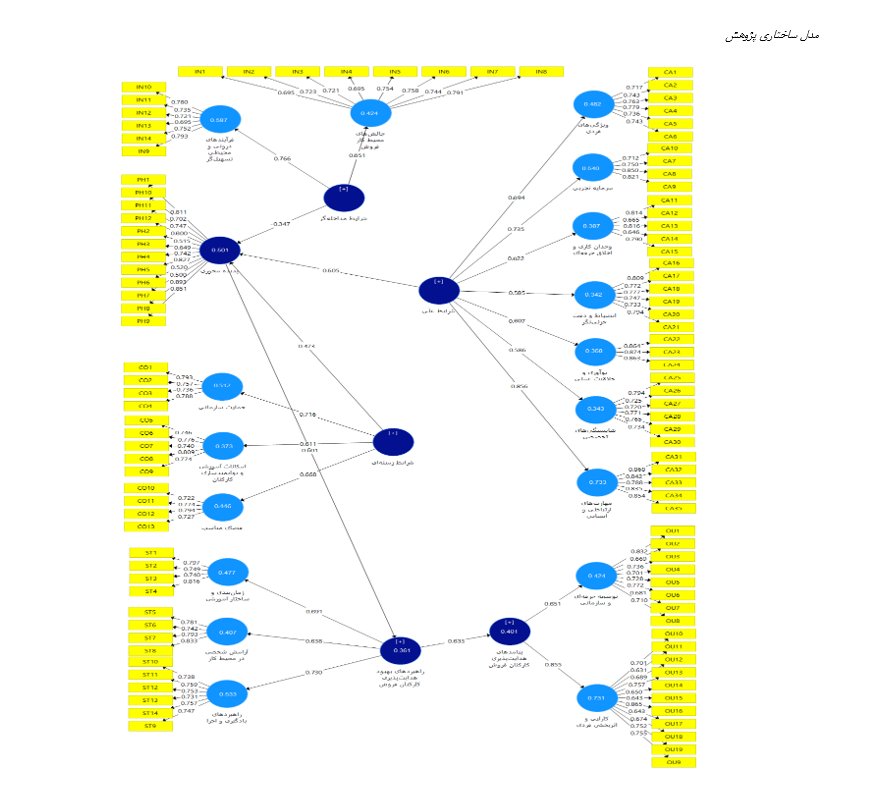
هدف پژوهش حاضر، اعتبارسنجی مدل ساختاری هدایتپذیری کارکنان فروش در مجتمع تجاری فامیلیمال اربیل و بررسی روابط میان شرایط علّی، شرایط مداخلهگر، شرایط زمینهای، پدیده محوری هدایتپذیری، راهبردهای بهبود و پیامدهای حاصل از هدایتپذیری بود. پژوهش حاضر از نظر هدف کاربردی و از نظر روش، توصیفی-همبستگی مبتنی بر مدلسازی معادلات ساختاری بود. جامعه آماری شامل 2000 نفر از کارکنان فروش مجتمع تجاری فامیلیمال اربیل بود که از میان آنان، بر اساس جدول کرجسی و مورگان، 384 نفر با روش نمونهگیری تصادفی طبقهای متناسب انتخاب شدند. دادهها با استفاده از پرسشنامه ساختاریافته 107 گویهای با طیف پنجدرجهای لیکرت گردآوری شد که سازههای شرایط علّی، پدیده محوری، شرایط مداخلهگر، شرایط زمینهای، راهبردهای بهبود هدایتپذیری و پیامدهای هدایتپذیری را اندازهگیری میکرد. روایی صوری و محتوایی، روایی سازه، روایی همگرا و واگرا و پایایی ابزار با آلفای کرونباخ و پایایی ترکیبی تأیید شد. دادهها با نرمافزارهای SPSS نسخه 27 و SmartPLS نسخه 4 و روش PLS-SEM تحلیل شدند. نتایج مدل ساختاری نشان داد شرایط علّی اثر مثبت و معناداری بر هدایتپذیری کارکنان فروش داشت (β=0.505، t=10.096)، در حالی که شرایط مداخلهگر اثر منفی و معناداری بر آن نشان داد (β=-0.347، |t|=5.680). شرایط زمینهای نیز هدایتپذیری را بهطور مثبت و معناداری پیشبینی کرد (β=0.473، t=6.899). همچنین، هدایتپذیری کارکنان فروش اثر مثبت و معناداری بر راهبردهای بهبود هدایتپذیری داشت (β=0.601، t=13.131) و راهبردهای بهبود نیز پیامدهای حرفهای و سازمانی را بهطور مثبت و معناداری پیشبینی کردند (β=0.633، t=12.248). تمامی پنج فرضیه پژوهش تأیید شدند و شاخص نیکویی برازش مدل برابر با 0.522 بود که حاکی از برازش مطلوب مدل ساختاری است. یافتهها نشان میدهد هدایتپذیری کارکنان فروش پدیدهای چندبعدی است که همزمان از ظرفیتهای فردی و حرفهای، شرایط حمایتی سازمان و موانع محیط کار تأثیر میپذیرد و از طریق شکلدهی راهبردهای مناسب به پیامدهای مطلوب حرفهای و سازمانی منجر میشود. بنابراین، تقویت شایستگیهای فردی، فراهمسازی زیرساختهای آموزشی و حمایتی و کنترل عوامل مداخلهگر میتواند اثربخشی برنامههای هدایت و توسعه منابع انسانی را در محیطهای خردهفروشی افزایش دهد.
دانلودها
مراجع
Akhavan Kharazian, M., & Dadbeh, S. (2021). A Multilevel Model of the Impact of Sales Employees' Personality Types and Customers' Personality Types on Trust in the Seller. Business Management, 13(2), 412-434.
Amiri, R., & Ghanbaripour, S. (2020). Examining the Relationship between Transformational Leadership and Employee Receptivity to Guidance in Government Organizations. Manager Psychology Quarterly, 28(1), 63-80.
Christina, R., & Nathan, M. D. M. (2024). Enhancing organizational performance through employee coaching: A review of current practices and future directions. Cahiers Magellanes-NS, 6(2), 1090-1101.
Febrian, W. D., & Sani, I. (2023). Analysis of work environment, attitude, coaching, and servant leadership on job satisfaction mediated by career development (Literature review study). Indonesian Journal of Business Analytics, 3(4), 1089-1104. https://doi.org/10.55927/ijba.v3i4.5031
Fournet, A. C. (2024). Coaching Isn't Just for Little League Anymore: A Theory of Individual Coachability Louisiana Tech University].
hosein goli, a., & khadem hojati, t. (2022). The effect of business intelligence on marketing on increasing sales in manufacturing companies. Journal of Accounting and Management Vision, 5(59), 91-100. https://www.jamv.ir/article_149897.html
Hwang, C. Y., Kang, S. W., & Choi, S. B. (2023). Coaching leadership and creative performance: A serial mediation model of psychological empowerment and constructive voice behavior. Frontiers in psychology, 14, 1077594. https://doi.org/10.3389/fpsyg.2023.1077594
Johnson, M. J., Kim, K. H., Colarelli, S. M., & Boyajian, M. (2021). Coachability and the development of the coachability scale. Journal of Management Development, 40(7/8), 585-610. https://doi.org/10.1108/JMD-06-2020-0174
Jung, J., Kim, B. J., & Kim, M. J. (2023). The effect of unstable job on employee turnover intention: The importance of coaching leadership. Frontiers in Public Health, 11, 1068293. https://doi.org/10.3389/fpubh.2023.1234387
Middleton, E. D., Zajac, S. A., Cavanaugh, K. J., Westmoreland, K., Brown, R. P., & Smith, D. B. (2024). Assessing workplace coachability: a multi-study approach to design and validation. Coaching: An International Journal of Theory, Research and Practice, 15-24. https://doi.org/10.1080/17521882.2024.2367425
Mmaditla, T., & Ndlovu-Hlatshwayo, E. N. (2023). The Perceived Applicability of Coaching Skills among Human Resource Business Partners of South African State-Owned Entities. Journal of Management and Entrepreneurship Research, 3(2), 106-120. https://doi.org/10.34001/jmer.2022.12.03.2-31
Mollaei. (2021). The Role of Individual Differences in Providing and Receiving Guidance from the Perspective of Quranic Verses and Hadiths [Master's thesis, Hakim Sabzevari University, Faculty of Literature and Humanities].
Moradi, H., Taban, J., & Maleki, Y. (2021). Dimensions of Human Receptivity to Guidance from the Perspective of the Quran and Their Compatibility with Citizenship Rights. Bioethics Journal, 10(1), 295-309.
Pousa, C., Liu, Y., & Aman, A. (2020). The Effect of Managerial Coaching on Salesperson's Relationship Behaviors: New Evidence from Frontline Bank Employees in China. International Journal of Bank Marketing, 38(6), 1259-1277. https://doi.org/10.1108/IJBM-12-2019-0437
Reeves, M. (2025). Coaching for Managers: Essential Skills for Developing High-Performing Teams. https://www.togetherplatform.com/blog/coaching-for-managers
Sahafzadeh, A., & Haghighi, M. (2023). Designing a Model for Empowering Iranian Brands with an Emphasis on the Open Innovation Approach in the Home Appliances Industry. New Marketing Research Journal, 12(4), 91-112. https://doi.org/10.22108/nmrj.2023.135031.2756
Shabani, M., Shafiei, F. S., & Diyalameh, N. (2024). Developing a Model of the Role of Educational Leadership in Students' Receptivity to Guidance with an Emphasis on the Holy Quran: The Guiding Leadership Style. Applied Issues in Islamic Education, 9(1), 9-15.
Toolabi, M., Farahani, A., Ghorbani Ghahfarokhi, L., & Rezaei Soufi, M. (2025). Designing a Paradigmatic Model of Organizational Coaching in Sports Organizations with a Human Resource Empowerment Approach. Organizational Behavior Management in Sport Studies, 12(2), 78-99. https://doi.org/10.30473/fmss.2025.72591.2637
Weiss, J. A. (2020). An Examination of Employee Coachability and Managerial Coaching in Organizations (Publication Number 323)
Zare Zeidi, A., Jafari Kalarijani, S. A., Mehrara, A., & Bagherzadeh, M. R. (2026). Identifying and Validating the Components of Coaching for Managers of Government Organizations with Emphasis on Sustainable Human Resources. Personal Development and Organizational Transformation, 4(1), 1-24. https://doi.org/10.61838/kman.jpdot.578
Zeraatpisheh, H., Masoudi, O. A., & Darzian Rostami, H. (2025). Providing a Coaching Model for Public Relations Managers of Petrochemical Companies: A Case Study of the South Pars Region of Assaluyeh. Communication and Culture Path, 5(3), 105-121.
دانلودها
گاهشمار انتشار
- ارسال
- بازنگری
- پذیرش
شماره
نوع مقاله
مجوز
حق نشر 2026 Noura Kazem Omran Noor (Author); Mohsen Alizadeh Sani; Meysam Shirkhodaie, Aboalhasan Hosseini, Mohammad Safari (Author)

این پروژه تحت مجوز بین المللی Creative Commons Attribution-NonCommercial 4.0 می باشد.