Developing a Conceptual Model of Strategic Co-evolution in the Digital Banking Platform Ecosystem: A Systematic Review
Keywords:
adaptive capabilities, co-evolution, digital banking, digital transformation, Platform ecosystem, value co-creationAbstract
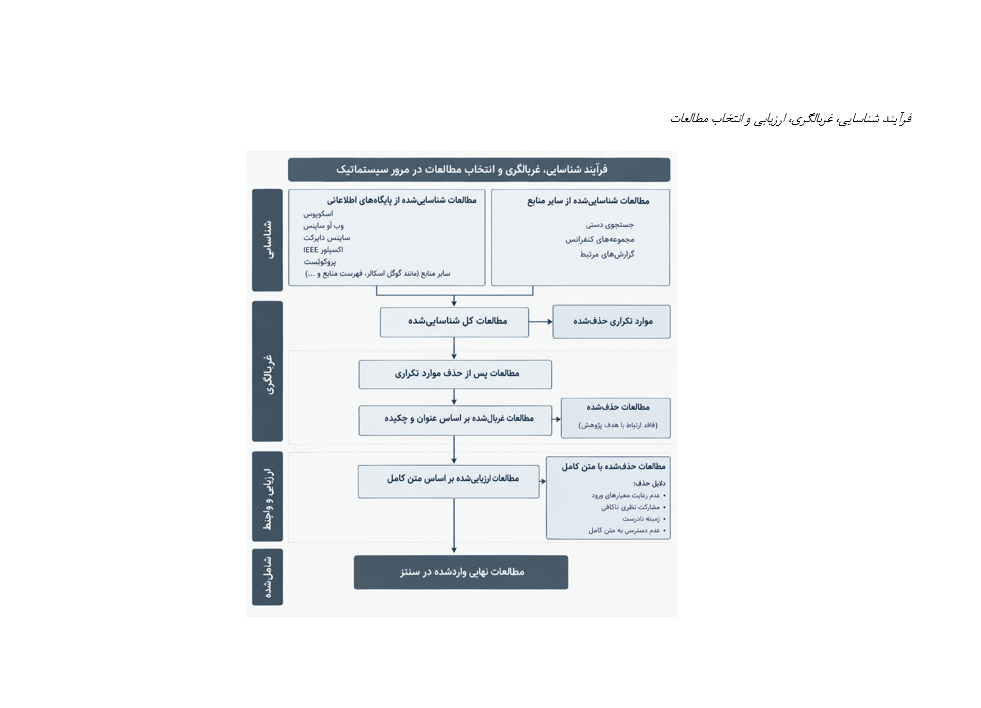
This study aimed to identify and integrate the antecedents, mechanisms, and outcomes of strategic co-evolution and to develop a conceptual model explaining the dynamics of digital banking platform ecosystems. This applied qualitative study employed a systematic literature review. Studies addressing co-evolution, platform ecosystems, digital banking, fintech, digital transformation, and ecosystem interactions were identified from scientific databases and screened according to predefined inclusion and exclusion criteria. Following duplicate removal, relevance screening, and eligibility assessment, 32 studies were retained for final synthesis. Extracted data encompassed influential conditions, ecosystem actors, mechanisms of interaction and change, and co-evolutionary outcomes. The evidence was analyzed through thematic analysis and a template-analysis approach, whereby initial concepts were coded, similar concepts were consolidated into higher-order categories, and their relationships were synthesized into an integrated conceptual framework. The conceptual synthesis indicated that strategic co-evolution in digital banking platform ecosystems emerges through dynamic interactions among technological and environmental conditions, institutional and competitive pressures, and the interdependence of ecosystem actors. Adaptation and dynamic capability development, ecosystem governance and orchestration, learning and feedback, innovation, actor interaction, and value co-creation emerged as the principal co-evolutionary mechanisms. These mechanisms were associated with ecosystem transformation and resilience, dynamism and growth, strengthened interaction and value co-creation, learning and innovation, and ecosystem sustainability. Importantly, the relationships among these dimensions were not linear or unidirectional; rather, resulting outcomes recursively influenced environmental conditions, actor behavior, ecosystem capabilities, and subsequent trajectories of transformation through feedback loops. The proposed model conceptualizes strategic co-evolution as a dynamic, interactive, nonlinear, and feedback-driven process in which digital banking ecosystems evolve through reciprocal adaptation among actors, technologies, governance arrangements, and environmental conditions. Shifting the analytical focus from individual organizations to the ecosystem level therefore provides a more integrated framework for understanding and managing digital banking transformation.
Downloads
References
Adner, R. (2017). Ecosystem as Structure: An Actionable Construct for Strategy. Journal of Management, 43(1), 39-58. https://doi.org/10.1177/0149206316678451
Bayat Turk, F., Mobini Dehkordi, A., Arabion, A., & Sakhdari, K. (2014). Conceptual Framework of Coevolution in Business Ecosystem. Quarterly Journal of Strategic Business Management Studies, 14(1), 1-22.
Dixon, T. D., & Wei, J. (2025). Business Ecosystem Dynamics in the Chinese Electric Vehicle Market: Co-Evolution of Capabilities and Dynamics. Asian Journal of Technology Innovation, 33(2), 244-282. https://doi.org/10.1080/19761597.2024.2355239
Engert, M., Hein, A., Maruping, L. M., Thatcher, J. B., & Krcmar, H. (2025). Self-Organization and Governance in Digital Platform Ecosystems: An Information Ecology Approach. MIS quarterly, 49(1), 91-122. https://doi.org/10.25300/MISQ/2024/18413
Fallah Tafti, S., Kardanaej, A., Khodadad Hosseini, S. H., & Jamali Afosi, M. (2015). Explaining the Interactive Strategic Goals of the Iranian Banking Industry Using the Concept of Business Ecosystem. Management Research in Iran, 19(4).
Gawer, A., & Cusumano, M. A. (2014). Industry Platforms and Ecosystem Innovation. Journal of Product Innovation Management, 31(3), 417-433. https://doi.org/10.1111/jpim.12105
Gong, Y., Zhang, Y., & Dong, L. (2025). Numerical Simulation and Governance Framework for Multi-Stakeholder Symbiotic Evolution in Digital Innovation Ecosystems. Scientific reports, 15, 23638. https://doi.org/10.1038/s41598-025-09027-6
Gozman, D., Liebenau, J., & Mangan, J. (2018). The Innovation Mechanisms of Fintech Start-Ups: Insights from SWIFT's Innotribe Competition. Journal of Management Information Systems, 35(1), 145-179. https://doi.org/10.1080/07421222.2018.1440768
Hietala, H., & Paivarinta, T. (2025). Governing Collective Ambidexterity: Antecedents, Mechanisms, and Outcomes in Digital Service Ecosystems. Government Information Quarterly, 42, 102001. https://doi.org/10.1016/j.giq.2024.102001
Jacobides, M. G., Cennamo, C., & Gawer, A. (2018). Towards a Theory of Ecosystems. Strategic management journal, 39(8), 2255-2276. https://doi.org/10.1002/smj.2904
Jahanizadeh, F., Meshbaki, A., Kardanaij, A., & Khodadad Hosseini, S. H. (2015). Explaining the Intellectual Foundations of the Business Ecosystem Approach. Management Research in Iran, 19(2).
Jovanovic, M., Sjödin, D., & Parida, V. (2022). Co-Evolution of Platform Architecture, Platform Services, and Platform Governance: Expanding the Platform Value of Industrial Digital Platforms. Technovation, 118, 102218. https://doi.org/10.1016/j.technovation.2020.102218
Kayal, K., & Al-Badawi, A. (2018). Strategies for Starting a Platform Business in the Banking and Payment Industry. Scientific-Research Journal of Innovation Management, 7(2), 113-136.
Khashaei-Varnamkhasti, V., Ebrahimi, M., Khalilnejad, S., & Motaharinejad, F. (2024). Generating Mechanisms of the Evolution of the Digital Banking Ecosystem. Intelligent Business Management Studies, 12(48), 33-81.
King, N. (2012). Doing Template Analysis. In Qualitative Organizational Research: Core Methods and Current Challenges. SAGE. https://doi.org/10.4135/9781526435620.n24
Liao, H., Pan, C., & Wu, Z. (2024). Digital Transformation and Innovation and Business Ecosystems: A Bibliometric Analysis for Conceptual Insights and Collaborative Practices for Ecosystem Innovation. International Journal of Innovation Studies, 8, 406-431. https://doi.org/10.1016/j.ijis.2024.04.003
Page, M. J., McKenzie, J. E., & Bossuyt, P. M. (2021). The PRISMA 2020 Statement: An Updated Guideline for Reporting Systematic Reviews. bmj, 372, n71. https://doi.org/10.1136/bmj.n71
Priyono, A., & Hidayat, A. (2024). Fostering Innovation through Learning from Digital Business Ecosystem: A Dynamic Capability Perspective. Journal of Open Innovation: Technology, Market, and Complexity, 10, 100196. https://doi.org/10.1016/j.joitmc.2023.100196
Rezaian, A., & Bayramzadeh, S. (2016). Analyzing the Failure of Co-Evolutionary Policies of the Banking Industry and Information Technology in Iran. Public Policy Quarterly, 2(3), 97-120.
Riasanow, T., Galic, G., Böhm, M., & Krcmar, H. (2020). Co-Evolution in Business Ecosystems: Findings from the Literature. Electronic Markets, 30(1), 113-137.
Saeedi, R., Hassanzadeh, A., Elahi, S., & Abesi, M. (2018). Meta-Analysis of the Relationship between Digital Business Ecosystem, Value Creation Ecology and SMEC Ecosystem. Journal of Management Research in Iran, 22(1).
Saghafi, F., Jafarnejad, A., Moteghi, M., & Mousavi, S. J. (2022). Model of the Stages of Evolution of Industrial Business Ecosystems. Intelligent Business Management Studies, 10(40), 135-166.
Snyder, H. (2019). Literature Review as a Research Methodology: An Overview and Guidelines. Journal of Business Research, 104, 333-339. https://doi.org/10.1016/j.jbusres.2019.07.039
Vetsikas, A., Stamboulis, Y., & Georgatzi, V. (2024). Exploring the Coevolution of Heterogeneous Actors in National Innovation Systems: A System Dynamics Analysis of Finland. Review of Evolutionary Political Economy, 5(3), 581-610. https://doi.org/10.1007/s43253-024-00133-1
Zanganejad, N., Moeini, A., Haji Heidari, N., & Azar, A. (2017). Framework for Developing a Platform Business Model: A Finding Based on Meta-Synthesis. Journal of Management Research in Iran, 25(1), 95-115.
Zarifis, A., & Cheng, X. (2025). Fintech and the Emerging Ecosystems: Exploring Centralised and Decentralised Financial Technologies. Springer. https://doi.org/10.1007/978-3-031-83402-8
Zheng, J., Zhang, J. Z., Kamal, M. M., & Mangla, S. K. (2025). A Dual Evolutionary Perspective on the Co-Evolution of Data-Driven Digital Transformation and Value Proposition in Manufacturing SMEs. International Journal of Production Economics, 109561. https://doi.org/10.1016/j.ijpe.2025.109561
Downloads
Publication Timeline
- Submitted
- Revised
- Accepted
Issue
Section
License
Copyright (c) 2025 Vahid Khashei Varnamkhasti, Shahram Khalilnezhad Azar, Mehdi Haghighi Kafash (Author); Nahid Majidian

This work is licensed under a Creative Commons Attribution-NonCommercial 4.0 International License.