تأثیر شدت رقابت و فرهنگ سازمانی بر رابطه بین کارآفرینی استراتژیک و حفظ کارکنان: مطالعه موردی شرکتهای دانشبنیان و فناور مستقر در مرکز رشد ارس
DOI:
https://doi.org/10.61838/kman.jtesm.492کلمات کلیدی:
شدت رقابت, فرهنگ سازمانی, کارآفرینی استراتژیک, حفظ کارکنان, شرکتهای دانشبنیانچکیده
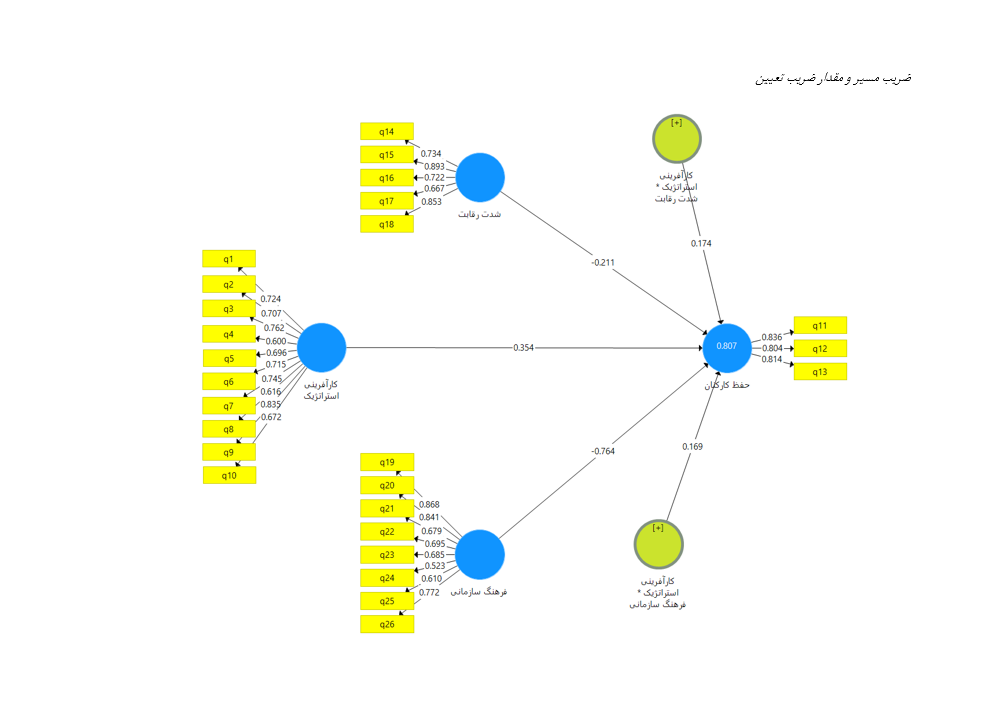
هدف پژوهش حاضر بررسی نقش تعدیلگر شدت رقابت و فرهنگ سازمانی در رابطه میان کارآفرینی استراتژیک و حفظ کارکنان در شرکتهای دانشبنیان و فناور مستقر در مرکز رشد ارس بود. این پژوهش از نظر هدف کاربردی و از نظر روش گردآوری دادهها، توصیفی ـ پیمایشی بود. جامعه آماری شامل مدیران ارشد 39 شرکت دانشبنیان و فناور مستقر در مرکز رشد ارس بود که بهدلیل محدودبودن حجم جامعه، تمامی اعضا با روش سرشماری بررسی شدند. دادهها با استفاده از پرسشنامههای استاندارد کارآفرینی استراتژیک، حفظ کارکنان و شدت رقابت اسچولز و دادا و پرسشنامه فرهنگ سازمانی گرونرت گردآوری شد. روایی محتوایی ابزارها با نظر متخصصان و روایی سازه از طریق تحلیل عاملی تأییدی ارزیابی شد. پایایی ابزارها نیز با استفاده از آلفای کرونباخ و پایایی ترکیبی تأیید گردید. برای آزمون مدل مفهومی و فرضیهها از مدلسازی معادلات ساختاری مبتنی بر حداقل مربعات جزئی و روش بوتاسترپینگ استفاده شد. نتایج مدل ساختاری نشان داد که شدت رقابت، رابطه میان کارآفرینی استراتژیک و حفظ کارکنان را بهطور مثبت و معناداری تعدیل میکند (β=0.174، t=2.018، p<0.05). همچنین، اثر تعدیلگر فرهنگ سازمانی بر رابطه میان کارآفرینی استراتژیک و حفظ کارکنان مثبت و معنادار بود (β=0.169، t=2.448، p<0.05). بنابراین، هر دو فرضیه پژوهش تأیید شدند. ضریب تعیین حفظ کارکنان برابر با 0.807 بود که نشان داد متغیرهای مدل توانستند 80.7 درصد از واریانس حفظ کارکنان را تبیین کنند. مقدار Q² برابر با 0.462 نیز بیانگر قدرت پیشبینی مطلوب مدل ساختاری بود. کارآفرینی استراتژیک در شرایط رقابتی شدید و در بستر فرهنگ سازمانی حمایتی، مشارکتی، انعطافپذیر و نوآورانه، تأثیر بیشتری بر حفظ کارکنان دارد؛ بنابراین، مدیران شرکتهای دانشبنیان باید همزمان با توسعه فعالیتهای کارآفرینانه، فرهنگ سازمانی تسهیلکننده و سازوکارهای متناسب با الزامات محیط رقابتی را تقویت کنند.
دانلودها
مراجع
Adomako, S., Opoku, R. A., & Frimpong, K. (2017). The moderating influence of competitive intensity on the relationship between CEOs' regulatory foci and SME internationalization. Journal of International Management, 23(3), 268-278. https://doi.org/10.1016/j.intman.2017.02.001
Almerri, H. S. H. (2023). Investigating the impact of organizational culture on employee retention: Moderating role of employee engagement. Journal of System and Management Sciences, 13(4), 488-507.
Alshawabkeh, R. O. K., Al-Abbadi, L. H., Eldahamsheh, M. M., Al-Quran, A. Z., Almomani, H. M., Bani-Khaled, A. K., & Al-Hawary, S. I. S. (2024). The impact of entrepreneurial leadership on organisational performance: Does innovation management matter? International Journal of Services and Operations Management, 47(2), 236-255. https://doi.org/10.1504/IJSOM.2024.136795
Cucu, G., & Guit, I. (2014). Organizational culture versus work motivation for the academic staff in a public university. Procedia - Social and Behavioral Sciences, 127, 448-453. https://doi.org/10.1016/j.sbspro.2014.03.288
DiCintio, M., Ghosh, S., & Grassi, E. (2017). Firm growth, R&D expenditures and exports: An empirical analysis of Italian SMEs. Research Policy, 46(4), 836-852. https://doi.org/10.1016/j.respol.2017.02.006
Farahi, A., Fazaili, A., & Ebrahimi, E. (2015). Introducing an optimal organizational culture model using a qualitative approach and managers' mind mining. Organizational Behavior Studies Quarterly, 4(4), 31-64.
Ganco, M., Ziedonis, R., & Agarwal, R. (2015). More stars stay, but the brightest ones still leave: Job hopping in the shadow of patent enforcement. Strategic management journal, 36(5), 659-685. https://doi.org/10.1002/smj.2239
Ireland, R. D., Hitt, M. A., & Sirmon, D. G. (2003). A model of strategic entrepreneurship: The construct and its dimensions. Journal of Management, 29(6), 963-989. https://doi.org/10.1016/S0149-2063(03)00086-2
Khazaeipour, J., Allameh, S. M., & Askari, N. (2016). Examining the effect of organizational culture: Emphasis on the role of knowledge sharing and organizational agility using the balanced scorecard approach. Organizational Culture Management, 14(2), 453-474.
Mirkamali, S. M., Haj Khazimeh, M., & Ebrahimi, S. a.-D. (2015). Identifying criteria for attracting and retaining human resources and providing appropriate solutions: The case of employees of the engineering campus faculties of the University of Tehran. Development and Transformation Management Journal, 22(3), 9-18.
Mirzaeian Vanab, Z., Mahdipour, A., & Azmesha, T. (2017). Presenting a strategic entrepreneurship model for achieving competitive advantage in sports boards of Khuzestan Province. Sport Management Studies, 9(45), 175-190.
Ogunleye, A. T., & Adebola, F. O. (2026). Leadership styles and their impact on employee engagement, retention, and productivity. The Sankalpa: International Journal of Management Decisions, 12(1), 19-28.
Rajabpour, E., Hamidianpour, F., & Tangestani, E. (2023). The effect of strategic entrepreneurship on competitive advantage: A study of knowledge-based companies in Bushehr County. Entrepreneurship Education and Management, 2(3), 19-34.
Schulze, A., & Dada, O. (2025). Building strategic human capital resources: The effects of strategic entrepreneurship on employee recruitment and retention. Journal of Small Business Management, 63(1), 388-421. https://doi.org/10.1080/00472778.2024.2322985
Shafique, M. N., Ahmad, N., Abbas, H., & Hussain, A. (2015). The impact of customer relationship management capabilities on organizational performance: Moderating role of competition intensity. Arabian Journal of Business and Management Review (Nigerian Chapter), 3(3), 28-47. https://doi.org/10.12816/0014506
Shao, Z. (2019). Interaction effect of strategic leadership behaviors and organizational culture on IS-business strategic alignment and enterprise systems assimilation. International Journal of Information Management, 44, 96-108. https://doi.org/10.1016/j.ijinfomgt.2018.09.010
Shiri, A., Yasini, A., & Hosseini, A. S. (2018). Examining the effect of organizational culture on hypocrisy in organizations with the mediating role of rumor-spreading in organizational layers. Organizational Behavior Studies Quarterly, 7(4), 213-243.
Thurik, A. R., Audretsch, D. B., Block, J. H., Burke, A., Carree, M. A., Dejardin, M., & Wiklund, J. (2024). The impact of entrepreneurship research on other academic fields. Small Business Economics, 62(2), 727-751. https://doi.org/10.1007/s11187-023-00781-3
Tokhirovna, T. S., & Khasanovich, J. E. (2024). The need and directions of entrepreneurship support. IMRAS, 7(2), 115-117.
Vedula, S., Doblinger, C., Pacheco, D., York, J. G., Bacq, S., Russo, M. V., & Dean, T. J. (2022). Entrepreneurship for the public good: A review, critique, and path forward for social and environmental entrepreneurship research. Academy of Management Annals, 16(1), 391-425. https://doi.org/10.5465/annals.2019.0143
Zainal, N. S. B., Wider, W., Lajuma, S., Ahmad Khadri, M. W. A. B., Taib, N. M., & Joseph, A. (2022). Employee retention in the service industry in Malaysia. Frontiers in Sociology, 7, 928951. https://doi.org/10.3389/fsoc.2022.928951
دانلودها
گاهشمار انتشار
- ارسال
- بازنگری
- پذیرش
شماره
نوع مقاله
مجوز
حق نشر 2025 Seyed Samad Hosseini (Author); Mohammad Taheri

این پروژه تحت مجوز بین المللی Creative Commons Attribution-NonCommercial 4.0 می باشد.