تبیین فرایند حداکثرسازی سهم بازار از طریق بهرهگیری از هوش مصنوعی در استراتژیهای بازاریابی: مورد مطالعه بیمه ایران
DOI:
https://doi.org/10.61838/kman.jtesm.498کلمات کلیدی:
سهم بازار, هوش مصنوعی, استراتژیهای بازاریابی, بازاریابی هوشمندچکیده
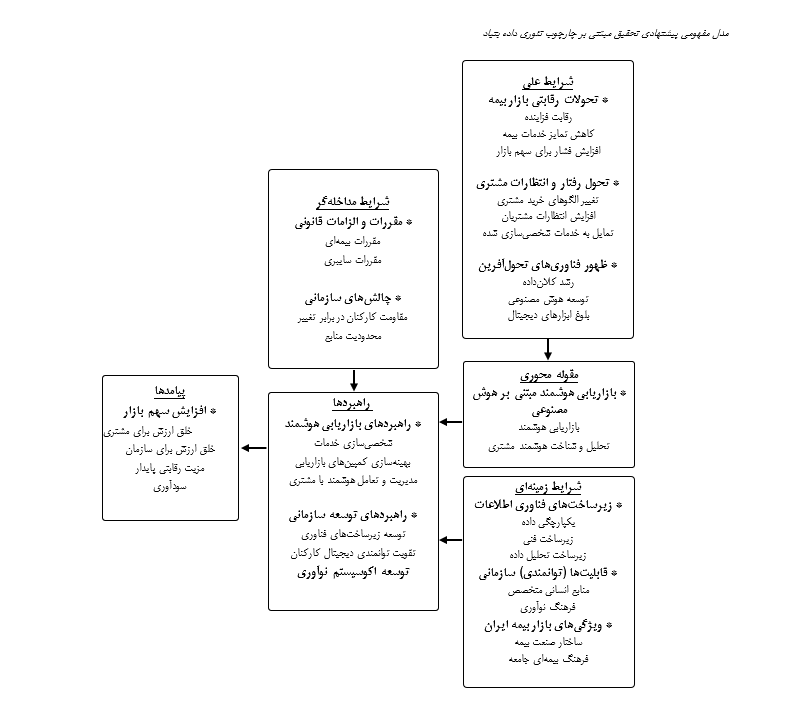
هدف پژوهش حاضر، تبیین فرایند حداکثرسازی سهم بازار بیمه ایران از طریق شناسایی سازوکارها، شرایط و راهبردهای بهرهگیری از هوش مصنوعی در استراتژیهای بازاریابی بود. این پژوهش از نظر هدف کاربردی، از نظر رویکرد اکتشافی ـ تبیینی و از لحاظ روششناسی کیفی بود. مشارکتکنندگان شامل ۱۴ نفر از مدیران، کارشناسان ارشد و متخصصان حوزههای بازاریابی، فناوری اطلاعات، تحلیل داده و تحول دیجیتال در صنعت بیمه بودند که با نمونهگیری هدفمند و گلولهبرفی تا دستیابی به اشباع نظری انتخاب شدند. دادهها از طریق مصاحبههای نیمهساختاریافته گردآوری، ضبط و پیادهسازی شدند. تحلیل دادهها با استفاده از نظریه دادهبنیاد مبتنی بر رویکرد اشتراوس و کوربین و طی مراحل کدگذاری باز، محوری و انتخابی انجام شد و مدل پارادایمی پژوهش بر اساس شرایط علّی، شرایط زمینهای، عوامل مداخلهگر، راهبردها، مقوله محوری و پیامدها شکل گرفت تحلیل دادهها به استخراج ۳۷۲ مفهوم و شناسایی ۳۲ مؤلفه در قالب ۱۲ بعد اصلی منجر شد. تحولات رقابتی بازار بیمه، تحول رفتار و انتظارات مشتری و ظهور فناوریهای تحولآفرین بهعنوان شرایط علّی شناسایی شدند. بازاریابی هوشمند و تحلیل و شناخت هوشمند مشتری، مقوله محوری مدل را تشکیل دادند. زیرساختهای فناوری اطلاعات، توانمندیهای سازمانی و ویژگیهای بازار بیمه ایران شرایط زمینهای بودند، درحالیکه مقررات بیمهای و سایبری، مقاومت کارکنان و محدودیت منابع نقش مداخلهگر داشتند. شخصیسازی خدمات، بهینهسازی کمپینها، مدیریت هوشمند تعامل با مشتری، توسعه زیرساخت فناوری، تقویت توانمندی دیجیتال کارکنان و توسعه اکوسیستم نوآوری، راهبردهای اصلی مدل بودند. اجرای این راهبردها به خلق ارزش برای مشتری و سازمان، مزیت رقابتی پایدار، سودآوری و افزایش سهم بازار منجر میشود. حداکثرسازی سهم بازار بیمه ایران مستلزم استقرار یک نظام یکپارچه بازاریابی هوشمند است که در آن زیرساخت دادهای، قابلیتهای سازمانی، فناوریهای هوش مصنوعی و راهبردهای مشتریمحور بهصورت هماهنگ توسعه یابند.
دانلودها
مراجع
Ahadi, S., Jalali, S. M., & Hasoumi, T. (2025). Identifying and Prioritizing the Dimensions of Artificial Intelligence-Based Marketing Management in Iran's Steel Industry: A Mixed-Methods Study. Technology in Entrepreneurship and Strategic Management, 4(3).
Alizadeh, H., Damavandinejad, M., & Behradfar, A. (2026). The Role of Artificial Intelligence Capabilities in Strengthening the Effect of B2B Marketing on Export Performance: A Study in the Petrochemical Industry. Technology in Entrepreneurship and Strategic Management, 5(2).
Bauer, W. A., & Dubljević, V. (2020). AI Assistants and the Paradox of Internal Automaticity. Neuroethics, 13, 303-310. https://doi.org/10.1007/s12152-019-09423-6
Bolourian Tehrani, M. (2024). Marketing and Market Management (6th ed.). Institute for Trade Studies and Research Publications.
Chen, Y., Du, L., Zhang, B., Wang, L., Wang, K., Huang, X., & Shi, Y. (2025). The Impact of Artificial Intelligence on the Sustainability of International Trade Enterprises. International Review of Economics & Finance, 101, 104136. https://doi.org/10.1016/j.iref.2025.104136
Chui, M., Manyika, J., & Miremadi, M. (2024). Notes from the AI Frontier.
Crawford, I., & Wang, Z. (2025). Is the Market Underreacting or Overreacting to Open Market Share Repurchases? A UK Perspective. Research in International Business and Finance, 26, 26-46. https://doi.org/10.1016/j.ribaf.2011.05.002
Dadkhah, M. R., & Kamali, K. (2022). Marketing and Market Management (3rd ed.). Mehrashoub Press.
Holzinger, A., Weippl, E., Tjoa, A. M., & Kieseberg, P. (2021). Digital Transformation for Sustainable Development Goals: A Security, Safety and Privacy Perspective on AI. In Lecture Notes in Computer Science (Vol. 12844, pp. 1-20). https://doi.org/10.1007/978-3-030-84060-0_1
Huang, M. H., & Rust, R. T. (2021). A Strategic Framework for Artificial Intelligence in Marketing. Journal of the Academy of Marketing Science. https://doi.org/10.1007/s11747-020-00749-9
Jafari, M. (2025). Artificial Intelligence in Marketing: A Review of Applications and Challenges First International Conference on Advances in Artificial Intelligence in Engineering and Humanities,
Lemon, K. N., & Verhoef, P. C. (2024). Understanding Customer Experience throughout the Customer Journey and Its Impact on Market Outcomes. Journal of Marketing, 88(2), 68-96. https://doi.org/10.1177/00222429231145892
Loursen, K., & Meliciai, V. (2022). The Role of ICT Knowledge Flows for International Market Share Dynamics. Research Policy, 39(2010), 687-697. https://doi.org/10.1016/j.respol.2010.02.007
Marber, A., Wellen, P., & Polsuszny, S. (2022). The Merging of Marketing and Sports: A Case Study. The Marketing Management Journal, 15(1), 162-171. https://doi.org/10.63963/001c.150881
Moghaddaspour, A., Gholipour Souteh, R., & Ansari, M. (2026). Presenting a Model of Data-Driven Marketing Strategies for the Digital Marketing of Knowledge-Based Companies. Technology in Entrepreneurship and Strategic Management, 5(2).
Mohebi, Z., & Kazemi, B. (2025). The Role of Artificial Intelligence in Marketing Management International Conference on Management Research and Humanities Studies in Iran,
Najaflou, H. (2024, 2024/02/06-2024/02/07). Examining the Impact of Artificial Intelligence on Marketing and Branding Strategies in Small and Medium-Sized Enterprises Third International Congress on Management, Economics, Humanities, and Business Development,
Potwora, M., Vdovichena, O., Semchuk, D., & Lipych, L. (2024). The Use of Artificial Intelligence in Marketing Strategies: Automation, Personalization and Forecasting. Journal of Management World, 2024(2), 41-49. https://doi.org/10.53935/jomw.v2024i2.275
Razeghian, M., & Weber, T. A. (2025). Strategic Durability with Sharing Markets. Sustainable Production and Consumption, 19, 79-96. https://doi.org/10.1016/j.spc.2019.02.007
Saeidi, S., & Alizadeh, H. (2026). The Effect of Artificial Intelligence Capabilities on Competitive Advantage in International Markets: The Mediating Role of Entrepreneurial Orientation and the Moderating Role of Strategic Agility. Technology in Entrepreneurship and Strategic Management, 5(2).
Seyed Javadin, S. R., & Bahmanirad, M. H. (2025). The Effect of Business Culture on the Role of Artificial Intelligence in Formulating Business Strategies. Quarterly Journal of New Approaches in Management and Marketing, 4(2), 317-335. https://doi.org/10.22034/jnamm.2025.561673.1213
Shahsavari, N. (2024). A Systematic Review and Analysis of Research on Artificial Intelligence in Marketing. Quarterly Journal of Applied Market Management Research, 10(36).
Steinhoff, L., Arli, D., Weaven, S., & Kozlenkova, I. (2023). Strategic Use of Digital Marketing and Its Impact on Customer Acquisition and Market Performance. Journal of Business Research, 156, 113498. https://doi.org/10.1016/j.jbusres.2022.113498
Teng, M., Tianjiao, L., Song, W., & Dong, J. (2026). The Effect of Artificial Intelligence on the Optimization of Digital Advertising Campaigns. International Journal of Information Management, 80, 102851. https://doi.org/10.1016/j.ijinfomgt.2024.102851
Thompson, L., McKinsey, E., & Wong, H. (2026). Artificial Intelligence Status: Current Trends of Artificial Intelligence in Marketing Insurance Companies. https://www.mckinsey.com/business-functions/mckinsey-digital/our-insights/the-state-of-ai-in-2025
Wang, J., & Yu, L. (2025). Application and Practice of Artificial Intelligence in Marketing Strategy. Discover Artificial Intelligence, 5, 103. https://doi.org/10.1007/s44163-025-00346-1
دانلودها
گاهشمار انتشار
- ارسال
- بازنگری
- پذیرش
شماره
نوع مقاله
مجوز
حق نشر 2025 Ansiyeh Faegh (Author); Ahmad Askari; Dariyoush Jamshidi (Author)

این پروژه تحت مجوز بین المللی Creative Commons Attribution-NonCommercial 4.0 می باشد.