بررسی تعامل شَمّ بازاریابی و هوشمندی بازار در ارتقای عملکرد بازاریابی دیجیتال: شواهدی از صنعت پخش داروی ایران
کلمات کلیدی:
شَمّ بازاریابی, هوشمندی بازار, عملکرد بازاریابی دیجیتال, تحلیل تماتیک, صنعت پخش دارویی, ایرانچکیده
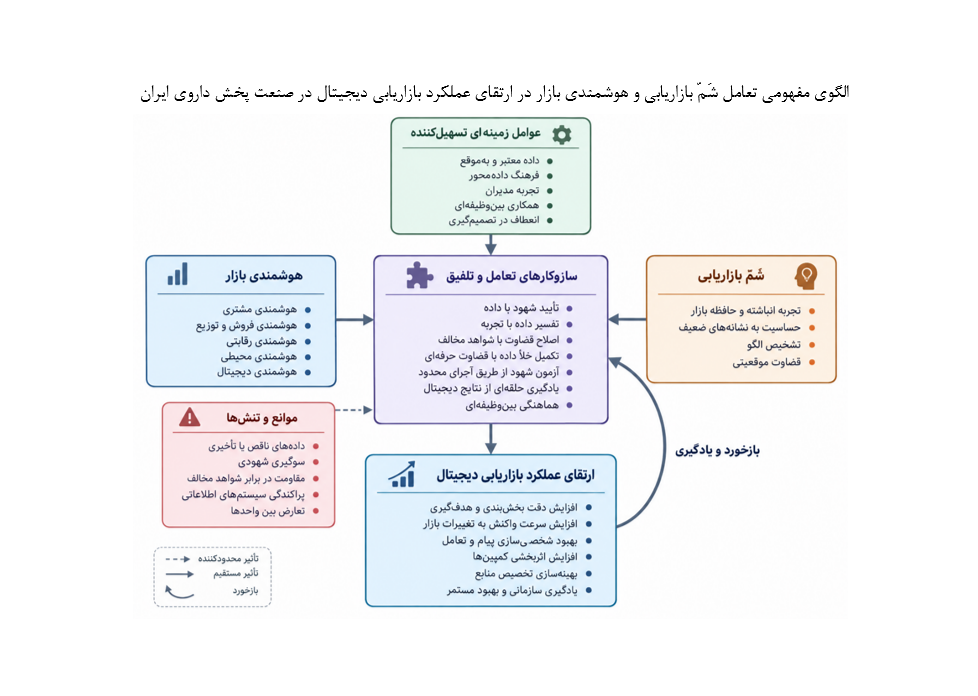
هدف پژوهش حاضر بررسی و تبیین چگونگی تعامل شَمّ بازاریابی و هوشمندی بازار و نقش این تعامل در ارتقای عملکرد بازاریابی دیجیتال در صنعت پخش داروی ایران بود. این پژوهش کاربردی با رویکرد کیفی و طرح اکتشافی انجام شد. مشارکتکنندگان شامل 18 نفر از مدیران و متخصصان حوزههای بازاریابی، فروش، بازاریابی دیجیتال، تحقیقات بازار، توسعه کسبوکار و برنامهریزی تجاری شرکتهای پخش دارویی مستقر در تهران بودند که با روش نمونهگیری هدفمند و حداکثر تنوع انتخاب شدند. دادهها از طریق مصاحبههای نیمهساختاریافته عمیق جمعآوری شد و مصاحبهها تا دستیابی به اشباع نظری ادامه یافت. تحلیل دادهها با روش تحلیل مضمون و با استفاده از نرمافزار MAXQDA انجام شد. برای افزایش اعتبار و قابلیت اعتماد یافتهها از بازبینی مشارکتکنندگان، مرور همکار پژوهشی، مقایسه مستمر دادهها و مستندسازی فرایند تحلیل استفاده شد. تحلیل مصاحبهها به استخراج 264 کد اولیه، 96 کد نهایی، 23 زیرمضمون و 6 مضمون اصلی منجر شد. مضامین اصلی شامل پایههای تجربی و شناختی شَمّ بازاریابی، زیرساختها و فرایندهای هوشمندی بازار، سازوکارهای تلفیق شَمّ و هوشمندی بازار، شرایط تسهیلکننده، موانع و تنشهای تصمیمگیری و پیامدهای تعامل برای عملکرد بازاریابی دیجیتال بود. یافتهها نشان داد مهمترین سازوکارهای تعامل شامل تأیید شهود با داده، تفسیر داده با تجربه، اصلاح قضاوت در مواجهه با شواهد مخالف، تکمیل خلأ اطلاعاتی با قضاوت حرفهای، آزمون محدود تصمیمهای شهودی و یادگیری حلقهای از نتایج دیجیتال است. این تعامل با افزایش دقت هدفگیری، سرعت واکنش، شخصیسازی، اثربخشی کمپینها، بهینهسازی تخصیص منابع و یادگیری سازمانی همراه بود. تعامل اثربخش میان شَمّ بازاریابی و هوشمندی بازار یک قابلیت سازمانی پویا است که از طریق ترکیب تجربه حرفهای با شواهد تحلیلی، کیفیت و سرعت تصمیمگیری بازاریابی دیجیتال را ارتقا میدهد. ایجاد سازوکارهای بازخوردی و یادگیری مستمر میتواند این همافزایی را در شرکتهای پخش دارویی تقویت کند.
دانلودها
مراجع
Ahmadnejad, M. (2024). The Role of Marketing in the Pharmaceutical Business Market in Iran. Modern Research Approaches in Management and Accounting, 8(29), 1289-1302. https://www.majournal.ir/index.php/ma/article/view/2749
Alvani, S. M., Hamidizadeh, A., & Boustani Rad, M. (2020). What Are the Components of Human Resource Soft Skills? A Systematic Review. Scientific Quarterly of Skill Training, 9(33), 25-50.
Cao, G., Duan, Y., & El Banna, A. (2019). A Dynamic Capability View of Marketing Analytics: Evidence from UK Firms. Industrial Marketing Management, 76, 72-83. https://doi.org/10.1016/j.indmarman.2018.08.002
Chen, C., Ishfaq, M., Ashraf, F., Sarfaraz, A., & Wang, K. (2022). Mediating Role of Optimism Bias and Risk Perception between Emotional Intelligence and Decision Making. Frontiers in psychology, 13, 914649. https://doi.org/10.3389/fpsyg.2022.914649
Cioppi, M., Curina, I., Francioni, B., & Savelli, E. (2023). Digital Transformation and Marketing: A Systematic and Thematic Literature Review. Italian Journal of Marketing, 2023(1-2), 207-288. https://doi.org/10.1007/s43039-023-00067-2
Creswell, J. W. (2018). Research Design: Qualitative, Quantitative, and Mixed Methods Approaches. SAGE Publications.
Cristofaro, M., Giardino, P. L., Malizia, A. P., & Mastrogiorgio, A. (2022). Affect and Cognition in Managerial Decision Making: A Systematic Literature Review of Neuroscience Evidence. Frontiers in psychology, 13, 762993. https://doi.org/10.3389/fpsyg.2022.762993
Dwivedi, Y. K., Hughes, L., Ismagilova, E., Aarts, G., Coombs, C., Crick, T., Duan, Y., Dwivedi, R., Edwards, J., Eirug, A., Galanos, V., Ilavarasan, P. V., Janssen, M., Jones, P., Kar, A. K., Kizgin, H., Kronemann, B., Lal, B., Lucini, B., . . . Williams, M. D. (2021). Artificial Intelligence (AI): Multidisciplinary Perspectives on Emerging Challenges, Opportunities, and Agenda for Research, Practice, and Policy. International Journal of Information Management, 57, 101994. https://doi.org/10.1016/j.ijinfomgt.2019.08.002
Horani, O. M., Al Adwan, A. S., Al Rahmi, W. M., & Alkhalifah, A. (2026). Enabling Innovation with Big Data Analytics Capabilities: The Moderating Role of Organizational Learning Culture. Data Science and Management, 9, 100158. https://doi.org/10.1016/j.dsm.2025.06.006
Khoshlafz, M. R., Amiri, M., Hasangholipour, T., & Alaei, H. (2022). Identifying the Impact of Behavioral Components on Sales Force Performance with an Emotional Intelligence Development Approach: A Case Study of Refah Chain Stores. Business Management, 14(1), 114-148. https://sid.ir/paper/1032681/fa
Mauro, M., Noto, G., Prenestini, A., & Sarto, F. (2024). Digital Transformation in Healthcare: Assessing the Role of Digital Technologies for Managerial Support Processes. Technological Forecasting and Social Change, 209, 123781. https://doi.org/10.1016/j.techfore.2024.123781
Mehrnia, A. (2023). Examining the Impact of Marketing Skills on Marketing Performance with the Mediating Role of Market Response and the Moderating Role of Competitive Intensity: A Case Study of Goldiran Marketing Personnel. Eighth International and National Conference on Management, Accounting, and Law,
Mohammadzadeh, A., & Sotoudeh Gharabagh, R. (2018). Soft Skills for Students and Graduates of Engineering Disciplines. Iranian Journal of Engineering Education, 20(80), 1-29.
Polakova, M., Suleimanova, J., Madzik, P., Copus, L., Molnarova, I., & Polednova, J. (2023). Soft Skills and Their Importance in the Labour Market under the Conditions of Industry 5.0. Heliyon, 9(4), e18670. https://doi.org/10.1016/j.heliyon.2023.e18670
Rahimpour, A., & Rouhbakhsh, A. (2017). A Study of Skills and Specialized Areas of Marketing Knowledge with a Comparative Approach among Managers, University Professors, and Marketing Students. Educational Scientific-Research Quarterly, 12(52), 113-126.
Stefia, C. M., Haryanto, B., Wahyudi, L., & Setiawan, A. I. (2024). Dynamic Marketing Capabilities and Firm Performance: A Systematic Review of Empirical Literature. Migration Letters, 21(5), 711-716.
Yoo, W. (2024). The Impact of Artificial Intelligence on Marketing Strategies. International Journal of Science and Research Archive, 13(1), 3211-3223. https://doi.org/10.30574/ijsra.2024.13.1.2042
Ziabari, F., & Hajipour, A. (2018). The Effect of Emotional Intelligence on Marketing Effectiveness in Service Organizations. Iranian Business Management Research, 10(3), 45-66.
دانلودها
گاهشمار انتشار
- ارسال
- بازنگری
- پذیرش
شماره
نوع مقاله
مجوز
حق نشر 2025 Masoud Tabaeh Emamieh (Author); Mohammad Reza Dalvi; Esmaeil Bagheri (Author)

این پروژه تحت مجوز بین المللی Creative Commons Attribution-NonCommercial 4.0 می باشد.