از هویت ملی تا بازار جهانی: مدل کیفی پیشرانها و پَسرانهای کارآفرینی بینالمللی در صنعت مد و لباس
کلمات کلیدی:
کارآفرینی بینالمللی, هویت ملی،, صنعت مد و لباس, پیشرانها, پَسرانهاچکیده
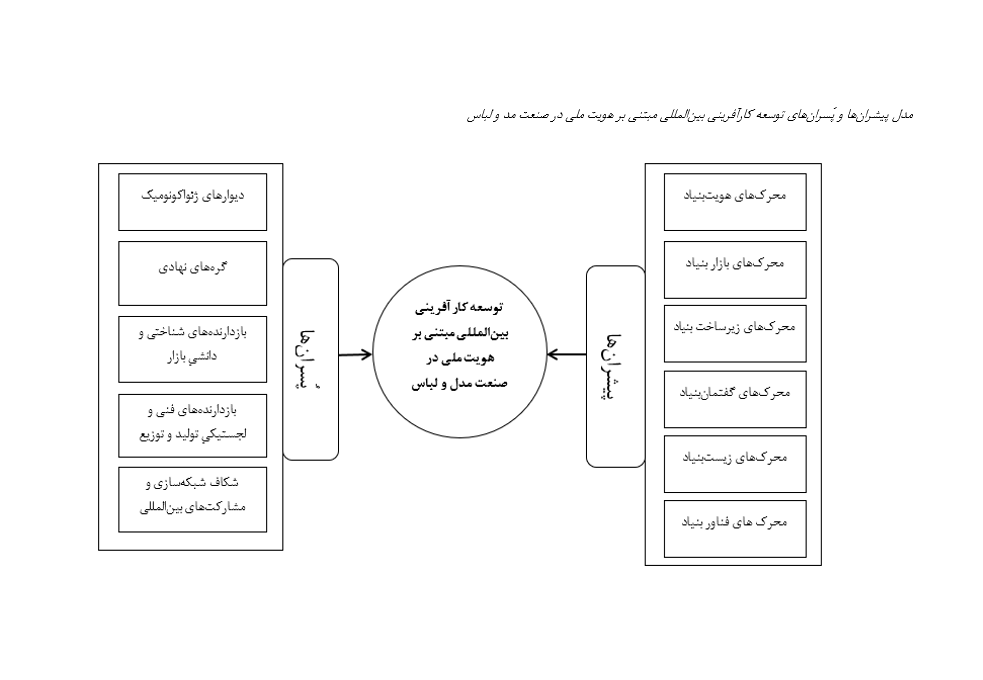
پژوهش حاضر با هدف طراحی مدل پیشرانها و پَسرانهای توسعه کارآفرینی بینالمللی مبتنی بر هویت ملی در صنعت مد و لباس انجام شد. این پژوهش از نظر هدف اکتشافی و از نظر روش، کیفی بود و با استفاده از تحلیل محتوای قراردادی مبتنی بر الگوی گرانهیم و لاندمن انجام شد. جامعه پژوهش شامل خبرگان بازاریابی بینالملل، استادان دانشگاه در حوزههای کارآفرینی، برندینگ و مدیریت مد و لباس و فعالان حرفهای صنعت مد و پوشاک بود. مشارکتکنندگان با روش نمونهگیری گلولهبرفی انتخاب شدند و مصاحبههای عمیق نیمهساختاریافته تا دستیابی به اشباع نظری ادامه یافت. در مجموع، ۱۵ نفر در مطالعه مشارکت کردند. دادهها پس از پیادهسازی مصاحبهها در سه مرحله کدگذاری باز، محوری و انتخابی تحلیل شدند. برای بررسی پایایی فرایند کدگذاری از ضریب توافق کاپای کوهن استفاده شد که مقدار آن 0.844 به دست آمد و نشاندهنده توافق عالی بود. تحلیل دادهها به استخراج ۱۲۷ کد باز، ۳۱ کد محوری و ۱۱ کد انتخابی منجر شد. پیشرانهای توسعه کارآفرینی بینالمللی مبتنی بر هویت ملی در شش بُعد شامل محرکهای هویتبنیاد، بازاربنیاد، زیرساختبنیاد، گفتمانبنیاد، زیستبنیاد و فناوربنیاد شناسایی شدند. همچنین، پَسرانها در پنج بُعد شامل دیوارهای ژئواکونومیک، گرههای نهادی، بازدارندههای شناختی و دانشی بازار، بازدارندههای فنی و لجستیکی تولید و توزیع، و شکاف شبکهسازی و مشارکتهای بینالمللی طبقهبندی شدند. نتایج نشان داد که موفقیت بینالمللی برندهای مد با هویت ایرانی حاصل تعامل همزمان ظرفیتهای فرهنگی و هویتی، قابلیتهای بازار و فناوری، زیرساختهای حمایتی و توانایی غلبه بر محدودیتهای نهادی، تجاری و شبکهای است. توسعه کارآفرینی بینالمللی مبتنی بر هویت ملی در صنعت مد و لباس پدیدهای چندبعدی است و تحقق آن مستلزم بهرهگیری همزمان از سرمایههای فرهنگی، روایتپردازی هویتی، فناوری و شبکههای بینالمللی و نیز کاهش موانع ژئواکونومیک، نهادی، شناختی و لجستیکی است. مدل ارائهشده میتواند چارچوبی برای سیاستگذاری و طراحی راهبردهای بینالمللیسازی برندهای مد ایرانی فراهم کند.
دانلودها
مراجع
Abdi, J., Savadkouhi, M., & Arabi, N. (2021). The Effect of Globalization and National Identity on Iranian Consumers' Behavior toward Foreign Clothing in Tehran. Modern Research Approaches in Management and Accounting, 5(69), 17-33.
Aghazadeh, Z., Esmaeilpour, H., Hosseini, S. R., & Alvani, S. M. (2024). Identifying the Antecedents and Consequences of Internationalization of Family Businesses. Development and Transformation Management(56), 62-70.
Akenzua, O. U., & Gbandi, E. C. (2026). Determinants of Brand Evangelism in the Fashion Clothing Industry in Benin Metropolis, Nigeria. Educational Advancement and Development Journal, 2(1), 235-244.
Astuti, N. C. (2022). Exploring International Entrepreneurship and Opportunity Creation in Emerging Markets [Doctoral dissertation, Queensland University of Technology].
Ben Mahrouche, A. (2023). International Entrepreneurship: Definitions and Evolution of a New Field of Research. Journal of Economic Development and Contracting, 5(4), 12-17.
Dana, L. P., Grandinetti, R., & Mason, M. C. (2016). International Entrepreneurship, Export Planning and Export Performance: Evidence from a Sample of Winemaking SMEs. International Journal of Entrepreneurship and Small Business, 29(4), 602-626. https://doi.org/10.1504/IJESB.2016.079965
De Mel, A. (2026). Asanka De Mel Builds Lovi Ceylon beyond Fashion. Sunday Observer. https://www.sundayobserver.lk
Etemad, H. (2023). The Need for Strategic Redirection and Business Model Change: The Impact of Evolving Influential Forces of Change on International Entrepreneurship Environment. Journal of International Entrepreneurship, 21(4), 441-463. https://doi.org/10.1007/s10843-024-00348-7
Hamidizadeh, M. R., & Fereydouni, B. (2024). The Effect of International Entrepreneurship through Internationalization Readiness on Firm Performance Success. Business Management Explorations, 16(35), 176-197.
Hosseini, M. H., Parhizgar, M. M., & Khademi, M. (2022). Designing a Branding Model in Social Production to Improve the Performance of the Domestic Apparel Industry. Productivity management, 16(61), 139-165.
Jalali, M. (2026). Examining Structural Barriers and Adaptive Strategies of Women's International Entrepreneurship in Iran. Third International Conference on Management, Economics, and Entrepreneurship, Nur, Iran.
Jami, S., Nasimi, M. A., & Pedarsalavati, S. (2023). Designing a Model of the Effectiveness of Social Media Advertising in the Domestic Apparel Industry: A Qualitative Grounded Theory Approach. Textile and Clothing Science and Technology, 12(3), 17-31.
Kabbara, D., Qin, E., Jarrar, H., & Salloum, C. (2024). Internationalisation and Growth of Small Sustainable Fashion Enterprises. International Journal of Entrepreneurship and Small Business, 51(4), 469-493. https://doi.org/10.1504/IJESB.2024.136955
Kahrizi, O. A., Amiri, Z., & Tavaghi Mianji, Z. (2025). The Role of International Entrepreneurship in Creating Export Opportunities for Small and Medium-Sized Enterprises and Start-Ups. Eleventh National Conference on Modern Studies and Research in Humanities, Management, and Entrepreneurship in Iran, Tehran, Iran.
Kalabi, A. M., & Ghandi, S. (2024). Business Internationalization with Emphasis on International Entrepreneurship: Explaining the Mediating Role of Organizational Capabilities and the Moderating Role of Global Mindset. International Business Management Quarterly, 7(2).
Keykhosravi, A., Bagheri Farahbakhsh, S., & Ali, S. (2021). Examining the Effect of National Identity on Consumers' Perceived Value of Domestic and Foreign Products: A Case Study of Clothing. Sixth International Conference on Management, Global Trade, Economics, Finance, and Social Sciences, Tehran, Iran.
Korhonen, S. (2016). Constructing the International Entrepreneurial Identity: A Study of International Entrepreneurship Sense-Making Narratives [Doctoral dissertation, University of Jyväskylä].
Lin, X. (2025). Explore Global Fashion Trends and Cultural Influences. Journal of Education, Humanities and Social Sciences, 46. https://doi.org/10.54097/rzdvr692
Martin-Rojas, R., Garcia-Morales, V. J., & Gonzalez-Alvarez, N. (2019). Technological Antecedents of Entrepreneurship and Its Consequences for Organizational Performance. Technological Forecasting and Social Change, 147, 22-35. https://doi.org/10.1016/j.techfore.2019.06.018
Masoudi, M. (2022). Examining Clothing as a Symbol of Culture and National Identity. Fourth International Conference on Humanities, Law, Social Studies, and Psychology,
McDougall, P. P., & Oviatt, B. M. (2000). International Entrepreneurship: The Intersection of Two Research Paths. Academy of Management journal, 43(5), 902-906. https://doi.org/10.2307/1556418
Milanesi, M., Runfola, A., & Guercini, S. (2024). Exploring the Internationalization Pathways of Luxury SMEs: Is There an Asset of Foreignness? International Marketing Review, 41(3-4), 806-826. https://doi.org/10.1108/IMR-08-2023-0174
Mounesi Sorkheh, M. (2017). Clothing and Identity: Dimensions of Cultural Identity in Iranian Clothing. Jelveh-ye Honar Scientific Quarterly, 9(1), 107-116.
Palacios-Marqués, D., García, M. G., Sánchez, M. M., & Mari, M. P. A. (2019). Social Entrepreneurship and Organizational Performance: A Study of the Mediating Role of Distinctive Competencies in Marketing. Journal of Business Research, 101, 426-432. https://doi.org/10.1016/j.jbusres.2019.02.004
Parvizi, A., & Seyedmoradi, M. (2024). A Review Study of the Role of Clothing in the Formation of National Identity. Third Conference on Islamic Culture and Art (National and International), Bandar Abbas, Iran.
Perera, S. R., Sinha, P., & Gilbert-Saad, A. (2026). From Entrepreneurial Orientation to Export Performance: A Pathway through Vicarious Learning and Absorptive Capacity in International SMEs. Journal of International Management, 101339. https://doi.org/10.1016/j.intman.2026.101339
Roustazadeh, M., Davoudi, M. R., Aghasi, S., & Shirvani, A. (2024). Identifying the Components of Digital Content Production in Marketing in the Fashion and Apparel Industry. Textile and Clothing Science and Technology, 13(3), 39-59.
Secinaro, S. F., Oppioli, M., Demarchi, L., & Novotny, O. (2025). Bridging Borders and Boundaries: The Role of New Technologies in International Entrepreneurship and Intercultural Dynamics. International Entrepreneurship and Management Journal, 21(1), 46. https://doi.org/10.1007/s11365-024-01061-6
Tan, C. S. L., & Islam, S. (2026). Fashion Entrepreneurship: Principles and Practice. Taylor & Francis. https://doi.org/10.4324/9781032631523
دانلودها
گاهشمار انتشار
- ارسال
- بازنگری
- پذیرش
شماره
نوع مقاله
مجوز
حق نشر 2025 Shohreh Jelokhani (Author); Mohammad Javad Taghipourian; Elham Fazeli Veisari, Maryam Rahmaty (Author)

این پروژه تحت مجوز بین المللی Creative Commons Attribution-NonCommercial 4.0 می باشد.