پدیدارشناسی تجربه مشتریمحوری کارکنان فروشگاههای زنجیرهای افق کوروش از دیدگاه مشتریان و کارکنان
کلمات کلیدی:
مشتریمحوری, تجربه زیسته مشتری, پدیدارشناسی, روش کلایزی, فروشگاههای زنجیرهای افق کوروش, کارکنان فروشچکیده
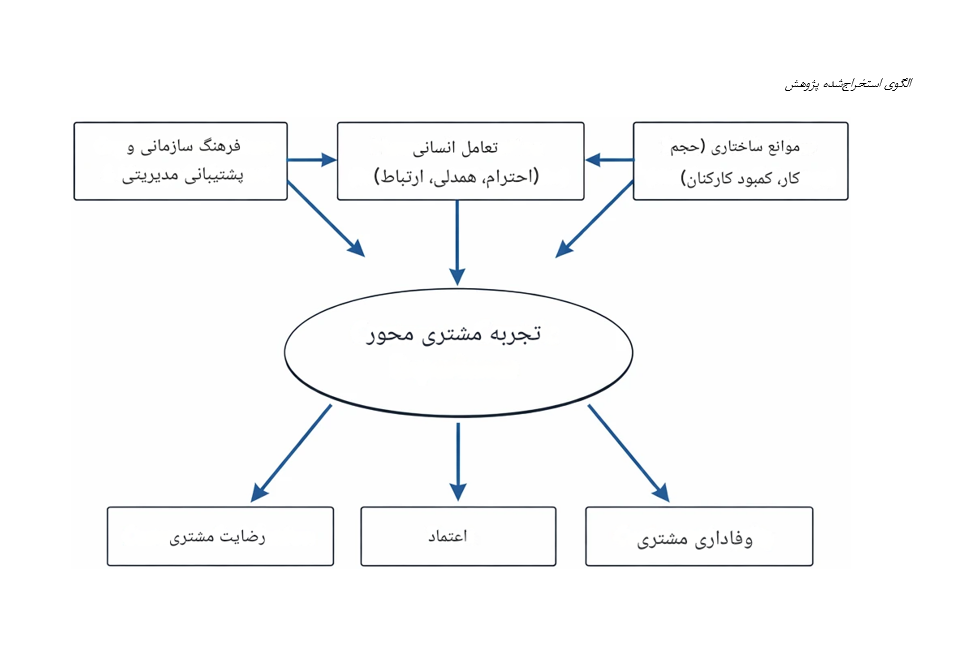
هدف پژوهش حاضر، کشف و تبیین تجربه زیسته مشتریمحوری کارکنان فروشگاههای زنجیرهای افق کوروش از دیدگاه مشتریان و کارکنان و شناسایی ابعاد، مؤلفهها و پیامدهای این پدیده در بستر سازمانی فروشگاههای زنجیرهای بود. این پژوهش از نظر هدف کاربردی و از نظر ماهیت، کیفی و از نوع پدیدارشناسی بود که با استفاده از روش هفتمرحلهای کلایزی انجام شد. جامعه پژوهش شامل خبرگان، کارکنان و مشتریان فروشگاههای زنجیرهای افق کوروش در شهر تهران بود که با روش نمونهگیری گلولهبرفی انتخاب شدند و فرآیند نمونهگیری تا دستیابی به اشباع نظری ادامه یافت. در نهایت، 15 نفر در پژوهش مشارکت داشتند. دادهها از طریق مصاحبههای نیمهساختاریافته عمیق گردآوری شد و پس از پیادهسازی کامل، طی مراحل کدگذاری باز، محوری و انتخابی مورد تحلیل قرار گرفت. بهمنظور افزایش اعتبار یافتهها از روشهایی نظیر بازبینی مشارکتکنندگان، بازآزمون کدگذاری و تأیید خبرگان استفاده شد. یافتههای پژوهش نشان داد که مشتریمحوری در فروشگاههای زنجیرهای افق کوروش پدیدهای چندبعدی و متأثر از عوامل انسانی، سازمانی و ساختاری است. در بخش یافتههای استنباطی، تحلیل دادهها منجر به استخراج چند مقوله اصلی شامل مشتریمحوری رفتاری، مشتریمحوری خدماتی، مشتریمحوری ارزشی، تجربه زیسته مشتریمحور، بستر سازمانی مشتریمحوری و پیامدهای مشتریمحوری شد. نتایج نشان داد که تعامل انسانی کارکنان، خوشبرخوردی، صبوری، گوش دادن فعال، پاسخگویی سریع، راهنمایی دقیق و مسئولیتپذیری در شکلگیری ادراک مثبت مشتریان از مشتریمحوری نقش اساسی دارند. همچنین ادراک ارزش اقتصادی، کیفیت خدمات، تنوع محصولات و قیمتگذاری منصفانه موجب افزایش رضایت، اعتماد و وفاداری مشتریان میشود. یافتهها همچنین نشان داد که حمایت مدیریتی، آموزش کارکنان و توانمندسازی سازمانی از عوامل تسهیلکننده مشتریمحوری هستند، در حالیکه فشار کاری بالا، کمبود نیروی انسانی و محدودیتهای ساختاری از مهمترین موانع تحقق آن محسوب میشوند. نتایج پژوهش نشان داد که مشتریمحوری در فروشگاههای زنجیرهای تنها به ارائه خدمات محدود نمیشود، بلکه فرآیندی پویا و تعاملی است که در بستر فرهنگ سازمانی، تعاملات انسانی و حمایت مدیریتی شکل میگیرد. توجه همزمان به تجربه زیسته کارکنان و مشتریان میتواند زمینه ارتقای کیفیت خدمات، افزایش رضایت و وفاداری مشتریان و بهبود عملکرد سازمانی را فراهم سازد.
دانلودها
مراجع
Ashrafi, Moghar, & Shirkhodai. (2025). Professional Ethics in Influencer Marketing: A Comparative Study of Selected Countries. Scientific Quarterly of Culture-Communication Studies, 26(69), 207-236.
Bahramzadeh, & Maskinnavaz. (2025). The Relationship of Service Quality, Customer Satisfaction, and Customer Value with Customer Loyalty through Customer Relationship Management Quality and Considering Brand Image in Behsaba Food Industries. Essays in Management, Psychology, and Educational Sciences.
Boroumand, N., Narimani, R., & Bagheri, M. (2022). The Role of Management Ability in Customer Concentration and Firm Performance. New Research Approaches in Management and Accounting, 6(21), 458-470.
Bose, S., Cahan, S. F., Dhole, S., & Mishra, S. (2025). Does a Customer Focus Influence Firms’ Climate‐Change Reporting Decisions? The Role of Market‐Driven Corporate Culture. Journal of Business Finance & Accounting, 52(3), 1255-1278.
Bozorgpour, Z. (2023). Examining the Effect of Social Media Marketing Activities and Customer Experience on Customer Relationship Quality: A Case Study of Ofogh Kourosh Chain Stores. New Research Approaches in Management and Accounting, 6(22), 996-1014.
Brahm, F., & Poblete, J. (2024). Organizational culture, adaptation, and performance. Organization Science, 35(5), 1823-1848.
Dong, Y., & Hon, A. H. (2025). What makes employees provide quality service? The role of employee customer-oriented perspective taking. International Journal of Hospitality Management, 125, 104016.
Ershad, S., Jarideh, N., & Badizadeh. (2016). The Effect of Customer Orientation and Service Orientation of Employees on Service Quality, Satisfaction, and Customer Loyalty in Hyperstar Stores. Management of Development and Transformation, 27(7), 75-84.
Ghlichlee, B., & Bayat, F. (2021). Frontline employees’ engagement and business performance: the mediating role of customer-oriented behaviors. Management Research Review, 44(2), 290-317.
Hüttel, B. A. (2021). Antecedents of frontline employees' customer orientation: A comprehensive review. SMR-Journal of Service Management Research, 5(1), 50-70.
Maarefi, M., & Mortazaei, G. (2025). Determining the Effect of Digital Transformation and Customer Focus on Agile Management. Technology in Entrepreneurship and Strategic Management, 4(2), 1-12.
Madhani, P. M. (2021). Building a customer-focused culture with rewards alignment: A cross-sectional analysis. International Journal of Electronic Customer Relationship Management, 13(1), 45-80.
Moradi, M., Deldar, M., & Sabermahani, M. (2019). The Effect of Customer Focus on Firms’ Dividend Payout Policy. Financial Management Strategy, 7(1), 95-122.
Salajegheh, A., & Shiasi Qaleh Maleki, S. (2022). The Effect of Customer Relationship Management on Customer Satisfaction in Chain Store Sales. International Conference on Interdisciplinary Studies in Management and Engineering, 5(5), 127-137.
Salamatina, Y. (2021). Managing the empathic culture of client-oriented personnel in the system of human resource development in the Russian regions. E3s Web of Conferences,
Samiei, Lotfizadeh, Heidarzadeh, & Torabian. (2023). Examining and Analyzing Customer Loyalty to Chain Stores in Iran Using a Mixed-Methods Approach. Monthly Journal of Political Sociology of Iran, 5(11), 5426-5444.
Schwepker, C. H., Jr., & Dimitriou, C. K. (2024). Employee-customer identification and service quality in the hospitality industry. American Journal of Business, 39(4), 211-227.
Shaikh, S. A. (2018). Impact of internal marketing and human resource management to foster customer oriented behavior among employees: a study on mega retail stores in Karachi. Nice Research Journal, 183-199.
Supramaniam, S., John, S. P., & Gaur, S. S. (2024). The Role of Sales Personnel Empathy and Customer-oriented Behaviour on Female Consumers’ Emotions and Satisfaction: An Empirical Analysis. Fiib Business Review, 23197145241241956.
Tadesse Bogale, A., & Debela, K. L. (2024). Organizational culture: a systematic review. Cogent Business & Management, 11(1), 2340129.
Takeei, A., & Takeei, N. (2021). The Relationship between Sales Staff Job Satisfaction and Customer Satisfaction in Ofogh Kourosh Chain Stores in Eastern Golestan. Applied Studies in Management and Development Sciences, 32(6), 39-54.
Tremblay, M. (2024). Customer gratitude expressions and FLEs’ prosocial behavior: Insights from delighted customers. Journal of Services Marketing, 38(7), 857-871.
Tremblay, M., & Parent-Rocheleau, X. (2025). The right fit: how the alignment between customer orientation and service climate boosts employee commitment and customer loyalty. European Journal of Marketing, 59(3), 528-551.
Turkson, E. O., & Ackaah‐Kwarteng, K. (2025). Unveiling the Link between Customer Orientation and Customer Involvement: The Role of Customer Empowerment. African Journal of Emerging Issues, 7(21), 29-52.
Vares, S. H., Khani, P., & Motab. (2025). Examining the Effect of Customer Orientation on Brand Loyalty and Customer Purchase Decisions. Advertising and Sales Management, 6(2), 239-259.
Wang, C. (2023). The Influence of Two-Dimensional Customer Orientation on C2C Online Shop Service Quality and Customer Behavioral Intention in C2C E-Commerce Setting. Manufacturing and Service Operations Management, 4(2), 10-20.
Yashchenko, O., Makatora, D., Kubanov, R., & Zinych, P. (2024). Customer Focus as a Tool for Improving Business Efficiency in the Architecture and Construction Industry.
Zhao, X. (2022). Customer orientation: A literature review based on bibliometric analysis. Sage Open, 12(1), 21582440221079804.
Zia, A. (2024). The Impact of Salesmen’s Customer-Oriented Behavior on Customer Satisfaction in Finland

دانلود
چاپ شده
ارسال
بازنگری
پذیرش
شماره
نوع مقاله
مجوز
حق نشر 2025 Mohsen Ashkaboos (Author); Seyed Reza Hassani; Afshin Baghfalaki, Saeed Mir (Author)

این پروژه تحت مجوز بین المللی Creative Commons Attribution-NonCommercial 4.0 می باشد.