Identifying Drivers of Emotional Branding Effective in Strengthening Customer Loyalty in Sports Clubs with a Futures Studies Approach
Keywords:
Emotional Branding, Customer Loyalty, Sports Club, Delphi, Structural AnalysisAbstract
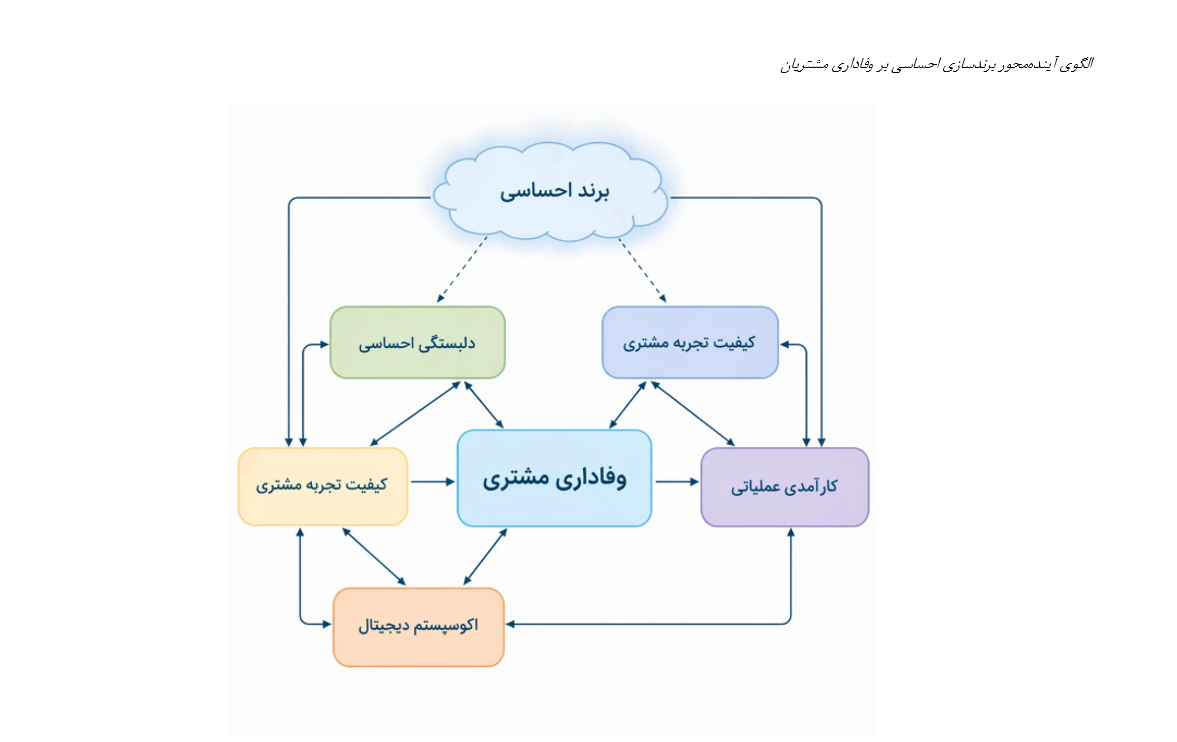
The present study aimed to identify the key drivers influencing the strengthening of customer loyalty through emotional branding in sports clubs and to develop a future-oriented model explaining the relationships among these drivers. This applied research was conducted within the framework of futures studies using a mixed exploratory-structural approach. Data were collected through literature review, expert interviews, and three rounds of the Delphi method. Subsequently, cross-impact analysis and MICMAC structural analysis were employed to determine the influence and dependence of the identified variables. Finally, morphological analysis was used to construct future scenarios of customer loyalty in sports clubs. The participants consisted of experts in sports management, marketing, and futures studies who were selected purposively. The findings revealed that five major drivers, namely “the brand’s ability to create emotional attachment and a sense of belonging,” “quality and consistency of customer experience,” “the importance of customers’ emotional and motivational needs,” “development of the digital ecosystem of sports services,” and “efficiency of operational processes,” played the most influential roles in strengthening customer loyalty. MICMAC analysis demonstrated that emotional brand attachment had the highest direct and indirect influence within the system. Scenario analysis further indicated that the most desirable future for sports clubs emerges when all key drivers are in favorable conditions and synergy exists among emotional, technological, and operational dimensions. The findings indicate that customer loyalty in sports clubs is a multidimensional phenomenon shaped by the integration of emotional branding, customer experience quality, digital transformation, and operational efficiency. Therefore, sports clubs capable of establishing deeper emotional bonds with customers while simultaneously delivering sustainable and digitally oriented experiences are more likely to achieve sustainable competitive advantage and long-term customer loyalty.
Downloads
References
Akhmetshin, R., Martinova, O., Novikova, E., & Palyakin, R. (2025). Marketing tools of customer loyalty management in telecommunication sector organizations. In V. V. Mantulenko, J. Horak, J. Kucera, & M. Ayyubov (Eds.), Proceedings of the International Scientific Conference "Digital Future: Science, Education, and Innovative Development of Socio-Economic Systems" (Vol. 1552). Springer. https://doi.org/10.1007/978-3-031-99598-9_71
Beyari, H. (2025). Artificial intelligence's effect on customer loyalty in the context of electronic commerce. Journal of Umm Al-Qura University for Engineering and Architecture, 16, 617-626. https://doi.org/10.1007/s43995-025-00142-z
Chen, B., & Cui, W. (2025). Data-driven power marketing strategy optimization and customer loyalty promotion. Energy Informatics, 8, 53. https://doi.org/10.1186/s42162-025-00510-y
Choi, C., Xu, J., & Min, D. (2024). Investigating of the influence process on consumer's active engagement through emotional brand attachment and brand love. Asia Pacific Journal of Marketing and Logistics, 36(11), 3061-3080. https://doi.org/10.1108/APJML-10-2023-1028
Ekber Akgun, A., Kocoglu, I., & Zeki Imamoglu, S. (2013). An emerging consumer experience: Emotional branding. Procedia - Social and Behavioral Sciences, 99, 503-508. https://doi.org/10.1016/j.sbspro.2013.10.519
Fastoso, F., & Gonzalez-Jimenez, H. (2020). Materialism, cosmopolitanism, and emotional brand attachment: The roles of ideal self-congruity and perceived brand globalness. Journal of Business Research, 121, 429-437. https://doi.org/10.1016/j.jbusres.2018.12.015
Fernandes, T., & Moreira, M. (2019). Consumer brand engagement, satisfaction and brand loyalty: A comparative study between functional and emotional brand relationships. Journal of Product & Brand Management, 28(2), 274-286. https://doi.org/10.1108/JPBM-08-2017-1545
Kalra, G., Jhamb, D., & Mittal, A. (2024). Emotional brand attachment, brand tribalism, and co-creation in luxury hotels: Insights from emerging economies. The Open Psychology Journal, 17. https://doi.org/10.2174/0118743501301683240516055354
Kammerer, A., Dilger, T., & Ploder, C. (2021). Emotional branding: Identifying the difference between Nike and Adidas. In A. Horobet, L. Belascu, P. Polychronidou, & A. Karasavvoglou (Eds.), Global, Regional and Local Perspectives on the Economies of Southeastern Europe. Springer. https://doi.org/10.1007/978-3-030-57953-1_18
Kia, M. (2025). Attention-guided deep learning for effective customer loyalty management and multi-criteria decision analysis. Iranian Journal of Computer Science, 8, 163-184. https://doi.org/10.1007/s42044-024-00215-7
Kuikka, A., Hallikainen, H., & Tuominen, S. (2025). What drives customer loyalty in a pandemic? Semantic analysis of grocery retailers. Electronic Commerce Research, 25, 2205-2240. https://doi.org/10.1007/s10660-024-09857-y
Lalicic, L., Huertas, A., Moreno, A., & Jabreel, M. (2020). Emotional brand communication on Facebook and Twitter: Are DMOs successful? Journal of Destination Marketing & Management, 16, 100350. https://doi.org/10.1016/j.jdmm.2019.03.004
Latif, K. F., & Bashir, S. (2024). Achieving customer loyalty during post-pandemic: An asymmetric approach. Future Business Journal, 10, 14. https://doi.org/10.1186/s43093-024-00305-9
Manohar, S., Kumar, R., Saha, R., & Mittal, A. (2022). Examining the effect of emotional branding in building brand equity of social marketing campaigns: A case on Swachh Bharat, India. Society and Business Review, 18(2), 197-218. https://doi.org/10.1108/SBR-09-2021-0159
Mera-Reategui, A., & Gallardo-Echenique, E. (2024). Key pillars in storytelling to generate emotional branding. In J. L. Reis, J. Zeleny, B. Gavurova, & J. P. M. d. Santos (Eds.), Marketing and Smart Technologies (Vol. 386). Springer. https://doi.org/10.1007/978-981-97-1552-7_20
Nguyen, H. M., Ho, T. K. T., & Ngo, T. T. (2024). The impact of service innovation on customer satisfaction and customer loyalty: A case in Vietnamese retail banks. Future Business Journal, 10, 61. https://doi.org/10.1186/s43093-024-00354-0
Ozuem, W., & Willis, M. (2025). Brand and customer loyalty in online brand communities. In Digital Marketing Strategies for Value Co-Creation. Palgrave Macmillan. https://doi.org/10.1007/978-3-031-84613-7_7
Surbakti, H., & Chumwatana, T. (2026). An intelligent DMI-based feature selection approach for measuring customer loyalty using SVM. International Journal of Information Technology, 18, 249-261. https://doi.org/10.1007/s41870-024-02317-8
Taghizadeh, H., & Shokri, A. (2014). The study of spiritual leadership impact on organizational justice and organizational commitment of employees of company Gas Ardabil Province. Human Resource Management in Oil Industry, 5(19), 227-255.
Taghizadeh, H., & Shokri, A. (2015). Presenting a practical model of reinforcing spiritual leadership in educational institutes: A case study. International Education Studies, 8(10), 126-136.
Turenko, O., & Yakhneeva, I. (2025). A study of customer loyalty in private schools. In V. V. Mantulenko, J. Horak, J. Kucera, & M. Ayyubov (Eds.), Proceedings of the International Scientific Conference "Digital Future: Science, Education, and Innovative Development of Socio-Economic Systems" (Vol. 1552). Springer. https://doi.org/10.1007/978-3-031-99598-9_19
Yang, K., Maria Kim, H., & Zimmerman, J. (2020). Emotional branding on fashion brand websites: Harnessing the Pleasure-Arousal-Dominance (P-A-D) model. Journal of Fashion Marketing and Management: An International Journal, 24(4), 555-570. https://doi.org/10.1108/JFMM-03-2019-0055
Downloads
Publication Timeline
- Submitted
- Revised
- Accepted
Issue
Section
License
Copyright (c) 2025 Seyed Yousef Hajiasghari; Bahman Valinejad, Mitra Choopanimoghaddam, Roya Mahmoudi, Maryam Mirzaei, Vahid Alizadeh Ara (Author)

This work is licensed under a Creative Commons Attribution-NonCommercial 4.0 International License.