کاربرد هستیشناسی در حاکمیت داده و مدیریت دانش در سازمانهای مبتنی بر هوش مصنوعی
DOI:
https://doi.org/10.61838/kman.jtesm.499کلمات کلیدی:
هستیشناسی, حاکمیت داده, مدیریت دانش, هوش مصنوعی, حکمرانی معنایی, سازمانهای هوشمندچکیده
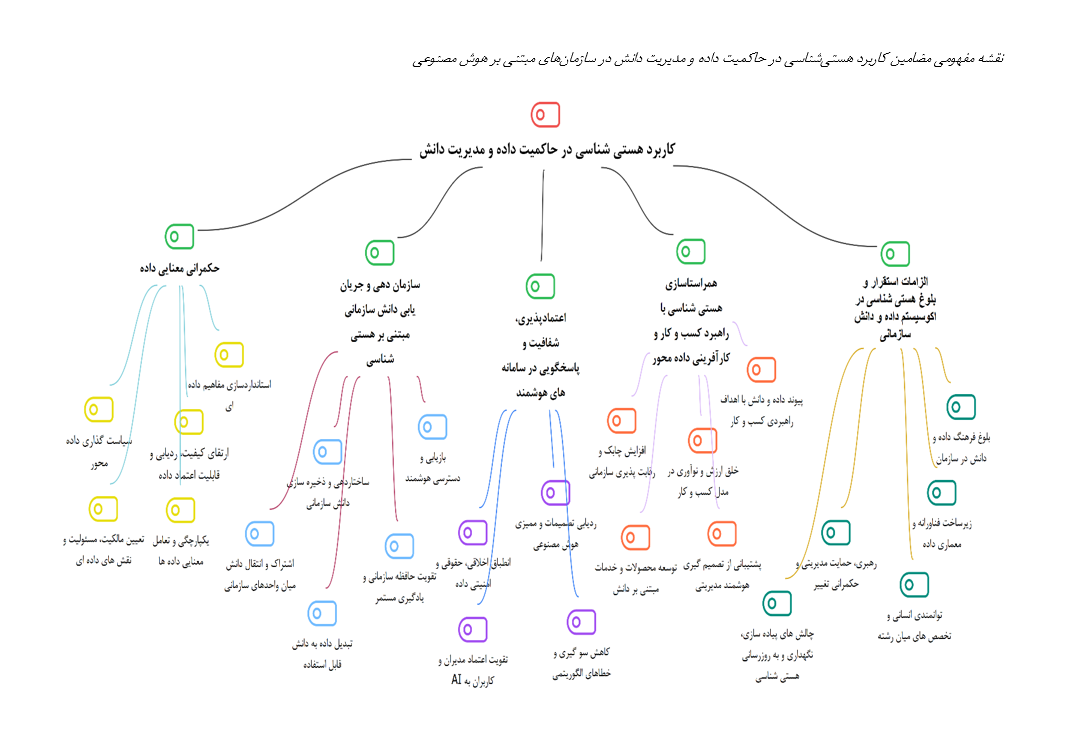
هدف پژوهش حاضر تبیین کاربرد هستیشناسی در بهبود حاکمیت داده و مدیریت دانش و شناسایی پیامدهای آن برای اعتمادپذیری سامانههای هوشمند، تصمیمگیری راهبردی، نوآوری کسبوکار و کارآفرینی دادهمحور در سازمانهای مبتنی بر هوش مصنوعی بود. این پژوهش کاربردی با رویکرد کیفی، طرح اکتشافی و روش تحلیل مضمون انجام شد. جامعه پژوهش را مدیران و متخصصان حوزههای هوش مصنوعی، حاکمیت داده، مدیریت دانش، تحلیل داده، معماری اطلاعات، تحول دیجیتال و کسبوکارهای فناورانه تشکیل دادند. مشارکتکنندگان با نمونهگیری هدفمند انتخاب شدند و اشباع نظری پس از انجام ۱۲ مصاحبه نیمهساختاریافته حاصل شد. دادهها پس از پیادهسازی کامل مصاحبهها، با رویکرد تحلیل مضمون بازاندیشانه براون و کلارک و در سه سطح مضامین پایه، سازماندهنده و فراگیر تحلیل شدند. برای مدیریت و کدگذاری دادهها از نرمافزار MAXQDA استفاده شد و اعتبار یافتهها بر اساس معیارهای اعتبارپذیری، انتقالپذیری، وابستگی و تأییدپذیری بررسی گردید. تحلیل دادهها به شناسایی ۳۲۰ مفهوم اولیه منجر شد که پس از حذف کدهای تکراری و ادغام مفاهیم هممعنا، در قالب ۲۰۱ مضمون پایه، ۲۵ مضمون سازماندهنده و پنج مضمون فراگیر سامان یافتند. مضامین فراگیر شامل حکمرانی معنایی داده، سازماندهی و جریانیابی دانش سازمانی، اعتمادپذیری و پاسخگویی سامانههای هوشمند، همراستاسازی هستیشناسی با راهبرد کسبوکار و کارآفرینی دادهمحور، و الزامات استقرار و بلوغ هستیشناسی بودند. یافتهها نشان دادند که هستیشناسی با استانداردسازی مفاهیم، یکپارچهسازی معنایی دادهها، ارتقای کیفیت و ردیابی داده، تسهیل انتقال و بازیابی دانش، افزایش توضیحپذیری تصمیمات الگوریتمی و کاهش سوگیری، زمینه تصمیمگیری هوشمند، توسعه محصولات دانشمحور و خلق ارزش دادهمحور را فراهم میسازد. هستیشناسی یک زیرساخت معنایی و راهبردی برای پیوند دادن داده، دانش، هوش مصنوعی و اهداف کسبوکار است و استقرار موفق آن مستلزم معماری داده یکپارچه، فرهنگ اشتراک دانش، تیمهای میانرشتهای، حمایت مدیریت ارشد و بهروزرسانی مستمر مدلهای مفهومی است.
دانلودها
مراجع
Afroogh, S., Akbari, A., Malone, E., Kargar, M., & Alambeigi, H. (2024). Trust in AI: Progress, Challenges, and Future Directions. Humanities and Social Sciences Communications, 11, 1568. https://doi.org/10.1057/s41599-024-04044-8
Akbari, S. (2025). Policy Requirements and Data Governance in the Age of Artificial Intelligence: A Conceptual Framework for Responsible Development of Intelligent Systems First International Conference on Management, Computer Science and Artificial Intelligence, Tehran.
Alshammakhi, Q. M., & Sheikh, R. A. (2025). Driving Sustainable Entrepreneurship through AI and Knowledge Management: Evidence from SMEs in Emerging Economies. Sustainability, 17(24), 10928. https://doi.org/10.3390/su172410928
Ambalavanan, R., Snead, R. S., Marczika, J., Towett, G., Malioukis, A., & Mbogori-Kairichi, M. (2025). Ontologies as the Semantic Bridge between Artificial Intelligence and Healthcare. Frontiers in Digital Health, 7, 1668385. https://doi.org/10.3389/fdgth.2025.1668385
Babaei Giglou, H., D'Souza, J., & Auer, S. (2024). LLMs4OL 2024 Overview: The 1st Large Language Models for Ontology Learning Challenge. Open Conference Proceedings, 4, 3-16. https://doi.org/10.52825/ocp.v4i.2473
Bernardo, B. M. V., Mamede, H. S., Barroso, J. M. P., & dos Santos, V. M. P. D. (2024). Data Governance and Quality Management—Innovation and Breakthroughs across Different Fields. Journal of Innovation & Knowledge, 9(4), 100598. https://doi.org/10.1016/j.jik.2024.100598
Girón, D. C. A., Ramos, S. E., Soto, F. G. C., & Cadenas, D. I. V. (2025). The Relationship between Knowledge Management and Artificial Intelligence: A Thematic Analysis from Scopus. Iberoamerican Journal of Science Measurement and Communication, 5(1), 10. https://doi.org/10.47909/ijsmc.1713
Guizzardi, G., & Guarino, N. (2024). Explanation, Semantics, and Ontology. Data & Knowledge Engineering, 153, 102325. https://doi.org/10.1016/j.datak.2024.102325
Jorzik, P., Klein, S. P., Kanbach, D. K., & Kraus, S. (2024). AI-Driven Business Model Innovation: A Systematic Review and Research Agenda. Journal of Business Research, 182, 114764. https://doi.org/10.1016/j.jbusres.2024.114764
Kazemnejad, S., & Tavakkolifar, E. (2024). Data Sovereignty and the Right of Ownership over AI-Generated Data: Legal Challenges and Cyber Requirements. Journal of Cyber Law, 1(3), 61-71. https://www.sid.ir/paper/1782187/en
Kumar, R., Ishan, K., Kumar, H., & Singla, A. (2025). LLM-Powered Knowledge Graphs for Enterprise Intelligence and Analytics 2025 6th International Conference on Recent Advances in Information Technology, https://doi.org/10.1109/RAIT65068.2025.11088890
Merono-Penuela, A., Simperl, E., Kurteva, A., & Reklos, I. (2025). KG.GOV: Knowledge Graphs as the Backbone of Data Governance in AI. Journal of Web Semantics, 85, 100847. https://doi.org/10.1016/j.websem.2024.100847
Oecd. (2024). AI, Data Governance and Privacy: Synergies and Areas of International Co-Operation. https://www.oecd.org/en/publications/ai-data-governance-and-privacy_2476b1a4-en.html
Oecd. (2025). Generative AI and the SME Workforce: New Survey Evidence. https://www.oecd.org/content/dam/oecd/en/publications/reports/2025/11/generative-ai-and-the-sme-workforce_83bafdfb/2d08b99d-en.pdf?utm_source=chatgpt.com
Papagiannidis, E., Mikalef, P., & Conboy, K. (2025). Responsible Artificial Intelligence Governance: A Review and Research Framework. The Journal of Strategic Information Systems, 34(2), 101885. https://doi.org/10.1016/j.jsis.2024.101885
Rezaei, M. (2025). Artificial Intelligence in Knowledge Management: Identifying and Addressing the Key Implementation Challenges. Technological Forecasting and Social Change, 217, 124183. https://doi.org/10.1016/j.techfore.2025.124183
Rosic, M., Sumic, D., & Males, L. (2025). Semantic Interoperability of Multi-Agent Systems in Autonomous Maritime Domains. Electronics, 14(13), 2630. https://doi.org/10.3390/electronics14132630
Tzitzikas, Y., Marketakis, Y., Fafalios, P., Kritsotaki, A., Axaridou, A., Mountantonakis, M., & Theodoridou, M. (2024). Governance Model for Ontologies. https://doi.org/10.2903/sp.efsa.2024.EN-9119
Wang, S., & Zhang, H. (2024). Green Entrepreneurship Success in the Age of Generative Artificial Intelligence: The Interplay of Technology Adoption, Knowledge Management, and Government Support. Technology in Society, 79, 102744. https://doi.org/10.1016/j.techsoc.2024.102744
Xhani, D., Sedrakyan, G., Gavai, A., Guizzardi, R., & van Hillegersberg, J. (2025). The Role and Applications of Semantic Interoperability Tools and Explainable AI in the Development of Smart Food Systems: Findings from a Systematic Literature Review. Intelligent Systems with Applications, 27, 200547. https://doi.org/10.1016/j.iswa.2025.200547
Zahedi, S. (2024). Management with AI and on AI. Development of humanities, 4(8), 45-58. https://doi.org/10.22047/hsd.2024.194458
Zolghadr, A., Sarmad Saeidi, S., & Ghasemi, B. (2026). Designing a Model for the Application of Artificial Intelligence in the Export of Electronic Industry Products. Technology in Entrepreneurship and Strategic Management, 5(1), 1-18. https://journaltesm.com/index.php/journaltesm/article/view/389
دانلودها
گاهشمار انتشار
- ارسال
- بازنگری
- پذیرش
شماره
نوع مقاله
مجوز
حق نشر 2025 Zahra Razmi; Zahra Tanha (Author)

این پروژه تحت مجوز بین المللی Creative Commons Attribution-NonCommercial 4.0 می باشد.