Designing Production Prosperity Strategies from the Perspective of Planning and Research and Development Affairs in Industrial Enterprises Active in the Auto Parts Manufacturing Industry
DOI:
https://doi.org/10.61838/kman.jtesm.517Keywords:
Industrial R&D Strategies, Production Prosperity, Parts Manufacturing Industry, Automotive Parts ManufacturingAbstract
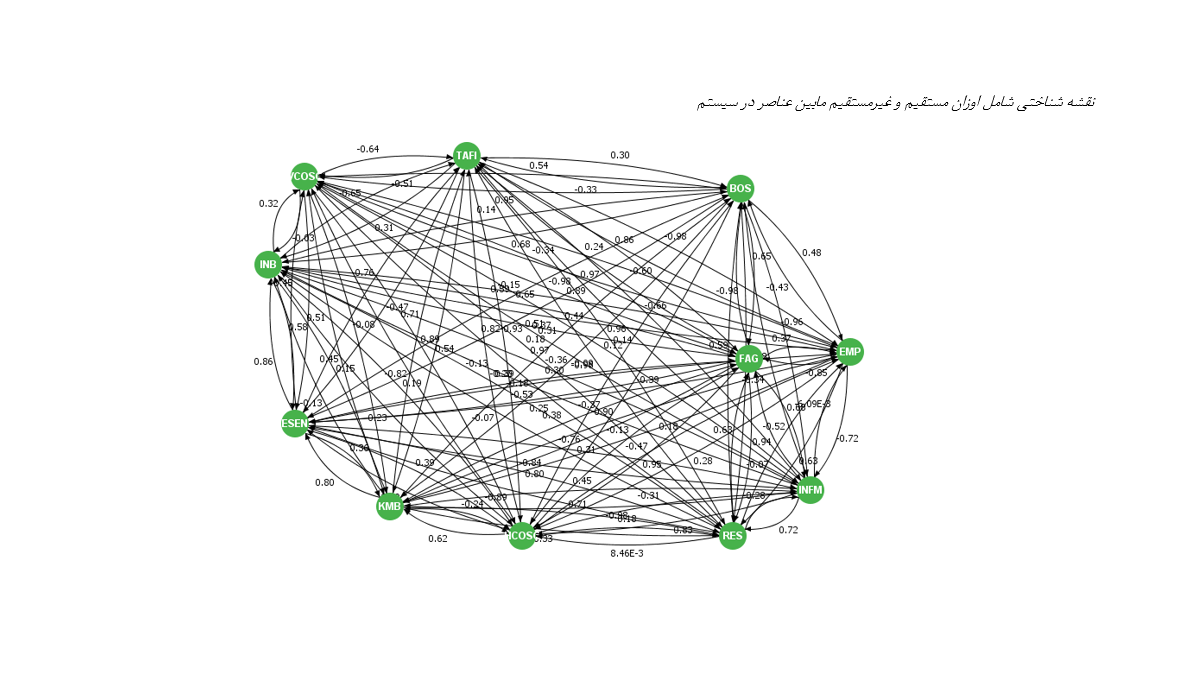
This study aimed to design and explain a comprehensive model of production prosperity strategies from the perspective of planning and research and development (R&D) in industrial enterprises operating in the auto parts manufacturing industry. This developmental-applied study employed a mixed qualitative–quantitative design within a pragmatic paradigm. In the qualitative phase, multiple grounded theory was applied by integrating theoretical exploration through a meta-synthesis of 88 scientific documents published between 2000 and 2024 with empirical exploration based on 18 semi-structured interviews with academic, industrial, and governmental experts. In the quantitative phase, relationships among the identified strategies were analyzed using fuzzy cognitive mapping, while firms were classified using K-means clustering. The expert panel consisted of 18 participants, and the quantitative sample included 360 presidents and senior managers of automotive parts manufacturing companies located in northwestern Iran, selected through stratified random sampling. The qualitative model was further validated using the Content Validity Ratio and Content Validity Index. Inferential findings organized 34 basic themes and 11 organizing themes into four overarching dimensions: collaborative R&D, future-oriented R&D, applied and profitability-oriented R&D, and targeted R&D. Fuzzy cognitive map analysis identified substantive causal relationships and strategic pathways among the model dimensions, with the system approaching stability after seven learning iterations. Cluster analysis identified three distinct groups of firms. Analysis of variance revealed statistically significant differences among the three clusters across all examined strategies; significance levels were below 0.001 for most dimensions and 0.003 for EMP. The largest F statistics were obtained for INB (F=884.402), BOS (F=874.463), and TAFI (F=641.603), demonstrating substantial differentiation among firms in their strategic preferences. The findings indicate that sustainable production prosperity in the auto parts manufacturing industry requires an integrated and systematic R&D orientation, with applied and profitability-oriented R&D occupying a central position; consequently, firms should emphasize key technology development, targeted R&D financing, collaborative innovation, and alignment of R&D activities with market requirements to strengthen competitiveness and achieve sustainable competitive advantage.
Downloads
References
Ahmed, F. U., Babu, M. M., Rahman, M. N., Uddin, M. J., & Dey, B. L. (2023). Strategic Orientation, Strategic Renewal, and the International Performance of Born Global Firms. Asia Pacific Journal of Management. https://doi.org/10.1007/s10490-023-09903-7
Bugeja, M., Shan, Y., & Zu, Y. (2023). The Disciplinary Role of Unsuccessful Takeovers and Changes in Corporate Governance. Accounting & Finance. https://doi.org/10.1111/acfi.13170
Castelló-Sirvent, F., & Roger-Monzó, V. (2022). Research Agenda on Turnaround Strategies Beyond Systemic Disruptions. Journal of Organizational Change Management. https://doi.org/10.1108/JOCM-05-2022-0160
Cheratian, I., Goltabar, S., & Rezaei Gahroii, R. (2023). Firms Persistence under Sanctions: Micro-Level Evidence from Iran. The World Economy, 46(4), 1007-1029. https://doi.org/10.1111/twec.13378
Chowdhury, M. M. H., Rahman, S., Quaddus, M. A., & Shi, Y. (2022). Strategies to Mitigate Barriers to Supply Chain Sustainability: An Apparel Manufacturing Case Study. Journal of Business & Industrial Marketing. https://doi.org/10.1108/JBIM-04-2021-0233
Farahani Azad, F., Aligholi, M., & Nematizadeh, S. (2022). Presenting a Marketing Model under Recession Conditions. Financial Economics Quarterly, 16(58), 71-92. https://doi.org/10.30495/fed.2022.691501
Feizpour, M. A. (2022). Presenting an Interpretive Structural Model of Production Boom Factors in Iranian Industries. Strategic Management Research, 28(79), 205-230. https://smrj.ihu.ac.ir/article_206991.html
Hasin, H., Nordin, E., Hussain, W. S., & Fauzihardani, E. (2024). The Impact of Turnaround Strategies on SME Performance. Information Management and Business Review, 16(3 (I)), 470-486. https://doi.org/10.22610/imbr.v16i3(I).3896
Hosseini, M., & Moradi Haghighi, F. (2023). Assessment and Analysis of Iran's Long-Term Competitive Advantage in Manufacturing Industries. Iranian Journal of Business and Development Studies, 15(1), 87-115. https://ijbds.usb.ac.ir/article_8055.html
Manuj, I., Herburger, M., & Adana, S. (2024). Supply Chain Resilience Capabilities in Automotive and Other Industries: A Mixed Method Approach. Journal of Business & Industrial Marketing, 39(6), 1311-1336. https://doi.org/10.1108/JBIM-07-2022-0355
Nhung, T. (2024). Supply Chain and Logistics Management in the Automotive Industry. Journal of Asian Multicultural Research for Economy and Management Study, 5(1), 27-33.
Norouzi, M., Khatami, H., & Haji Hassani, S. (2024). Designing a Typology Framework for Government Support of Small and Medium-Sized Enterprises. Management Improvement, 18(2), 21-47. https://doi.org/10.22034/jmi.2024.440936.3057
Paul, S. K., Chowdhury, P., Moktadir, M. A., & Lau, K. H. (2021). Supply Chain Recovery Challenges in the Wake of COVID-19 Pandemic. Journal of Business Research, 136, 316-329. https://doi.org/10.1016/j.jbusres.2021.07.056
Rico, M., Pandit, N. R., & Puig, F. (2021). SME Insolvency, Bankruptcy, and Survival: An Examination of Retrenchment Strategies. Small Business Economics, 57(1), 111-126. https://doi.org/10.1007/s11187-019-00293-z
Tawfeeq Saleh Al-Sammarraie, F., & Fathi, M. R. (2025). Evaluation of the Environmental Performance of Supply Chain in the Automotive Industry. Transactions on Data Analysis in Social Science, 7(1), 9-15. https://www.transoscience.ir/article_228268.html
Varshavi, R., Mohammad Pourzarandi, M. E., & Hashemi, S. Z. (2023). Developing an Appropriate Strategy for an Auto Parts Manufacturing Company: A Case Study of Ideal Khodro Koosha Afarin Industries. Dynamic Management and Business Analysis, 2(4), 94-111. https://doi.org/10.61838/dmbaj.2.4.8
Vijaya, A., Meisterknecht, J. P. S., Angreani, L. S., & Wicaksono, H. (2025). Advancing sustainability in the automotive sector: A critical analysis of environmental, social, and governance (ESG) performance indicators. Cleaner Environmental Systems, 16, 100248. https://doi.org/10.1016/j.cesys.2024.100248
Vishlaghi, M., Zarei, A., & Feiz, D. (2021). Designing a Strategic Agility Model in Relation to Sustainable Production Boom Based on Grounded Theory: A Study of the Automotive Industry. Management Improvement, 15(2), 127-153. https://doi.org/10.22034/jmi.2021.238717.2292
Xiang, Y. (2025). Method for Analyzing the Importance of Quality and Safety Influencing Factors in Automotive Body Manufacturing Process—A Comprehensive Weight Evaluation Method to Reduce Subjective Influence. Mathematics, 13(12), 1944. https://doi.org/10.3390/math13121944
Zarei, M., & Ghasemi, A. (2025). Correlation-aware risk assessment in Iran's automotive supply chains under sanctions. International Journal of Production Economics, 259, 109982. https://doi.org/10.1016/j.ijpe.2024.109982
Downloads
Publication Timeline
- Submitted
- Revised
- Accepted
Issue
Section
License
Copyright (c) 2025 Ali Asghar Rezazadeh (Author); Houshang Taghizadeh; Majid Bagherzadeh Khajeh (Author)

This work is licensed under a Creative Commons Attribution-NonCommercial 4.0 International License.